
The Note That Wasn't Written by Me
When the voice of a machine challenges the soul of a song, what remains truly human?

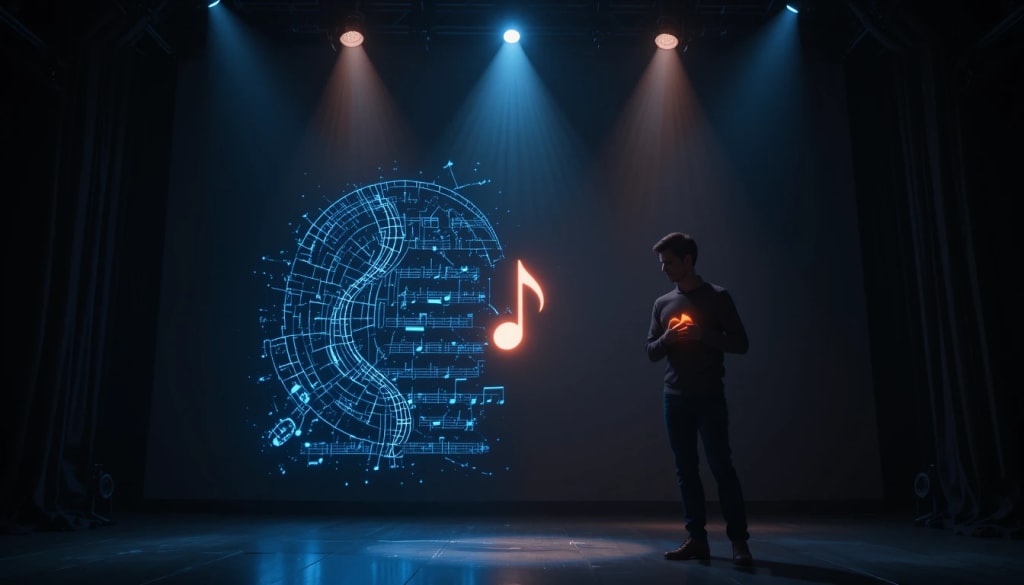
Story:
They said the software could write better lyrics than me.
At first, I laughed. It felt like someone telling a painter that a printer had more soul.
But the producer wasn’t joking.
“Just try it,” he said, sliding the laptop across the table. “It’s called GPTZero. It doesn’t write — it detects if what you wrote was written by an AI. If your stuff passes, we use it. If not… we let the machine fix it.”
I looked down at my own lyrics — the ones I’d written at 3 AM with swollen eyes and trembling hands, poured from memories I hadn’t told another soul. They were raw. Messy. Real.
I copied and pasted them into the box. Clicked “analyze.”
A spinning circle. A loading bar.
Then the verdict:
LIKELY AI-GENERATED.
I felt like someone had punched me in the throat.
“This can’t be right,” I said.
The producer shrugged. “The algorithm thinks it’s too polished. Too familiar in structure. That’s how these things work. No offense — it's probably just a fluke.”
But I wasn’t offended. I was shattered.
Because if the machine thought my voice wasn’t real — what did that mean for all the nights I stayed up trying to make it honest? Had I somehow started writing like the machine without realizing it?
Or worse… had the machine started writing like me?
I went home with a knot in my chest and a silent song stuck in my throat.
That night, I stared at the ceiling and wondered: What does it mean to be authentic now?
My mother used to say, “Your voice is your fingerprint. No one else has it.” But that was before neural networks and pattern-trained software that could mimic heartbreak in a minor key.
I sat at the piano, unsure what to write.
Every line I tried felt like it was under surveillance. Every metaphor, every chord, echoed with the silent question: Is this mine? Or is it what an AI would expect me to write?
And then… something strange happened.
I stopped trying to write perfectly.
I just played.
Messy chords. Broken rhythms. I sang off-pitch on purpose. Whispered. Shouted. Spoke between lines. I cried halfway through a verse and didn’t fix it.
And somewhere in that chaos, I found it: the note that wasn’t written by anyone else.
It was flawed. It was beautiful. It was mine.
The next morning, I walked into the studio with red eyes and a wild kind of clarity.
“I’m not running it through the checker,” I said.
The producer raised an eyebrow. “You sure?”
“I’m sure.”
I stepped into the vocal booth and sang the new piece — one take, raw. No filter. No autotune.
Silence followed.
Then he pressed the button.
That… was human,” he said softly.
No tech test could’ve told him that. He just knew. Because he felt it.
And I realized something:
The machine may recognize patterns, but it can’t recognize pain.
It can mimic style, but not story.
It can replicate structure, but not the shaking breath behind a confession.
A song isn’t just notes and rhymes.
It’s memory. Grit. Soul.
It’s the tremble in your voice when you don’t want anyone to know you’re hurting.
It’s the crack in the lyric where your truth slips out, uninvited.
Later that week, the label called. They liked the new track. No AI checker required.
And even if they hadn’t — even if the whole world had passed it through a dozen filters and flagged it as “machine-made” — I wouldn’t care.
Because I know how it felt when I wrote it.
I know where it came from.
I know who it came from.
And that’s a note no machine could ever write.
shohel rana
About the Creator
Shohel Rana
As a professional article writer for Vocal Media, I craft engaging, high-quality content tailored to diverse audiences. My expertise ensures well-researched, compelling articles that inform, inspire, and captivate readers effectively.
Keep reading
More stories from Shohel Rana and writers in Humans and other communities.
The Town That Vanished Overnight
Article: There are stories in America that live in whispers—tales passed down over coffee at truck stops, or told in hushed tones around campfires. Not because they’re scary, but because they’re unexplainable. This isn’t about UFOs or ghosts. This is about a real town. A town that existed—until it didn’t. The town’s name was Larkspur Hollow.
By Shohel Rana8 months ago in Humans
Rachel Reviews: The Spiral Archive by Pieter Hendrik
It's difficult for me to know where to start with a review of this book as it was, for me, an entirely unique experience and one that I'll probably never have again. I don't want that to be interpreted as unenjoyable but it has left me scratching my head a little and ruminating on its content, its themes and its characters.
By Rachel Deeminga day ago in BookClub


Comments
There are no comments for this story
Be the first to respond and start the conversation.