
Just three years left to avoid surpassing 1.5°C warming, experts caution
World leaders urged to act immediately to avert climate catastrophe
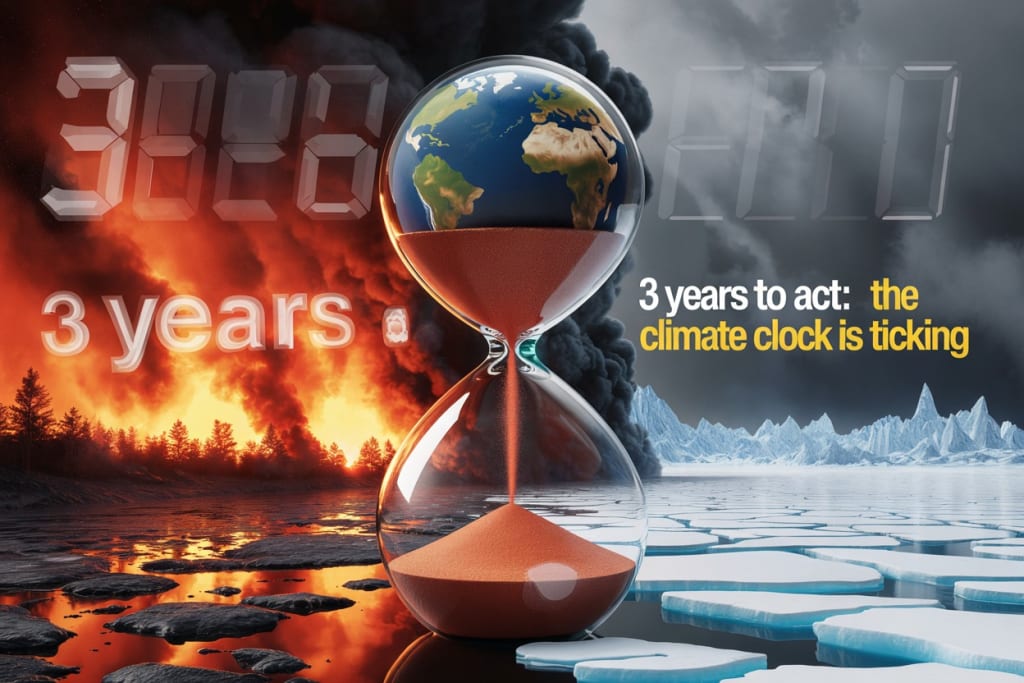
The Earth could go over the 1.5°C global warming limit in just three years if we keep releasing carbon dioxide at the current rate.
That’s the serious warning from over 60 top climate scientists, based on the latest report on global warming.
In 2015, nearly 200 countries promised to try to keep temperature rise below 1.5°C compared to the late 1800s, to avoid the worst effects of climate change.
But since then, countries have continued burning large amounts of coal, oil, and gas, and cutting down forests that absorb carbon — putting that goal at serious risk.
Climate change is already making extreme weather worse — like the UK’s record 40°C heat in July 2022 — and causing sea levels to rise faster, putting coastal areas in danger.
“We’re seeing dangerous changes speeding up,” said climate expert Prof Piers Forster. These changes are clearly linked to the large amount of pollution we’ve been releasing.
Back in 2020, scientists said we could emit 500 billion more tonnes of carbon dioxide and still have a 50% chance of staying under 1.5°C of warming. But by 2025, only 130 billion tonnes will remain.
At the current rate of about 40 billion tonnes of CO₂ each year, we could use up that "carbon budget" in just three years — making it very likely we’ll go over the Paris Agreement target.
Last year was the first time global temperatures stayed over 1.5°C above 1800s levels for a full year. While that doesn’t officially break the Paris Agreement, it’s a strong warning sign.
Most of the heat was caused by human activity, with temperatures now rising about 0.27°C every decade — much faster than ever before.
If emissions stay high, we could reach 1.5°C of warming by 2030. After that, it might be possible to cool the planet by removing CO₂ from the air — but scientists warn not to depend too much on these future technologies.
As Professor Joeri Rogelj says, the more we overshoot 1.5°C, the harder it becomes to fully undo the damage.
Even a Small Rise in Temperature Makes a Big Difference
The study shows how serious climate change already is. One key finding: the Earth is heating up much faster than before — more than twice as fast as in the 1970s and even faster than a decade ago.
This rapid heating is mostly caused by greenhouse gases, and a drop in cooling particles in the air has made it worse.
Most of the extra heat — about 90% — is being absorbed by the oceans. This warms the water, harms marine life, and causes sea levels to rise. In fact, sea levels are now rising twice as fast as they did in the 1990s, increasing the flood risk for millions of people in coastal areas.
Even though this information sounds serious, the authors note that the speed of emissions growth seems to be slowing down as clean energy technologies are being used more.
They say cutting emissions quickly and strictly is now more important than ever.
The goal set in the Paris Agreement is backed by strong science showing that 2°C of warming would be far worse than 1.5°C.
However, people often wrongly assume that staying below 1.5°C is completely “safe” and going above it is always “dangerous.”
In reality, every small increase in temperature worsens extreme weather, ice melt, and sea-level rise.
Professor Rogelj said, “If we reduce emissions in the next ten years, we can seriously slow down the rate of warming.”
He also said, “Every bit of warming we can prevent will lead to less damage, less suffering — especially for poor and vulnerable people — and fewer problems for our societies as we try to live the lives we want.”
About the Creator
Kamran Khan
Proffessor Dr Kamran Khan Phd General science.
M . A English, M . A International Relation ( IR ). I am serving in an international media channel as a writer, Reporter, Article Writing, Story Writing on global news, scientific discoveries.
Keep reading
More stories from Kamran Khan and writers in Humans and other communities.
This burger was created in a lab using cow cells... Is it truly ready for restaurant menus?
Inside a plain building in Oxford, Riley Jackson is cooking a steak. The bright red meat sizzles in the pan and smells just like regular steak. But this one is special — it was made in a lab next door.
By Kamran Khan8 months ago in Education
The Night I Opened My Door — And Everything Changed
The knock came at 11:43 p.m. I remember the time because I had just checked my phone, hoping for a message that was never going to arrive. The apartment was quiet in that heavy way only lonely spaces can be. The refrigerator hummed. The clock ticked. My tea had gone cold beside me — a habit lately.
By imtiazalam7 days ago in Humans



Comments
There are no comments for this story
Be the first to respond and start the conversation.