
This burger was created in a lab using cow cells... Is it truly ready for restaurant menus?
Exploring the Future of Lab-Grown Meat and Its Place on Your Plate
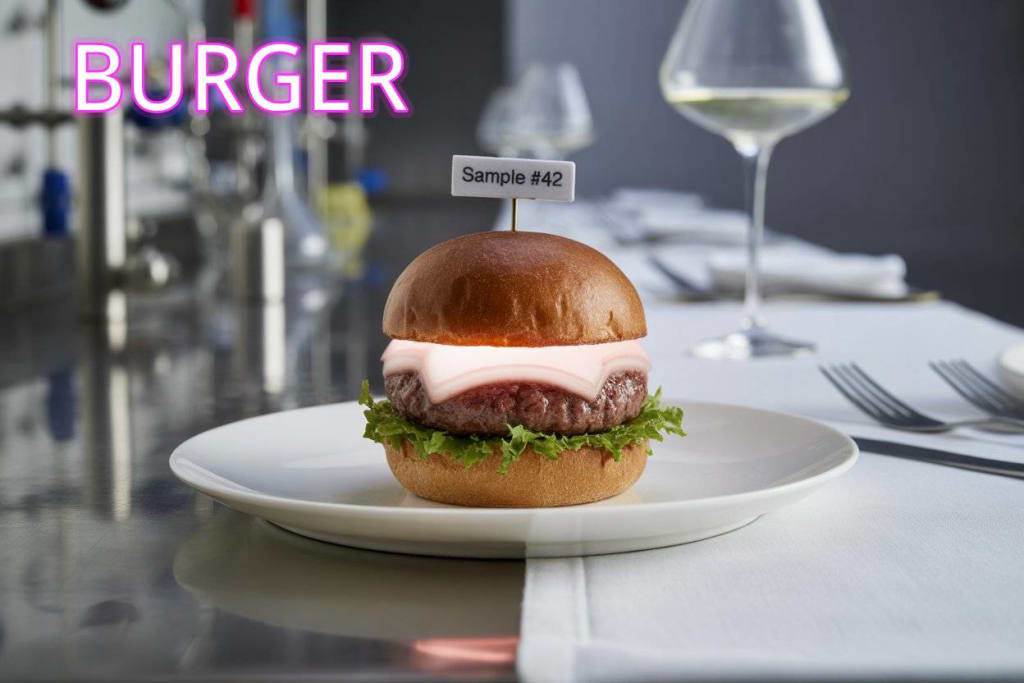
Inside a plain building in Oxford, Riley Jackson is cooking a steak. The bright red meat sizzles in the pan and smells just like regular steak. But this one is special — it was made in a lab next door.
It looks and feels almost the same as real meat. “That’s exactly what we want,” says Jackson, who works at Ivy Farm Technologies, the company behind this new kind of food.
Lab-grown meat is already being sold in a few countries and might be available in UK shops soon — in things like burgers, sausages, and pies. Unlike plant-based options, it’s made from real cow cells, so it’s just like regular meat on a biological level.
Supporters believe it could help reduce greenhouse gases from meat production, which are a big part of climate change. But some people doubt this and think simply eating less meat is a better solution.
Others worry lab-grown meat is too processed and that a few big companies might control the market. Earlier this year, lab-grown meat was used in pet food in the UK. Products for people might be next. So now there’s a big question: should we keep making meat in labs?
Fighting Climate-Warming Emissions
People around the world are eating more meat than ever. The UN says meat production has grown five times bigger since the 1960s, reaching 364 million tonnes in 2023. Making just 1 kilogram of beef can release up to 40 kilograms of carbon dioxide.
A 2021 study in Nature Food found that food production causes about one-third of the world’s greenhouse gas emissions. Cows also release methane and need a lot of land and water to raise.
Tim Lang, a food policy expert from City St George’s, University of London, says the problem is very serious. But many politicians are slow to take action because they worry about upsetting the meat industry and losing public support.
Supporters of lab-grown meat say it could help meet the growing demand for meat while creating much less pollution. A UK report in 2021 even suggested people eat 30% less meat by 2032 to help fight climate change.
Lab-Made Foods: Sausages, Eel, and Caviar on Your Plate
To create lab-grown meat, scientists take cells from animals and grow them in dishes. Later, they grow more of them in large tanks called bioreactors. The basic steps are simple, but making the meat taste good and look real is more challenging.
The cells grow in a liquid full of nutrients, and sometimes plant proteins are added to help copy the texture and flavor of real meat. Some companies are also working on making lab-grown seafood like eel and caviar.
Ivy Farm Technologies plans to start with mixed products that combine lab-grown and regular meat — such as burgers and sausages, not full steaks. CEO Dr. Harsh Amin says, “If we want to help the environment, we need products that many people will want to eat. Burgers are a good place to begin.”
Trusting Without Solid Proof...
Companies say lab-grown meat is better for the environment, but many of their claims don’t have strong data to back them up. Dr. John Lynch from Oxford University says these claims often depend on guesses, not facts.
Making lab-grown meat uses energy — not just to grow the cells, but also to make the needed chemicals and nutrients. Also, companies keep their methods secret to stay ahead of competitors, which makes it hard to know exactly how things are done.
In the best-case scenario, lab meat might only release 1.65 kg of CO₂ for every 1 kg of meat, which is better than beef. But if the process uses a lot of energy, emissions could rise to 22 kg per kg of meat, which would cancel out the environmental benefits.
Unlike methane from cows that disappears in about 12 years, CO₂ from lab-grown meat stays in the atmosphere for much longer. Dr. Lynch says this means lab meat could be worse for the climate in the long run.
However, lab-grown meat does use much less land. Lynch thinks that with better technology, it might one day be more climate-friendly than beef — though it still may not beat chicken or pork, which are already quite efficient
Seafood Made in Labs and Its Use Around the World
Singapore was the first to allow lab-grown meat in 2020, followed by the U.S. in 2023 and Israel in 2024. But in the UK, companies say slow rules and approvals are making progress difficult.
Even in countries where it’s allowed, lab-grown meat is mostly only available at special tastings or expensive restaurants. Companies still find it hard to produce enough and keep prices low.
In the U.S., four companies have gotten some level of approval. Wildtype’s lab-made salmon is served at a fancy restaurant in Oregon, and Good Meat’s chicken was first offered in Washington, DC. Most people who tried it said they were “curious and hopeful” about it.
Farmers’ and Fishermen’s Opinions
Some cattle groups in the U.S. have tried to stop lab-grown meat, but big groups like the National Cattlemen's Beef Association haven’t supported these bans. They probably want to keep options open for new technology. People who make lab-grown meat say they don’t want to replace farm animals but to add to the supply. As more people want meat, regular farming might not be enough.
On the other hand, the seafood industry mostly supports lab-grown seafood because it can help protect the oceans and reduce overfishing.
Is “high-protein slurry” really good for the environment?
Vow, an Australian company, sells lab-grown Japanese quail in Singapore and aims to grow. They chose quail for its uniqueness and are adding healthy nutrients like omega-3s.
COO Ellen Dinsmoor says if the meat tastes good, is nutritious, and affordable, people will buy it.
Some critics say focusing on expensive products ignores poorer communities. Dr. Chris van Tulle-ken argues it’s better to eat less meat than replace it with processed lab-grown foods.
Despite this, lab-grown meat offers benefits like less cholesterol and no animal killing. Its future depends on taste and price — if it’s good and cheap, it could become popular worldwide.
About the Creator
Kamran Khan
Proffessor Dr Kamran Khan Phd General science.
M . A English, M . A International Relation ( IR ). I am serving in an international media channel as a writer, Reporter, Article Writing, Story Writing on global news, scientific discoveries.
Keep reading
More stories from Kamran Khan and writers in Education and other communities.
5 AI Tools That Can Help You Make Money Online in 2026
5 AI Tools That Can Help You Make Money Online in 2026 Artificial Intelligence is no longer just a futuristic concept. It has quickly become one of the most powerful technologies shaping the modern digital economy. Businesses, creators, and freelancers are now using AI tools to save time, increase productivity, and generate new income streams. Just a few years ago, creating content, designing images, or editing videos required advanced technical skills and expensive software. Today, AI tools allow almost anyone with an internet connection to do these tasks faster and more efficiently. For people looking to earn money online, learning how to use AI tools can be a major advantage. Instead of spending hours on repetitive work, these tools can help you produce professional-level results in minutes. Here are five AI tools that are helping people around the world build online income opportunities. 1. ChatGPT – AI Writing and Content Creation One of the most powerful AI tools available today is ChatGPT. It helps users generate high-quality written content quickly and efficiently. People use ChatGPT for many different online tasks, including writing blog posts, creating social media content, generating marketing copy, and even producing scripts for videos. Freelancers are using it to complete writing projects faster, while bloggers use it to brainstorm ideas and structure their articles. Content creators can also use it to write YouTube scripts, product descriptions, and email newsletters. While AI can assist with writing, successful creators still add their own creativity and editing to make the content unique and engaging. Because online businesses constantly need fresh content, this tool has become extremely valuable for writers and marketers. 2. Midjourney – AI Image Generation Visual content plays a huge role in the digital world. Social media posts, website designs, advertisements, and digital products all rely heavily on high-quality images. Midjourney is an AI image generator that can turn simple text prompts into stunning digital artwork. Designers and entrepreneurs use it to create: Book covers Social media graphics Website images Digital art prints Many creators even sell AI-generated artwork online through digital marketplaces. With the right prompts and creativity, people can build entire design portfolios using AI-generated images. 3. Runway ML – AI Video Creation and Editing Video content continues to dominate the internet. Platforms like YouTube, social media apps, and online courses all rely heavily on video. Runway ML is an AI-powered tool that helps creators generate and edit videos quickly. It allows users to create visual effects, remove backgrounds, and even generate video clips using artificial intelligence. Video editors and content creators use this tool to speed up their workflow and produce high-quality videos without expensive equipment. As the demand for video continues to grow, people who understand AI video tools will have a strong advantage in the online content industry. 4. Canva – AI Design for Everyone Canva has become one of the most popular design tools on the internet, especially for beginners. With its AI-powered features, users can create professional graphics, presentations, posters, and marketing materials with very little design experience. Freelancers often use Canva to provide design services for clients, including social media posts, brand kits, and promotional graphics. Small businesses also rely on Canva to maintain a consistent online presence without hiring expensive designers. Because of its simplicity and versatility, Canva remains one of the easiest tools for beginners who want to start offering digital design services. 5. Pictory – AI Video From Text Pictory is a powerful AI tool that can transform written content into engaging videos. Creators can simply paste an article or script into the platform, and Pictory automatically generates a video using stock footage, captions, and background music. This tool is especially useful for content creators who want to produce videos for YouTube or social media without filming themselves. Many people use Pictory to turn blog posts into videos, create educational content, or produce short clips for social platforms. Because video consumption continues to increase worldwide, tools like Pictory are becoming essential for digital creators. Final Thoughts Artificial Intelligence is changing the way people work online. Instead of replacing human creativity, AI tools are helping people work faster and more efficiently. For beginners who want to earn money online, learning how to use AI tools can open the door to many new opportunities. Writing, designing, video editing, and digital marketing are all becoming easier with the help of technology. The most important step is to start experimenting and learning. Even mastering just one of these tools can create new income possibilities. The future of online work is increasingly connected to AI. Those who learn to use these tools today will likely have a strong advantage in the digital economy of tomorrow.
By Baseer Shaheen 6 days ago in Education
Early March 2026: 4 Goals Accomplished
It's early March and I've now accomplished my 4th writing goal for the year of 2026. Before diving into the behind-the-scenes of it... why not tell you up front what that accomplishment was? I was published in a 2nd publication for this year. Published in Helix Literary Magazine out of Central Connecticut State University. You can read it for free right now!
By Stephen Kramer Avitabile7 days ago in Writers




Comments
There are no comments for this story
Be the first to respond and start the conversation.