
John Lennon’s Legacy of Abandonment: From Wounds to Redemption

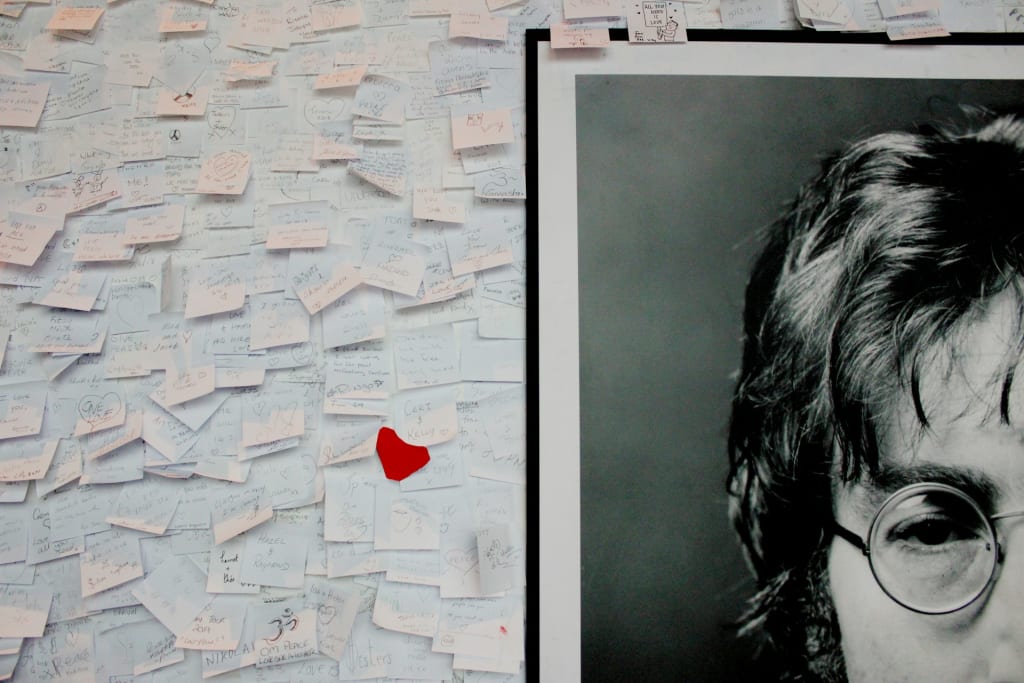
John Lennon’s life was a symphony of brilliance and pain. Beneath the revolutionary music and sharp wit lay a deep emotional wound: abandonment. His father, Alfred “Freddie” Lennon, vanished from his life early on, leaving scars that shaped John’s relationships, especially with his own son Julian. Yet through the guidance of May Pang and Yoko Ono, Lennon began to confront his past and evolve—slowly, imperfectly—into a more present and intentional father.
The Origin of the Wound: Freddie Lennon’s Absence
Alfred Lennon was a merchant seaman with a troubled past. Raised in an orphanage, he married Julia Stanley in 1938, and two years later, John was born. But Freddie’s role as a father was fleeting. During World War II, he was often at sea, and when he returned, Julia had moved on. Freddie drifted away, and John’s memories of him faded into myth. “I soon forgot my father,” Lennon said in 1968. “It was like he was dead.”
Freddie’s absence wasn’t just physical—it was existential. He didn’t reappear until John was a global icon. Their reunion was awkward and brief. Freddie tried to capitalize on John’s fame, even releasing a single in 1965, which only deepened the rift. Their contact remained sporadic until Freddie’s death in 1976.
Emotional Fallout: Lennon’s Search for Belonging
John Lennon’s abandonment issues weren’t just personal—they were artistic. His songs often echoed themes of loss, yearning, and fractured identity. In “Mother,” he screams, “Mother, you had me, but I never had you,” and “Father, you left me, but I never left you.” These lyrics reveal a man still grappling with childhood trauma decades later.
His relationships bore the imprint of these wounds. He was emotionally volatile, possessive, and deeply afraid of rejection. His first marriage to Cynthia Powell ended in divorce, and his relationship with their son Julian was strained. Julian later said, “I felt rejected and unimportant in his life.” The irony was bitter—John, abandoned by his father, became an absent father himself.
May Pang: A Bridge to Julian
During Lennon’s 18-month separation from Yoko Ono—dubbed the “Lost Weekend”—he entered a relationship with May Pang, their former assistant. Far from being chaotic, this period became a turning point. Pang encouraged Lennon to reconnect with Julian, who hadn’t seen his father in years.
Pang’s influence was gentle but persistent. She arranged visits, created space for father-son bonding, and helped Lennon overcome his guilt and fear. Julian visited Lennon in Los Angeles in 1974, where they swam, played music, and shared meals—simple acts that began to rebuild trust. Pang even ensured their Manhattan apartment had a dedicated room for Julian, signaling a shift in Lennon’s priorities.
Julian later reflected, “When Dad was with May, he always seemed very happy and youthful. She brought a light to our relationship.”
Yoko Ono and the Househusband Years
After reconciling with Yoko in 1975, Lennon stepped away from public life to raise their son Sean. This five-year hiatus marked a radical shift: the man who once fled fatherhood now embraced it. Yoko supported Lennon’s domestic retreat, encouraging him to explore baking, parenting, and introspection. Lennon described this period as “househusbanding,” and credited it with helping him heal.
Songs like “Beautiful Boy” expressed a tenderness rarely seen in his earlier work. While Julian remained somewhat estranged during this time, Lennon’s evolving understanding of fatherhood—shaped by Pang’s emotional guidance and Ono’s support—laid the groundwork for eventual reconciliation.
Generational Trauma and the Hurt Cycle
The Lennon family’s story is a textbook case of generational trauma. Freddie’s own abandonment as a child set the stage for his neglect of John. John’s emotional scars led to his detachment from Julian. Each generation inherited the pain of the last, often unconsciously.
Psychologists describe this as the “hurt cycle”—a pattern where unresolved trauma is passed down until someone breaks it. Julian Lennon’s decision to confront his past, reflect deeply, and create art from pain is a rare example of healing. His 2022 album Jude was a reclamation of pain—a way to “take a sad song and make it better.” He described the process as “coming to terms with who I really am, taking the reins… probably for the first time in my life I feel whole.”
Lennon’s Art as Catharsis
John Lennon’s music was his therapy. Songs like “Isolation,” “Working Class Hero,” and “Jealous Guy” reveal a man wrestling with vulnerability, shame, and the longing to be seen. His 1970 Plastic Ono Band album, recorded after intensive primal scream therapy, was a raw outpouring of childhood pain. “I’m just a lonely guy,” he once said. “I’m just trying to find some peace.”
Even his activism and public persona—bold, confrontational, idealistic—can be seen as attempts to reclaim control. The boy who was abandoned became the man who demanded attention, who spoke truth to power, who sought universal love to fill a personal void.
Conclusion: From Silence to Song
John Lennon’s abandonment by his father was not a footnote—it was a foundational trauma that shaped his psyche, his relationships, and his art. Freddie Lennon’s absence created a legacy of emotional disconnection that echoed through John’s life and into Julian’s. Yet through the efforts of May Pang and the stability offered by Yoko Ono, Lennon began to confront his past and make amends.
Julian’s own healing came later, but it came. And in the end, Lennon’s story is one of imperfect redemption. He didn’t erase the pain of his absence, but he tried to rewrite the narrative. And in doing so, he offered a glimpse of healing—not just for himself, but for the son who once felt forgotten.
Would you like this adapted into a visual format or a song lyric draft next?
About the Creator
Julie O'Hara - Author, Poet and Spiritual Warrior
Thank you for reading my work. Feel free to contact me with your thoughts or if you want to chat. [email protected]
Keep reading
More stories from Julie O'Hara - Author, Poet and Spiritual Warrior and writers in Humans and other communities.
Yoko Ono: Beyond the Frame A Life of Art, Activism, and Unyielding Vision
Born into Privilege, Forged by Fire Yoko Ono was born on February 18, 1933, in Tokyo, Japan, into a family of extraordinary privilege and cultural stature. Her father, Eisuke Ono, was a prominent banker with the Yasuda Bank, part of the powerful Yasuda zaibatsu, one of Japan’s pre-war financial dynasties. Her mother, Isoko Ono, descended from the Yasuda clan, further cementing the family’s elite status.
By Julie O'Hara - Author, Poet and Spiritual Warrior3 months ago in Humans



Comments
There are no comments for this story
Be the first to respond and start the conversation.