
Yoko Ono: Beyond the Frame A Life of Art, Activism, and Unyielding Vision

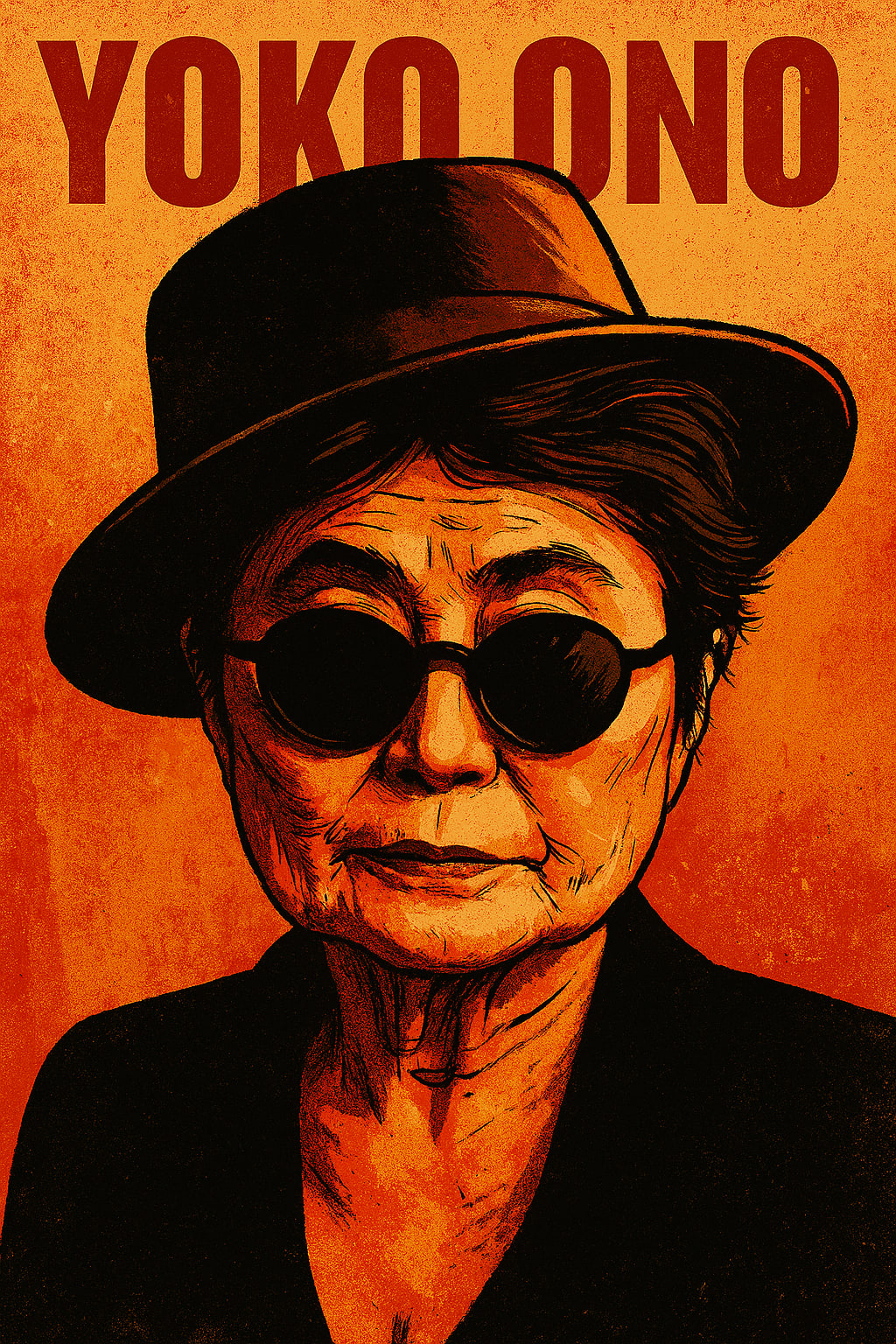
Born into Privilege, Forged by Fire
Yoko Ono was born on February 18, 1933, in Tokyo, Japan, into a family of extraordinary privilege and cultural stature. Her father, Eisuke Ono, was a prominent banker with the Yasuda Bank, part of the powerful Yasuda zaibatsu, one of Japan’s pre-war financial dynasties. Her mother, Isoko Ono, descended from the Yasuda clan, further cementing the family’s elite status.
The Onos lived a transnational life, moving between Tokyo and New York due to Eisuke’s banking assignments. This cosmopolitan upbringing exposed Yoko to both Eastern and Western cultural paradigms, shaping her later artistic hybridity. Yet privilege did not shield her from trauma. During World War II, she survived the firebombing of Tokyo in 1945, an experience that left a lasting impression on her psyche and creative sensibility.
Education: Philosophy, Music, and Defiance
Yoko Ono’s education mirrored her family’s elite status. She attended Gakushūin, the Peers School, reserved for children of Japan’s aristocracy. Among her classmates was Prince Akihito, the future emperor of Japan. In 1951, she became the first woman admitted to the philosophy program at Gakushūin University—a groundbreaking achievement in a male-dominated academic environment.
In 1952, Ono moved to New York and enrolled at Sarah Lawrence College, a liberal arts institution known for its progressive curriculum. She studied writing and music but left before graduating, drawn instead to the avant-garde art scene of downtown Manhattan. Her intellectual formation was shaped by Zen Buddhism, Western philosophy, and the experimental ethos of post-war art.
The Artist Before the Icon
Before meeting John Lennon, Yoko Ono was already a respected figure in the conceptual and performance art world. Her work was deeply influenced by John Cage, La Monte Young, and the Fluxus movement, which emphasized the blending of artistic disciplines and audience participation.
Notable Works Before Lennon
• “Painting to Be Stepped On” (1960): A canvas placed on the floor, inviting viewers to walk over it—challenging traditional notions of reverence and authorship.
• “Cut Piece” (1964): Ono sat silently on stage while audience members were invited to cut pieces of her clothing, a powerful commentary on vulnerability, gender, and violence.
• “Grapefruit” (1964): A book of poetic instructions and conceptual pieces that became a seminal work in the art world.
Her loft on Chambers Street became a hub for experimental artists, including Nam June Paik and Jonas Mekas. Ono’s work blurred the boundaries between artist and audience, object and experience, often inviting participation and introspection.
Personal Life and Emotional Depth
Yoko Ono married Japanese composer Toshi Ichiyanagi in 1956. Their marriage ended in divorce in 1962. She later married Anthony Cox, an American filmmaker and jazz musician, with whom she had a daughter, Kyoko. This relationship also ended in divorce, and Ono lost custody of Kyoko during a bitter legal battle. These personal hardships added emotional depth to her art and activism.
Peace, Philanthropy, and Global Impact
After John Lennon’s assassination in 1980, Ono became the steward of his legacy, channeling her grief into activism and public art. Her philanthropic work spans continents and causes, from peace initiatives to education and human rights.
Peace Initiatives
• Imagine Peace Tower (Iceland): A glowing tower of light dedicated to Lennon’s vision of peace, lit annually on his birthday and other significant dates.
• Strawberry Fields Memorial (Central Park, NYC): A tranquil garden space honoring Lennon, funded and maintained by Ono.
• Bed-In for Peace (1969): Though a joint effort with Lennon, it exemplifies Ono’s lifelong commitment to nonviolent protest and media-based activism.
Support for the Arts and Education
Ono has funded scholarships and grants for young artists, particularly those working in experimental and conceptual media. She has supported institutions that promote art education, gender equality, and LGBTQ+ rights.
Advocacy for Victims of Violence
Ono has been vocal about domestic violence and has supported organizations that help survivors. Her own experiences with emotional trauma have informed her empathetic approach to activism.
Recognition and Legacy
Despite early criticism—often rooted in racism and sexism—Ono has received numerous accolades:
• Grammy Award for Album of the Year (1981) for Double Fantasy, her collaboration with Lennon.
• Billboard’s 11th most successful dance club artist of all time (2016), with twelve number-one singles on the US Dance charts.
• Tributes from artists like Elvis Costello, Sonic Youth, and Meredith Monk, who recognize her as a muse and icon.
Her influence extends into fashion, film, and literature. She remains a symbol of artistic courage and social conscience.
Conclusion: A Life of Depth and Defiance
Yoko Ono’s life defies simplification. She is not merely the woman who “broke up the Beatles,” as tabloids once claimed, but a visionary artist, philosopher, and activist whose work challenges us to rethink our assumptions about art, identity, and justice.
From her groundbreaking performance pieces to her global peace initiatives, Ono’s life is a testament to the power of creative resistance and emotional authenticity. She remains one of the most misunderstood yet profoundly influential figures of the 20th and 21st centuries.
About the Creator
Julie O'Hara - Author, Poet and Spiritual Warrior
Thank you for reading my work. Feel free to contact me with your thoughts or if you want to chat. [email protected]
Keep reading
More stories from Julie O'Hara - Author, Poet and Spiritual Warrior and writers in Humans and other communities.
Being an Adult Means Knowing When to Listen, Not Just Argue
Adulthood isn’t just a matter of age -- it’s a matter of intellectual maturity. One of its clearest markers is the ability to distinguish between arguing to win and listening to understand. Children and emotionally immature adults often confuse loudness with logic, and opinion with truth. But real grown-ups know: facts matter, listening matters, and emotional framing without evidence is a shortcut to ignorance.
By Julie O'Hara - Author, Poet and Spiritual Warrior3 months ago in Humans
The Devil's Cut
“Comrade, finally you’re awake.” The voice was smooth, sensual. A flickering incandescent bar was all that lit the white, sterile room. All Vladimir remembered was everything going black. He tried to move his arms and found them strapped to the gurney.
By Matthew J. Fromm5 days ago in Fiction


Comments
There are no comments for this story
Be the first to respond and start the conversation.