
Jerusalem, with its two halves, has turned into a ghost town.
The "Jerusalem Storm" operation raises concerns among the residents of the city of Jerusalem.
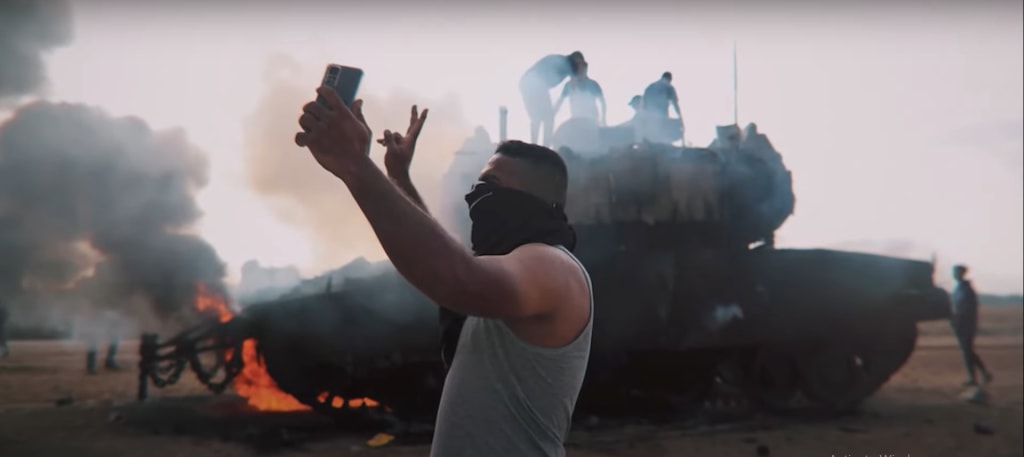
Jerusalem - On Monday, the city of Jerusalem appeared as a ghost town, with its occupied eastern and western halves, on the third day of the Hamas movement's attack on Israel.
In the Khan al-Zeit market, the main market in the Old City of Jerusalem, only a few stores opened their doors. Mari Bahbah (in her forties), near a vegetable store, said that the produce had wilted due to the closure, adding, "People are in a state of fear and anxiety," and stating, "Jerusalem has indeed become a ghost town."
She points out that Palestinians "are forced to go to work but they feel anxious about facing mistreatment on the Israeli streets because of the war."
In the western part of the city, Israeli Sarah (70 years old) echoed the same concerns, saying, "There is no one in the streets, but this is normal. It's a war." She added, "People are afraid, especially those with children in the army."
Hamas announced on Saturday the start of the "Jerusalem Storm" operation, which constitutes an unprecedented attack on Israel, carried out by land, sea, and air with the use of drones. Thousands of rockets were launched from the Gaza Strip. Hamas militants managed to infiltrate several Israeli areas adjacent to the Gaza Strip border, capturing a hundred people and killing more than 900, according to Israeli authorities.
The operation shocked Israel, which declared that it is at war and vowed that Hamas would pay the price. For the past three days, Israel has continued its intense bombardment campaign on the Gaza Strip.
In Bab al-Khalil in the Old City, only a small number of souvenir and gift shops have opened their doors, and some cafes near the Church of the Holy Sepulchre, but the area is devoid of tourists.
At the usually crowded Bab al-Amoud Gate, the site was occupied only by a number of border guards and Israeli police who set up metal barricades to check the identities of pedestrians and inspect them. Palestinians spoke to the French Press Agency about the tightening they face from Israeli security forces.
Hazem (42 years old), who came from the adjacent Silwan neighborhood, said, "The police and soldiers asked me to get out of the car and searched it. They found an electric tester in it, so one of them slapped me (...) and when others wanted to attack me, an Arab officer stopped them and told me to put it in the toolbox next time."
Mohammed al-Baitoni, a wandering pastry seller who resides in the Old City, says, "The city is empty because most of Jerusalem's residents live in Kafr Aqab, Shuafat, and Ras Khamis behind the wall, and Israel has closed its crossings with the occupied West Bank."
He says that a group of Israeli special units asked his family members not to sit in front of their house, under the threat of "tear gas canisters" if they do not comply. He adds, "They want to vent their anger on us."
At the area of the old train station, which is usually crowded with restaurant-goers and shoppers in the western part of the city, the shops were closed.
Israeli Itamar Taragan, who manages the station, says, "We feel like we can't breathe." He adds, commenting on the capture of Israelis by Hamas, "Even if they are not your children, you feel shocked. We don't know how this happened. We feel like we are dying from the inside."
He continues, "We will not reopen the shops tomorrow or the day after," noting that some stores decided to open their doors "to cook for the soldiers and provide rescue services."
There are still some tourists in the city. Some expressed concerns about their ability to leave by air as many flights to and from Israel have been canceled.
About the Creator
Keep reading
More stories from Mikhael Rashad and writers in Humans and other communities.
Unveiling the Top Soccer Players in the World 2023: A Comprehensive Guide
What Makes a Soccer Player the Best? Before we dive into the list of the top soccer players in 2023, it's essential to understand what criteria are used to evaluate their performance. The best soccer players are not just judged by their goal-scoring abilities but by various attributes that make them stand out on the field. Here are some of the key factors that define a top soccer player:
By Mikhael Rashad2 years ago in Humans
Autonomy Is The Real Privilege
Good morning, freedom-seekers! Today we’re gonna be looking at autonomy. A strange word, I know; one many would probably look at blankly and run away from on sight. We’re gonna figure out what it actually means, consider how it’s achieved, and decipher just how deeply most of us are tangled up in dependence without realising it.
By That ‘Freedom’ Guyabout 9 hours ago in Humans
You Don’t Miss Them, You Miss Who You Were With Them
I used to think I missed them. That the tight feeling in my chest, the sudden wave of nostalgia, the random memories that showed up uninvited were all proof that I still wanted them back. I thought longing meant love, and sadness meant unfinished business.
By HazelnutLattea2 days ago in Humans
Smart phones, Humans and Aliens.
WARNING. I will be tapping into one of your favorite creative tensions: The absurdity of humans worshipping their glowing rectangles as if they were tiny oracles. There’s something deliciously poetic about that contradiction, and it lends itself beautifully to an instructive proviso.
By Novel Allen4 days ago in Poets




Comments