

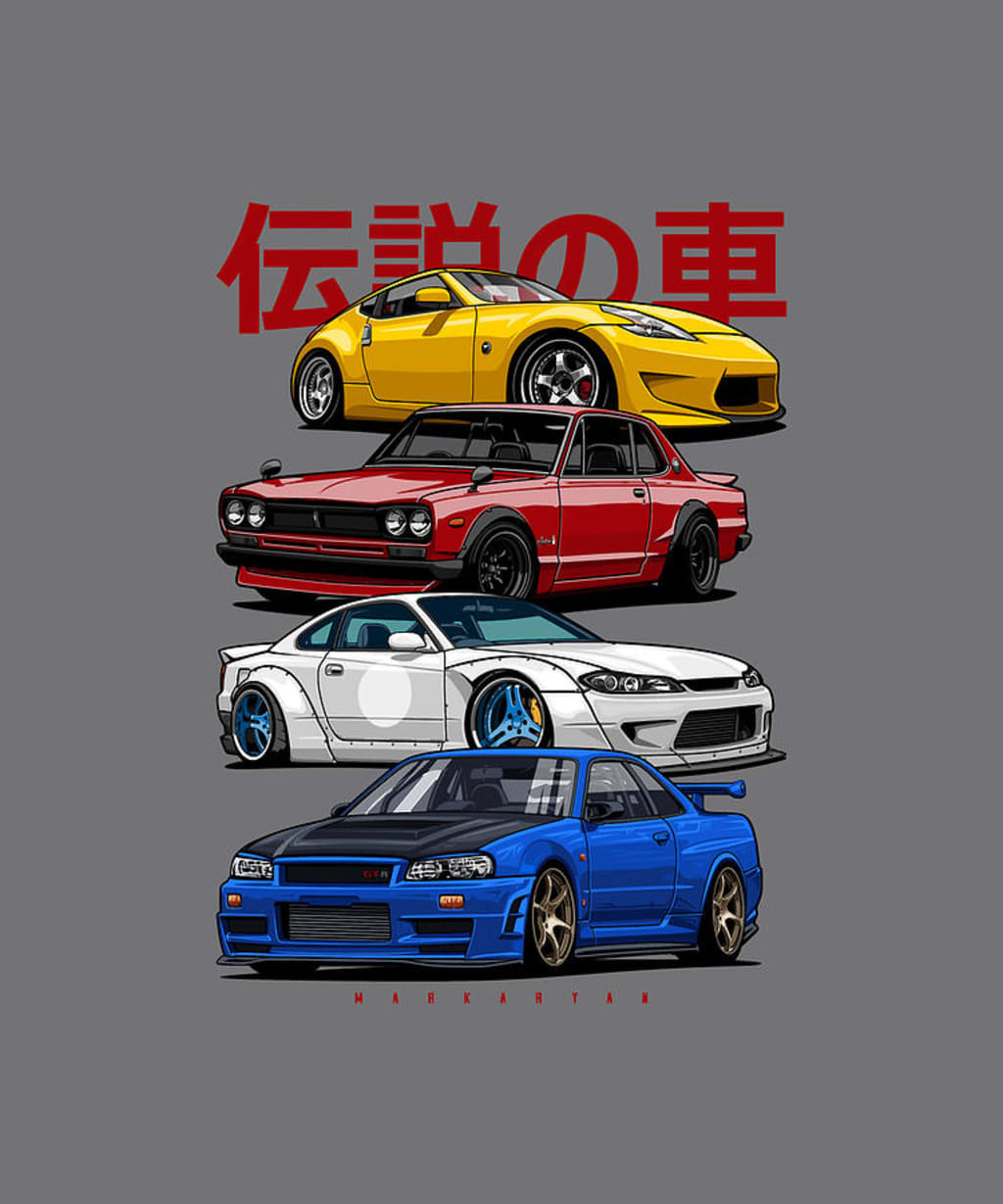
JDM (Japanese Domestic Market) culture refers to the car and motorcycle culture that originated in Japan and has since spread to other parts of the world. JDM culture is characterized by a focus on high-performance vehicles, modified and customized to suit the individual tastes of their owners.
JDM culture encompasses a wide range of activities, including racing, drifting, and car shows. Many JDM enthusiasts are interested in modifying their cars with aftermarket parts and accessories to improve performance and aesthetics.
Some of the most popular JDM vehicles include the Toyota Supra, Nissan Skyline, Honda Civic, and Mazda RX-7. These cars are known for their powerful engines, sleek designs, and custom modifications.
JDM culture has also influenced other areas of popular culture, including music, fashion, and art. For example, the use of JDM-inspired designs and graphics has become popular in streetwear and other fashion trends.
Overall, JDM culture represents a passionate and dedicated community of enthusiasts who appreciate the unique and innovative aspects of Japanese automotive and motorcycle design.
There are many great JDM (Japanese Domestic Market) cars, but here are five popular and highly regarded models:
Toyota Supra: The Toyota Supra is a legendary JDM sports car known for its powerful turbocharged engine and sleek design. The fourth-generation Supra (1993-2002) is particularly famous and was popularized in the Fast and Furious movie franchise.
Nissan Skyline GT-R: The Nissan Skyline GT-R is a high-performance sports car that has won many accolades for its racing pedigree. The R32, R33, and R34 generations are particularly popular among JDM enthusiasts.
Honda NSX: The Honda NSX (also known as the Acura NSX in North America) is a mid-engine sports car that was designed to compete with the likes of Ferrari and Porsche. The NSX is renowned for its handling and balance, as well as its futuristic design.
Mazda RX-7: The Mazda RX-7 is a sports car that is known for its unique rotary engine and nimble handling. The third-generation RX-7 (1992-2002) is particularly sought after and is often modified for even greater performance.
5=)Mitsubishi Lancer Evolution: The Mitsubishi Lancer Evolution (or Evo for short) is a rally-inspired sports sedan that is known for its all-wheel drive system and turbocharged engine. The Evo has a cult following among JDM enthusiasts, particularly the later generations such as the Evo VIII and Evo IX.
JDM culture can be traced back to the 1960s and 1970s when Japan's automotive industry began to take off. During this time, Japanese automakers such as Toyota, Nissan, Honda, and Mazda were developing and producing high-quality vehicles that were designed for the Japanese market.
These cars were often not exported to other countries, which made them exclusive to Japan and therefore highly sought after by car enthusiasts around the world. This exclusivity, combined with the unique and innovative design of these cars, helped to create a dedicated JDM culture.
In the 1980s and 1990s, the popularity of JDM culture continued to grow, with more and more enthusiasts modifying and customizing their cars with aftermarket parts and accessories to enhance their performance and appearance. JDM culture also began to spread to other parts of the world, with JDM imports becoming increasingly popular in the United States, Europe, and other regions.
Today, JDM culture remains a vibrant and passionate community of car enthusiasts who appreciate the unique and innovative aspects of Japanese automotive design.
JDM (Japanese Domestic Market) culture has had several peaks of popularity throughout its history. One of the most significant periods of growth for JDM culture was during the 1990s and early 2000s, when Japanese sports cars like the Toyota Supra, Nissan Skyline GT-R, and Honda NSX were at the height of their popularity.
During this time, the import scene in the United States was booming, with many enthusiasts importing JDM cars and modifying them with aftermarket parts and accessories to enhance their performance and appearance. JDM culture also gained popularity in other parts of the world, with enthusiasts in Europe, Australia, and other regions embracing Japanese automotive design and culture.
The popularity of JDM culture began to decline in the mid-2000s, due in part to changing trends and tastes in the automotive industry. However, JDM culture has continued to have a dedicated and passionate following to this day, with enthusiasts still modifying and customizing JDM cars with the latest aftermarket parts and accessories.
About the Creator
İbrahim Tuna
it's funny
Keep reading
More stories from İbrahim Tuna and writers in Humans and other communities.
01010111 01101000 01100101 01110010 01100101, 01101001 01110011, 01100101 01110110 01100101 01110010 01111001 01100010 01101111 01100100 01111001
01010111 01101000 01100101 01110010 01100101, 01101001 01110011, 01100101 01110110 01100101 01110010 01111001 01100010 01101111 01100100 01111001
By İbrahim Tuna3 years ago in Humans
I Saw God Through the Kitchen Window
Cupping my fingers, I glide them across her trapezius and steadily up and along her neck, pushing in my thumb. I finish the move at the base of her skull. I rub with small, deep circles to soften the solidified fascia.
By Chantal Christie Weiss43 minutes ago in Humans



Comments
There are no comments for this story
Be the first to respond and start the conversation.