
Islam Is the Religion of Peace
A True Story That Breaks Stereotypes and Opens Hearts


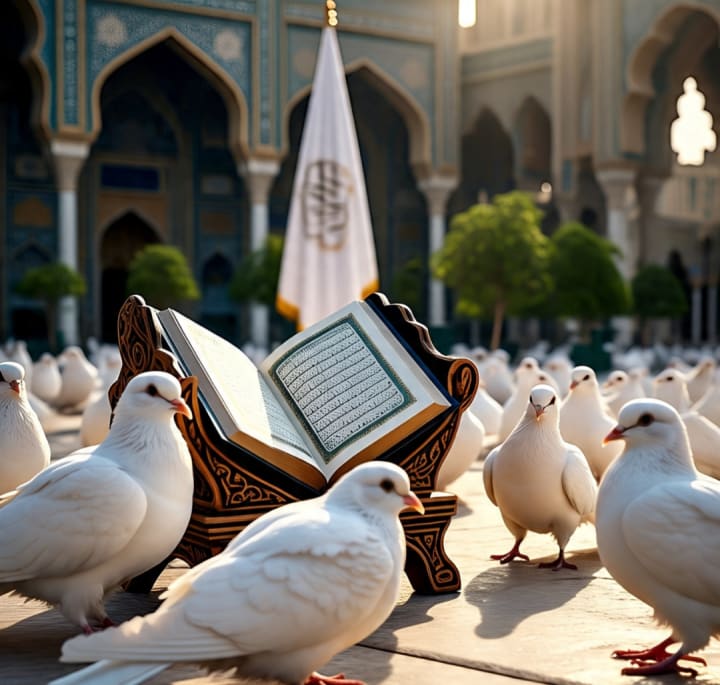
In the heart of a bustling European city, nestled between a café and a bookstore, lived a middle-aged woman named Margaret. A retired schoolteacher and widow of five years, she lived alone but never felt lonely. Her days were simple—morning tea, crossword puzzles, tending her tiny balcony garden, and volunteering at the local community center.
Margaret had grown up with certain beliefs. Not hateful, but shaped by media, politics, and fear. The word “Islam” made her uneasy. She never knew any Muslims personally, yet she thought she understood them—strict, different, maybe even dangerous. But she never admitted it out loud. It was just something she “felt.”
That all changed one cold December morning.
Margaret was carrying groceries home when she slipped on black ice and fell hard. Her bag tore open, apples and cans rolling into the street. Struggling to get up, pain shot through her knee. Passersby walked around her—some glanced, none stopped.
Except one.
A young man in a beanie and long dark coat rushed over. “Are you okay, madam?” he asked, his accent warm and polite.
She winced. “I think I’ve twisted something.”
Without hesitation, he helped her to her feet, gathered her groceries, and offered to walk her home. She hesitated. He looked… Muslim. His beard, his kindness, the subtle “Assalamu Alaikum” he whispered under his breath. Still, the pain outweighed the fear.
His name was Ameen. He lived three streets down with his mother and worked part-time at a local pharmacy. Over the next few days, Ameen checked in on her, brought her food, and even helped tidy her small apartment while she recovered. He never expected anything in return. Margaret, guarded at first, began to soften.
One afternoon, over tea, she finally asked, “May I ask… what made you stop and help me that day?”
Ameen smiled. “My Prophet Muhammad (peace be upon him) taught us that kindness is part of faith. He said, ‘He is not a believer whose neighbor sleeps hungry while he is full.’ Islam teaches peace, compassion, and service. It was simply my duty.”
Margaret was stunned. That wasn’t what she’d heard on the news or read online.
Curious, she began to ask more questions. About hijab, prayer, fasting, charity. Ameen never preached—he simply answered, always calm, always respectful. He even brought her an English translation of the Quran and highlighted verses about mercy, justice, and love.
One verse stayed with her:
“Whoever kills a soul…it is as if he had slain mankind entirely. And whoever saves one—it is as if he had saved mankind entirely.” (Quran 5:32)
It shook her. This was not the Islam she thought she knew.
One day, Ameen invited her to visit the mosque during an open house event. She was hesitant, nervous, unsure of how she’d be received. But the moment she walked in, she was welcomed with smiles, tea, and warmth. Women offered scarves, children handed her sweets, and the imam personally thanked her for coming.
She watched Muslims pray, bowing in humility, whispering words of peace. Not violence. Not hate. Peace.
That night, Margaret wept quietly.
She thought of the years she’d avoided her Muslim neighbors. The times she’d crossed the street or switched the channel when a Muslim appeared on screen. She realized how much she had missed. Not just about Islam—but about humanity.
From that point on, her heart was open.
She started volunteering with refugee families, many of whom were Muslim. She helped them learn English, adjust to life in a new country, and navigate the same streets she once feared them walking on. In return, they welcomed her into their homes, their celebrations, their hearts.
Margaret experienced Ramadan for the first time—not fasting, but joining the iftar meals. She saw joy, laughter, humility. She saw unity. She saw peace.
One evening, she stood before a group of young volunteers and said:
“I once believed Islam was something to be afraid of. I was wrong. It was fear that blinded me. Islam, in its true form, is the most peaceful faith I’ve ever encountered. It taught me that peace begins not with politics, but with people.”
Moral of the Story
"True peace doesn’t lie in what we hear—it lies in what we choose to understand."
Margaret’s journey teaches us that ignorance breeds fear, but compassion opens doors. Islam, like many faiths, is often misunderstood not because of what it teaches, but because of what the world projects onto it. When seen through the lens of real lives—like Ameen’s, like Margaret’s—the truth becomes clear:
Islam is not a religion of violence.
Islam is the religion of peace.
About the Creator
Salman khan
Hello This is Salman Khan * " Writer of Words That Matter"
Bringing stories to life—one emotion, one idea, one truth at a time. Whether it's fiction, personal journeys.
Keep reading
More stories from Salman khan and writers in Humans and other communities.
DEAR MOM, YOU WILL BE OKAY – I PROMISE YOU THAT
I was 14 when I first saw my mother cry in a way that shattered me. Not the quiet tears she tried to hide in the kitchen while washing dishes. Not the brave silence she held when Dad left. No—this time, she was broken. Curled on the edge of our old brown couch, gripping her chest like she was trying to keep her heart from falling apart.
By Salman khan9 months ago in Humans
Thief In The Night
To the thief in the night that took and replicated what once was mine: Honestly, I feel kind of bad for you. It’s funny, because we hardly know each other. I only know of you through the magazines you’ve written and the broadcasts you have televised in the past — as well as through the public mentions of you from your show business connections there.
By Snarky Lisa6 days ago in Humans
Understanding Soul Contracts and the Difference Between Twin Flames and Karmic Soulmates
Understanding Soul Contracts and the Difference Between Twin Flames and Karmic Soulmates When people first learn about soul contracts or the idea of a soul curriculum, they often make the same mistake: they start interpreting every relationship through the lens of their own personality and their own ego. They assume every person was “brought into their life” to teach them something, as if the contract is one‑sided. But a soul contract is never one‑directional. If someone is part of your curriculum, you are part of theirs. You are learning from them just as much as they are learning from you. This mutuality is the foundation of the curriculum I describe in The Soul’s Curriculum — every soul is both student and teacher, and every interaction is an exchange.
By Julie O'Hara - Author, Poet and Spiritual Warrior7 days ago in Humans




Comments
There are no comments for this story
Be the first to respond and start the conversation.