
Is Dust Making Your Site a Nightmare? Here’s the One Tool You’re Not Using Enough
No more coughing, no more chaos—just clarity, control, and clean air.
The Dust Dilemma No One Talks About
If you’ve ever worked on a construction site, managed a mining operation, or simply tried to keep a dusty industrial yard under control, you know one thing: dust is more than a nuisance—it’s a serious problem.
It chokes the air.
It blinds visibility.
It damages machinery.
And worst of all? It quietly puts your team’s health at risk.
Watering it down manually or waiting for a windy day to do the job is like trying to sweep a beach with a toothbrush. You need something smarter, faster, and more efficient.
Enter: The Dust Suppression Sprayer.
Not just a tool—this is your site’s respiratory system.
My Wake-Up Call with Dust (A Quick Story)
Two years ago, I visited a mid-size quarry operation on the outskirts of town. It was peak summer, 38°C in the shade, and the entire place was wrapped in a fog of fine dust. The kind that gets into your nose, eyes, throat—your soul.
I watched a machine operator step down from his digger, coughing like he’d smoked a pack. “This dust’s killing me, mate,” he said half-joking, half-wheezing.
That was the moment it clicked. Why are we okay with working in clouds of dirt every day? Why are we pretending it’s just part of the job?
That quarry now uses dust suppression sprayers.
So What Is a Dust Suppression Sprayer, Really?
Think of it as the industrial equivalent of a weather system you control.
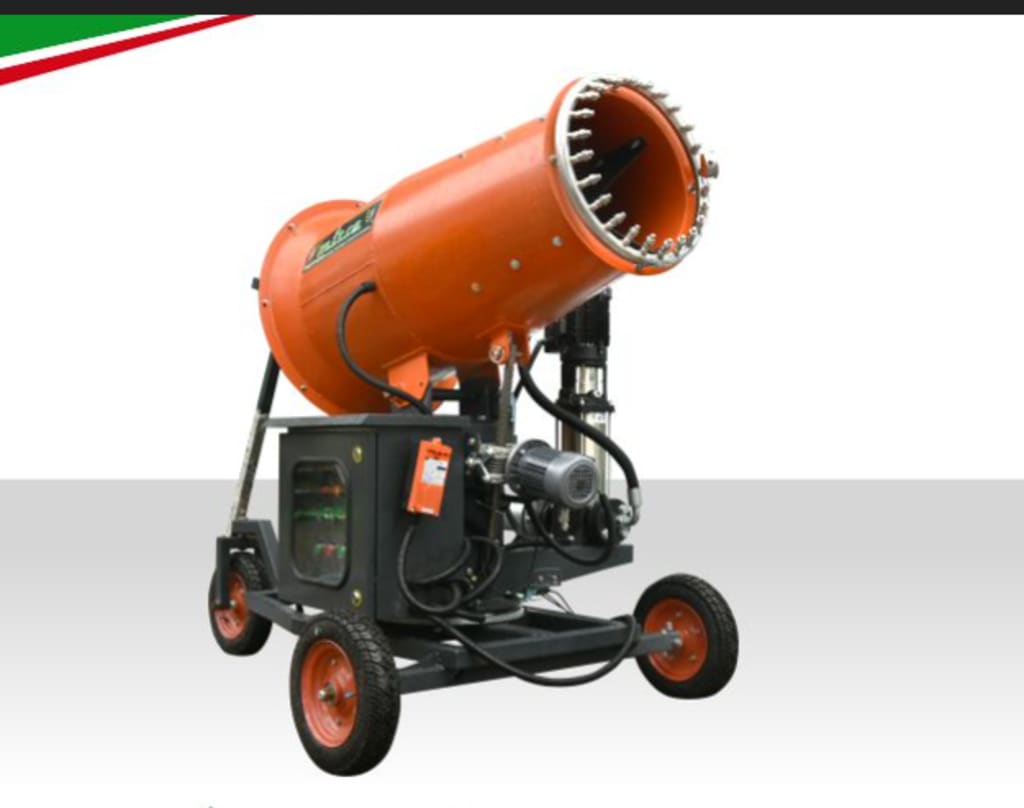
At its core, a dust suppression sprayer atomizes water into fine mist or droplets and disperses it over work areas, construction roads, demolition zones, and stockpiles. These microscopic droplets collide with airborne dust particles, weigh them down, and force them to settle.
It’s not about flooding—it’s about precision.
No slippery puddles.
No waste of water.
Just controlled coverage where you need it most.
Why Traditional Methods Just Don’t Cut It
Spraying hoses? Labor-intensive and wildly inefficient.
Water trucks? Better—but expensive, fuel-guzzling, and often poorly targeted.
Letting dust “settle on its own”? That's not a strategy. That’s negligence.
Dust suppression sprayers are engineered to:
Run automatically or remotely.
Reduce PM10 and PM2.5 particles (dangerous sizes for lungs).
Work indoors and outdoors.
Save thousands of liters of water through efficient misting.
It’s not about doing “more” work—it’s about working smarter.
Real Problems. Real Solutions.
Let’s break this down like a problem-solving checklist:
🛑 Problem 1: Reduced Visibility on Site
Solution: A misting sprayer clears the air—literally—making paths, machinery, and workers visible. Fewer accidents. Less downtime.
🛑 Problem 2: Worker Health Complaints
Solution: Dust particles, especially crystalline silica, can cause serious lung conditions. A suppression sprayer keeps air breathable and compliant with occupational health standards.
🛑 Problem 3: Machinery Wear and Tear
Solution: Dust gets into filters, joints, and engines. Reducing airborne particles extends the life of every tool and truck.
🛑 Problem 4: Regulatory Compliance
Solution: Government bodies are cracking down on particulate emissions. Sprayers help you meet standards without fines or shutdowns.
Types of Dust Suppression Sprayers (and Picking the Right One)
Portable Units – Great for small sites or temporary needs.
Fixed Cannons – Installed permanently, ideal for continuous operations.
Trailer-Mounted or Tow-Behind Sprayers – Flexible for large, shifting work zones.
Overhead Misting Systems – For warehouses or indoor processing facilities.
Pro tip: Choose based on dust density, area size, and frequency of operations. And always check nozzle design—some offer finer mists that are perfect for delicate environments like recycling centers or demolition sites.
What Nobody Tells You (But You Should Know)
🛠 It’s not plug-and-play. You’ll need to calibrate pressure, nozzle size, and flow rate based on dust type.
💧 Water quality matters. Hard water clogs nozzles. Use filtered or softened water if needed.
⚙️ Maintenance is key. A clogged sprayer is a useless sprayer. Routine cleaning ensures efficiency.
🚫 Don’t over-wet. Too much water can damage surfaces or create hazards. The goal is damp, not drenched.
The ROI You Can Actually See (and Breathe)
Still thinking it’s just another fancy machine?
Think again. Dust suppression sprayers pay for themselves by:
Reducing worker sick days.
Minimizing regulatory penalties.
Extending equipment life.
Enhancing site safety, which boosts morale and productivity.
It’s the kind of investment that doesn’t just tick boxes—it transforms your workflow.
One Final Thought
If your site still relies on “just water trucks” or worse, nothing at all, here’s the honest truth:
You’re not saving money—you’re spending it invisibly on damaged lungs, worn-out machines, and preventable problems.
Dust isn’t just dust. It’s risk.
And a dust suppression sprayer? That’s your control switch.
About the Creator
mitra Agro21
M.I.T.R.A develops spraying machines for farmers who are growing horticulture crops such as Grapes, Pomegranate, Orange, Mango and Ground Crops etc.
https://mitraweb.in/
Keep reading
More stories from mitra Agro21 and writers in Humans and other communities.
The Advantages of Using a Tractor Mounted Sprayer
When it comes to modern farming, efficiency and effectiveness are key to ensuring a successful harvest. One of the most important tools for achieving these goals is the tractor mounted sprayer. This equipment helps farmers apply pesticides, fertilizers, and herbicides across large fields with minimal effort, making farming more efficient. In this post, we’ll explore the benefits of using a sprayer for tractor, how it works, and how it can transform your farming practices.
By mitra Agro2112 months ago in Humans
The CEO of Everything
They say "jack of all trades, master of none," but they forgot to mention the part where the jack of all trades is also the camera woman, the makeup artist, and the person currently yelling at a tangled Wii microphone cable in a her own bathroom while recording herself singing and trying to make it look realistic and professional. (As professional as you can make it with nothing but a cell phone camera and a mic that doesn't work)
By Sara Wilson4 days ago in Humans
Rachel Reviews: The Spiral Archive by Pieter Hendrik
It's difficult for me to know where to start with a review of this book as it was, for me, an entirely unique experience and one that I'll probably never have again. I don't want that to be interpreted as unenjoyable but it has left me scratching my head a little and ruminating on its content, its themes and its characters.
By Rachel Deeming3 days ago in BookClub


Comments
There are no comments for this story
Be the first to respond and start the conversation.