
Is Being Right Really Worth Losing Them?
How constant correcting slowly kills relationships long before the breakup ever happens

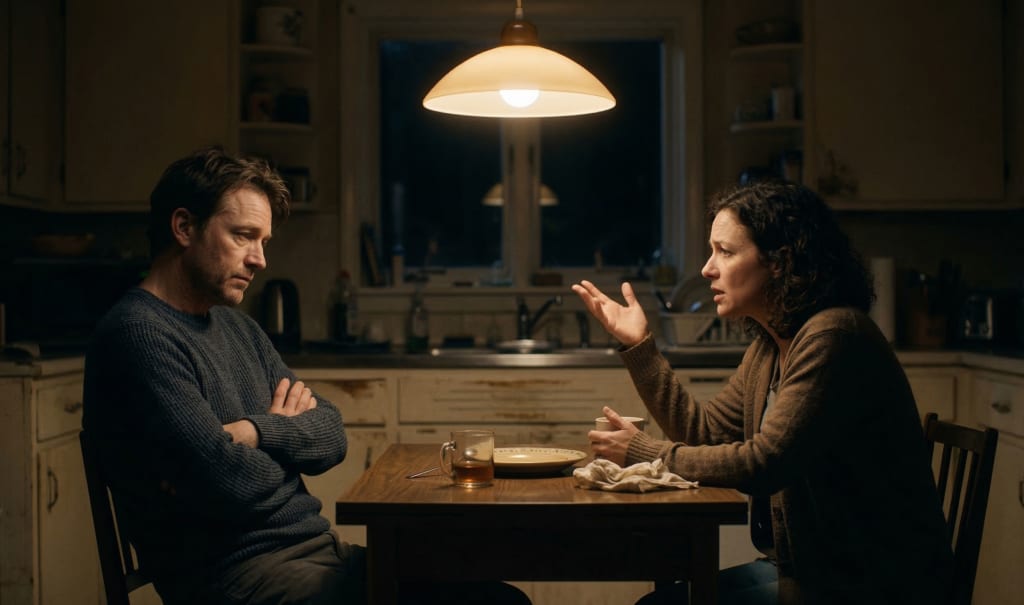
Being right feels good in the moment, but that short hit of ego can quietly cost you the person you love.
That’s the sentence I wish someone had said to me ten years ago, preferably very loudly, while shaking my shoulders.
Is Being Right Really Worth Losing Them In The Long Run?
The first fight I remember losing someone in didn’t sound like a big fight.
We were sitting in her tiny kitchen, cheap pendant light buzzing, arguing about a detail in a story she was telling. Not the point of the story. Not the meaning. Just the date.
“It was 2016,” she said.
“No, it was 2017,” I corrected, without even looking up from my phone. “You’d just moved. It couldn’t have been 2016.”
She paused. That half-second pause where you can feel the temperature in the room shift.
“Okay,” she said. “Maybe.”
I felt that familiar satisfaction wash over me. I’d remembered correctly. I’d won. If you’d paused the scene right there and asked me what happened, I would’ve said, “We had a small disagreement about a date. No big deal.”
But it was a big deal, and not for the reason I thought.
She wasn’t actually arguing about the year. She was telling me about a time she’d felt completely alone, and I turned it into a trivia contest that no one asked for.
That was the first moment she started editing herself around me.
She didn’t sit down and announce it. She just told fewer stories. She gave fewer details. She left out the parts she thought I’d “fix” so she didn’t have to deal with being interrupted or corrected.
The relationship didn’t end that night.
It died in tiny, quiet ways over the next year, each time I chose being right over being kind, curious, or simply present.
I’ve seen this pattern in romantic relationships, friendships, even at work. People don’t leave because you were wrong about a date. They leave because they feel small, dismissed, and tired of defending themselves against someone who’s supposed to be on their side.
That’s what constant correcting does: it doesn’t explode a relationship, it erodes it.
Why Being Right Feels So Good (And So Necessary)
I’ll be honest: I love being right.
I love remembering obscure facts, catching inconsistencies, spotting tiny errors other people miss. It makes me feel sharp. Useful. Like my brain has value.
For years, I thought that meant I should correct everything.
If my partner misquoted a movie, I’d jump in.
If a friend said “we met in March” and it was actually February, I’d “clarify.”
If my sibling texted “your” instead of “you’re,” I’d send back “*you’re” like it was some kind of public service.
And I told myself a nice-sounding story about it:
“I’m just precise.”
“I care about accuracy.”
“I just want things to be clear.”
Which was partially true. But only partially.
Underneath it, there was something uglier:
I didn’t want to feel stupid.
I didn’t want to be overlooked.
I didn’t want someone else to be “more right” than me.
Being right turned into a kind of protection. If I could prove I was correct, then I was safe. Smart. Valid.
The problem is, relationships don’t run on correctness. They run on connection, and constant correcting feels (to the other person) a lot like dominance. Or judgment. Or both.
You think you’re saying, “The capital of Australia is Canberra.”
They hear, “You’re wrong again.”
They don’t just walk away thinking, “Oh, I learned something new.”
They walk away thinking, “I can’t relax around you. I have to double-check myself.”
And it’s hard to feel close to someone you’re always bracing for.
The Slow Damage Constant Correcting Does (That You Don’t See Right Away)
The scariest thing about this habit isn’t the obvious blow-up fights. Those you can at least see.
What got me were the small, almost invisible shifts:
They start telling shorter stories.
They leave out details you’d “fix.”
They preface things with “I might be wrong, but…” more than they used to.
They laugh off their own memories like they’re unreliable.
They stop trying to share certain parts of themselves with you.
I had someone I loved once say to me, “You don’t listen, you proofread.”
I laughed when she said it. I actually thought it was kind of clever.
Only later, replaying that conversation, did it hit me like a punch. She wasn’t joking. She was telling me exactly why she felt lonely with me even when we were sitting right next to each other.
Here’s what constant correcting quietly tells people:
“I’m more focused on the detail than the emotion.”
You’re talking about the date, but they were trying to talk about the heartbreak, the fear, the joy.
“I need you to be precise, not honest.”
People remember events emotionally, not chronologically. Correcting their memory can feel like calling their experience into question.
“I’m not fully with you, I’m above you.”
Even if you don’t mean it that way, repeated corrections shove you into a teacher role and them into a student role. Most partners don’t want to date their editor.
Nobody says, “I broke up with them because they corrected my grammar.”
They say, “I felt criticized all the time.”
Or, “I didn’t feel heard.”
Or my personal least favorite: “It just stopped feeling safe to be myself.”
That’s what being “right” was costing me. It took me way too long to see it.
Why Do We Constantly Correct The People We Love?
This question haunted me for months: if it hurts people, why do we still do it?
I had to be uncomfortably honest with myself. I came up with a few reasons that might sting a little:
Control.
The world feels messy. Facts feel clean. If I can keep the facts straight, maybe everything else will stay in place too. (Spoiler: it won’t.)
Anxiety.
Some of us correct to reduce the tiny discomfort that comes from hearing something “off.” It’s like an itch we have to scratch, even if scratching makes the skin bleed.
Identity.
If your thing has always been “the smart one,” correcting people becomes how you prove you still deserve that label.
Fear of being invisible.
Jumping in with corrections makes you feel like you’re adding value to the conversation, even if you’re actually draining it.
And then there’s one more reason people don’t talk about much:
Sometimes, we’re more comfortable being “the correct one” than being “the vulnerable one.”
If we stay in fact-check mode, we don’t have to say, “That story makes me feel scared,” or, “I’m jealous,” or, “I still haven’t forgiven you for that thing three years ago.”
We can hide behind accuracy.
I’d love to say I’ve fixed this in myself completely. I haven’t. I still catch my mouth automatically forming the words, “Actually, it was…”
But now, there’s a pause.
How Do You Stop Constantly Correcting Someone You Care About?
People actually Google this, which tells me I’m not the only one who’s watched myself nitpick someone I love and thought, “Why am I like this?”
Here’s what started to help me in real, practical ways — not theory, actual daily habits:
Ask yourself, “Does this correction protect them or my ego?”
If it protects their safety, health, or serious decisions (like money, medical issues, work commitments), speak up.
If it just protects your pride or your need to be seen as smart? Let it go. Seriously. Let it burn.
Count to three in your head before you correct.
This sounds ridiculous, but it changed things for me.
1: Notice the urge.
2: Ask “Is this worth interrupting their flow?”
3: Decide if you want to be right or close in this moment.
Ask a clarifying question instead of dropping a correction bomb.
Instead of, “No, it was 2017,” try, “Wait, I thought that was after you moved—is my memory off?”
Same information, totally different energy.
Pick your ‘no-correction zones.’
I gave myself some rules:
No corrections during vulnerable conversations.
No corrections while they’re telling a story in front of other people.
No grammar corrections over text. (Still working on this one. My fingers itch.)
If you absolutely have to correct, cushion it in care.
“I might be misremembering, but I thought you said…”
“I wanna make sure we’re on the same page—was it this or that?”
You’re not pretending to be unsure if you’re dead certain; you’re just not weaponizing certainty.
And one more thing I didn’t expect to matter so much:
6. Admit when you’re wrong. Immediately. Out loud. Clearly.
Don’t mumble it. Don’t slide past it.
Say, “Wow, I was wrong. You were right. Thanks for catching that.”
That sentence alone, consistently spoken, can start to repair years of being the correction police.
The Surprising Truth About Being Right In Relationships
Here’s the part that really messed with me: being right doesn’t actually do what I thought it did.
I thought being right would:
Make people respect me.
Make me feel confident.
Make arguments shorter.
Make relationships smoother.
What actually happened was almost the opposite.
The more I insisted on being right:
The less people wanted to open up to me.
The more defensive I felt all the time.
The longer fights dragged on, because suddenly we weren’t arguing about the original issue, we were arguing about who remembered it “correctly.”
The more exhausted both sides felt, even after “resolving” things.
Being right is like eating a spoonful of salt.
A tiny bit in the right context? Useful.
Dumped into everything indiscriminately? You ruin the whole meal.
The surprising analogy that hit me one day was this:
Constant correcting is like fact-checking someone’s love letter while they’re reading it to you.
You might improve the grammar.
You definitely kill the moment.
We think we’re protecting reality. Half the time, we’re just wrecking intimacy.
What Do You Lose When You Always Have To Be Right?
This is the question I wish more search engines would autofill.
Because it’s not just “you might lose the argument.”
You might lose:
The way they light up when they tell you a story.
The unfiltered version of their thoughts.
The casual, messy, honest side of them that doesn’t overthink every word.
The trust that you’re on their team, not grading them.
And if you go far enough down that road, you might lose them.
Not overnight. Not dramatically. Just gradually, in the way someone who’s always walking on eggshells around you eventually walks away instead.
I lost people I loved because I thought being correct was the same as being caring. It isn’t.
Being caring sometimes looks like letting a harmless detail be wrong so the deeper truth can be heard.
The Small Shift That Actually Saved My Relationships
So here’s what I’m trying to practice now, imperfectly, on good days and bad ones:
I ask myself, “What’s more important right now: the fact or the feeling?”
If we’re booking plane tickets, sure, the fact matters.
If they’re telling me about the worst day of their year, the feeling does.
Sometimes it’s mixed. Those are the hard ones. That’s where I still stumble.
But I’ve noticed something almost immediate when I choose the feeling:
Conversations go deeper.
People relax around me.
I don’t feel like I’m constantly on trial either, because I’m not living in a courtroom in my own head.
I’m not saying you should never correct anyone. I’d be a hypocrite. Also, there are moments where being accurate really does matter.
I’m saying: put your corrections on a diet.
Most relationships don’t need you to be a live fact-checker. They need you to be a soft place to land. Someone who can let a small wrong detail float past because the bigger truth is right there, unfolding in front of you, if you stop trying to win and just listen.
So the next time you feel that surge—“Actually, it was 2017”—try this instead:
Take a breath.
Look at their face, not the mistake.
Ask yourself, “Is being right really worth losing a tiny piece of them right now?”
Because that’s what’s on the line. Not the date. Not the movie quote. Them.
And once you notice what it’s really costing you, being “right” suddenly doesn’t feel so satisfying anymore.
About the Creator
abualyaanart
I write thoughtful, experience-driven stories about technology, digital life, and how modern tools quietly shape the way we think, work, and live.
I believe good technology should support life
Abualyaanart
Keep reading
More stories from abualyaanart and writers in Humans and other communities.
Instant Soul Recognition: The Subtle Cues That Signal a Lifelong Connection.
In a world filled with fleeting encounters and surface-level interactions, meeting someone who feels instantly familiar can be a rare and profound experience. This phenomenon—often called recognizing a kindred spirit—goes beyond mere chemistry or shared interests. A kindred spirit is someone whose energy, values, outlook, and inner rhythm align so seamlessly with yours that it feels like your soul has encountered an old friend, even if you've just exchanged names.
By Wilson Igbasi5 days ago in Humans
TUS NUA - ch 53
TUS NUA – ch 53 New Beginnings – Mia and Midnight (*)(*)(*) Finola knew Ali’s brother-in-law needed to put his mind at rest. She fed her arm through his and led him outside. “We’ll sit here. If you like, I can put a block around us so our conversation will be private.”
By Margaret Brennan5 days ago in Fiction



Comments
There are no comments for this story
Be the first to respond and start the conversation.