
Indian Air Strikes: How Will Pakistan Respond? Four Crucial Inquiries
Pakistan's Response to Indian Airstrikes Four Essential Question

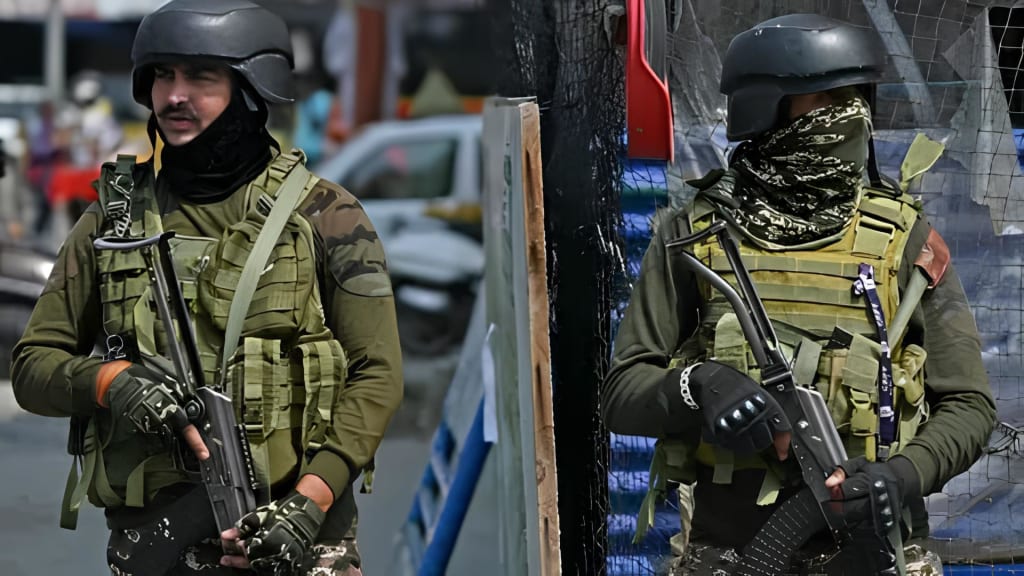
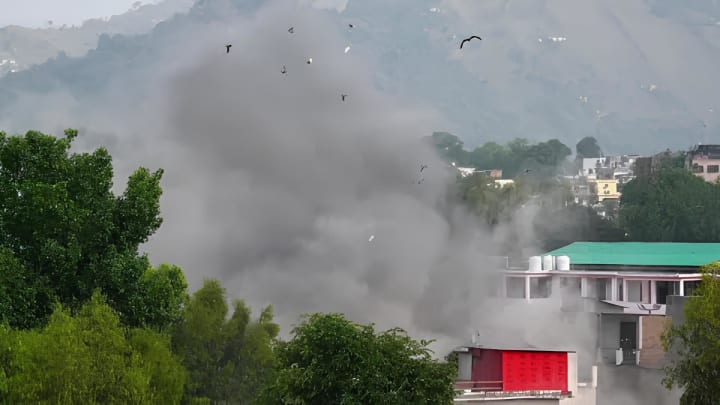
India and Pakistan, two nuclear-armed neighbors, have shared a turbulent and often hostile relationship since their partition in 1947. While diplomatic dialogues have occasionally created brief windows of peace, the relationship is predominantly defined by territorial disputes, cross-border terrorism, and mutual suspicion. One of the most volatile flashpoints in this relationship is the issue of Kashmir, which has led to multiple wars and countless skirmishes. In this tense environment, the occurrence of Indian air strikes inside Pakistani territory is an issue of grave concern, capable of triggering a wider regional conflict.
This article explores how Pakistan might respond to Indian air strikes, analyzing four critical inquiries that define the range of Pakistan's potential reactions. The goal is to offer a comprehensive analysis rooted in history, strategy, political science, and international diplomacy.
---
## Inquiry 1: Will Pakistan Respond Militarily or Diplomatically?
### Historical Background
When considering Pakistan's response to Indian air strikes, it's essential to look at historical precedents. In February 2019, after a suicide bombing in Pulwama killed 40 Indian paramilitary personnel, India conducted an air strike in Balakot, Pakistan. Pakistan responded with a retaliatory airstrike and captured an Indian pilot, later releasing him as a gesture of peace.
### Military Response: Advantages and Risks
**Advantages**:
* Demonstrates strength and deters future attacks.
* Satisfies domestic political and public pressure.
* Maintains military morale and strategic credibility.
**Risks**:
* Escalation into a full-scale war.
* Economic destabilization.
* Loss of international support, especially from Western powers advocating restraint.
### Diplomatic Response: A Calculated Alternative
Pakistan may also choose diplomacy over military retaliation, particularly if international pressure or internal constraints limit the military option. This could involve:
* Engaging the United Nations and presenting evidence of Indian aggression.
* Calling on allies like China, Saudi Arabia, and Turkey for support.
* Mobilizing international media and diplomatic corps to frame India as the aggressor.
### Strategic Factors Influencing the Choice
* **Severity and location of the air strike**.
* **Civilian vs. military casualties**.
* **Timing and political climate**.
* **International support or condemnation**.
---
## Inquiry 2: How Strong Is the Internal Political and Public Pressure?
### Role of Political Leadership
Pakistan's leadership, particularly the Prime Minister and the military high command, must weigh public sentiment and political calculus. Any perception of weakness can be politically damaging. Civilian governments in Pakistan often act in coordination with the military, which exerts considerable influence over foreign and security policies.
### Media and Public Sentiment
Pakistani media often plays a pivotal role in shaping public opinion. In the event of an Indian air strike, media outlets typically amplify nationalist rhetoric, showing images of destruction, victims, and perceived Indian aggression.
### Civil Society and Nationalism
Civil society organizations, political parties, and religious groups can also influence the response. In times of crisis, nationalism surges, and even opposition parties tend to rally around the government.
### Domestic Constraints
Despite public pressure, Pakistan’s economy, political instability, and ongoing internal conflicts (such as insurgencies in Balochistan and TTP attacks) may constrain its ability to engage in full-scale military retaliation.
---
## Inquiry 3: What Role Will International Actors Play?
### United States
The United States has historically acted as a mediator between India and Pakistan. Although it has tilted more towards India in recent years due to strategic interests, especially concerning China, Washington still values stability in South Asia.
### China
China is Pakistan’s closest strategic ally, but it typically advocates for restraint. Beijing has economic and geopolitical interests in South Asia, particularly with its Belt and Road Initiative passing through Pakistan. Any escalation could threaten those interests.
### Saudi Arabia and the Gulf States
These nations maintain economic and religious ties with Pakistan. They often advocate for peace and provide financial aid, which gives them leverage. However, they are unlikely to support direct military aggression.
### Russia and European Union
Russia has strengthened its ties with both India and Pakistan in recent years. It tends to take a neutral stance and pushes for peaceful resolutions. The EU consistently advocates for diplomacy and humanitarian considerations.
### International Organizations
The United Nations, Organization of Islamic Cooperation (OIC), and Non-Aligned Movement (NAM) play key roles in framing the conflict internationally. Their reactions influence how the global community views any response by Pakistan.
### Impact of International Mediation
* May delay or avert military retaliation.
* Provides a platform for Pakistan to present its case.
* Helps in securing economic and strategic support.
---
## Inquiry 4: Could Pakistan Escalate via Proxy or Hybrid Warfare?
### Use of Non-State Actors
Historically, Pakistan has been accused of supporting non-state actors operating in Kashmir and other regions. In a post-strike scenario, this could be a means of indirect retaliation.
### Cyber Warfare
Cyber attacks on Indian infrastructure, government websites, and financial institutions could serve as a form of hybrid retaliation. Pakistan’s cyber capabilities are evolving, and such attacks offer deniability.
### Disinformation and Psychological Operations
Manipulating public sentiment through social media, fake news, and psychological operations can destabilize public trust and create panic. These tactics are increasingly used in modern warfare.
### Economic Leverage and Disruption
While limited, Pakistan can attempt to disrupt trade routes, especially those connecting India with Afghanistan or Central Asia. It may also target economic investments in disputed areas.
### Intelligence and Surveillance Operations
Pakistan may escalate its intelligence operations within India to gather information or conduct covert actions. This could include tracking military movements or supporting internal dissent.
---
## Broader Implications of Pakistan’s Response
### Risk of Nuclear Escalation
Given that both nations possess nuclear weapons, any form of escalation carries the existential risk of a nuclear confrontation. Even the threat of nuclear deployment acts as a significant deterrent.
### Regional Stability
An Indo-Pakistani conflict affects the entire region, including Afghanistan, Iran, and China. It can disrupt trade, create refugee crises, and embolden extremist groups.
### Economic Fallout
Both nations suffer economically from conflict. Pakistan, already facing IMF conditions and inflation, may experience capital flight, currency devaluation, and trade restrictions.
### Humanitarian Consequences
Civilian casualties, displacement, and human rights violations often accompany military responses. These consequences can spark international condemnation and long-term trauma.
### Long-Term Strategic Shifts
Repeated air strikes and escalations may force Pakistan to:
* Increase defense spending.
* Shift alliances.
* Accelerate nuclear modernization.
* Harden internal security and surveillance.
---
## Conclusion
Pakistan’s response to Indian air strikes is influenced by a complex interplay of domestic, military, diplomatic, and geopolitical factors. The four inquiries—military vs. diplomatic response, internal political pressure, role of international actors, and the possibility of proxy or hybrid warfare—offer a structured framework to analyze potential scenarios.
In a region as sensitive as South Asia, the stakes of miscalculation are high. While nationalism and political calculations may drive immediate reactions, the long-term costs of escalation—both human and strategic—urge caution. Diplomacy, restraint, and international mediation remain the most viable paths to preventing catastrophic outcomes.
In the final analysis, Pakistan must balance national pride with pragmatic foresight. The eyes of the world remain fixed on the subcontinent, and each decision made in Islamabad will shape not only the future of Indo-Pak relations but also the fate of regional and global peace.
About the Creator
Keep reading
More stories from Keyas Khan and writers in Humans and other communities.
When Love Fades: A Story of Letting Go,
Love—so often celebrated as the most powerful and transformative force in our lives—is also one of the most fragile. It starts with fire, burns bright, and in many cases, slowly cools into embers. There are times when the fire is rekindled, and there are times when it dies quietly and unnoticed, leaving us to wonder how something that was once so vibrant became so distant. This is the story of how love faded between two people who once thought they were inseparable. It is a story of loss, of realization, of pain—but also of healing, growth, and acceptance. For in letting go, we sometimes find ourselves. Chapter 1: The Beginning – A Love That Felt Endless We met in a time when everything felt infinite. The nights were warm, filled with laughter, long conversations, and eyes that never stopped searching one another. We were inseparable—not because we had to be, but because we wanted to be. Every day was a discovery. Every flaw was adorable. Every silence was comforting. We built dreams together. From small ones like where we’d travel next, to bigger ones like a shared future. “Forever” was a word we said often and believed deeply. But no one warns you that forever is fragile, and sometimes, love isn’t enough to hold it all together. Chapter 2: The Shift – When the Small Things Became Big Love rarely ends with a bang. It fades, slowly. It drifts away like mist in the morning sun. We didn’t notice at first. Life got busy. The number of responsibilities grew. The calls became shorter. The dates became rare. And the silences? They turned uncomfortable. What used to be sweet quirks began to annoy. Conversations turned into arguments, and arguments turned into cold wars. We still said “I love you,” but now it sounded like a habit, not a feeling. We both changed—but not together. And that was the beginning of the end. Chapter 3: Denial – Holding On to Shadows Even as we felt the distance grow, we refused to let go. We kept trying to fix what we couldn’t understand. We thought if we just tried harder, gave more, compromised more—we could find our way back. But love, once it begins to fade, doesn't always respond to force. Sometimes, the harder you try, the more obvious it becomes that you're chasing a version of the past that no longer exists. And so, we clung to the memory of what we used to be. We stayed longer than we should have. We told ourselves it was just a phase. But deep down, we both knew—we were holding on to a ghost. Chapter 4: The Realization – The Moment You Know There is always a moment. A moment when one of you looks at the other and realizes: "I don’t know this person anymore." Not in anger, not in hate—but in sadness. It’s like looking into the eyes of someone who once held your whole world and realizing they’re a stranger now. That moment came quietly. We were sitting in silence, not because we were comfortable, but because there was nothing left to say. The connection, once so electric, had gone flat. Despite the fact that we were both in it, the space felt empty. And then came the words—soft, trembling, but honest: “I think we both know this isn’t working anymore.” Chapter 5: The Separation – Letting Go with Grace Breakups don’t always have to be ugly. Ours wasn’t. There were tears, yes. There were long hugs and whispered apologies. But there was no blame, no shouting. Just two people choosing to stop hurting each other. We divided our things. We deleted old pictures—some we kept, because memories don’t always deserve to be erased. We walked away, not as enemies, but as people who once loved deeply and chose to respect that love, even in goodbye. Letting go wasn’t a one-time act. It was a process. It was waking up and not reaching for the phone. It was seeing their name and not calling. It was learning to breathe without their presence. Chapter 6: The Pain – Healing Isn’t Linear Healing doesn’t follow a straight line. Some days, I was fine. I laughed, I worked, I felt free. Other days, the grief hit me like a wave. A song, a scent, a memory—anything could bring it all back. People told me time would heal everything. But time doesn’t heal—it simply gives space. What really heals is acceptance. Accepting that the love was real. That the end was necessary. And that moving forward isn’t betrayal—it’s survival. I let myself feel everything: the guilt, the regret, the sadness. Because numbness isn’t healing. Only when I stopped avoiding the pain did I begin to let it go. Chapter 7: The Growth: Regaining Your Wholeness In the absence of them, I found myself. I rediscovered passions I’d forgotten. I traveled alone, learned new things, met new people. I realized that my identity wasn’t defined by a relationship, and my happiness didn’t depend on another person’s presence. I forgave myself. I was kind to them. Not because it was easy, but because it was necessary. Carrying bitterness only poisons the future. I learned that love isn’t always meant to last forever. Some people come into your life to teach you lessons, to help you grow, to show you what you need—and then they leave. And that’s okay. Conclusion – When Love Fades, You Don’t Have To Love fading doesn’t mean failure. Sometimes, it’s the bravest thing you can do—to let go of something that once made you happy because it no longer does. It is not weakness to let go. It’s an act of strength. It's choosing peace over pretending. It’s saying: “I deserve more than almost.” And when you walk away from a love that no longer serves you, you open the door to something new. Maybe not right away. But someday. Because when love fades, it doesn’t mean your story ends. It just means a new chapter begins
By Keyas Khan8 months ago in Humans
Breaking the Cycle: A Reflection on Family, Abuse, and Choosing Peace
There comes a moment in every life when silence becomes too heavy to carry. Not because we owe anyone an explanation, but because speaking the truth—gently, clearly, and without bitterness—can be a way of reclaiming our own story. My story spans generations. It begins with my father, and it continues with my eldest daughter, with whom I eventually made the painful decision to go no contact. These choices were not made in anger. They were made in clarity. They were made in self‑preservation. And they were made with the hope that the cycle of harm might finally end with me.
By Julie O'Hara - Author, Poet and Spiritual Warrior7 days ago in Humans




Comments (1)
Nice 🙂👍