
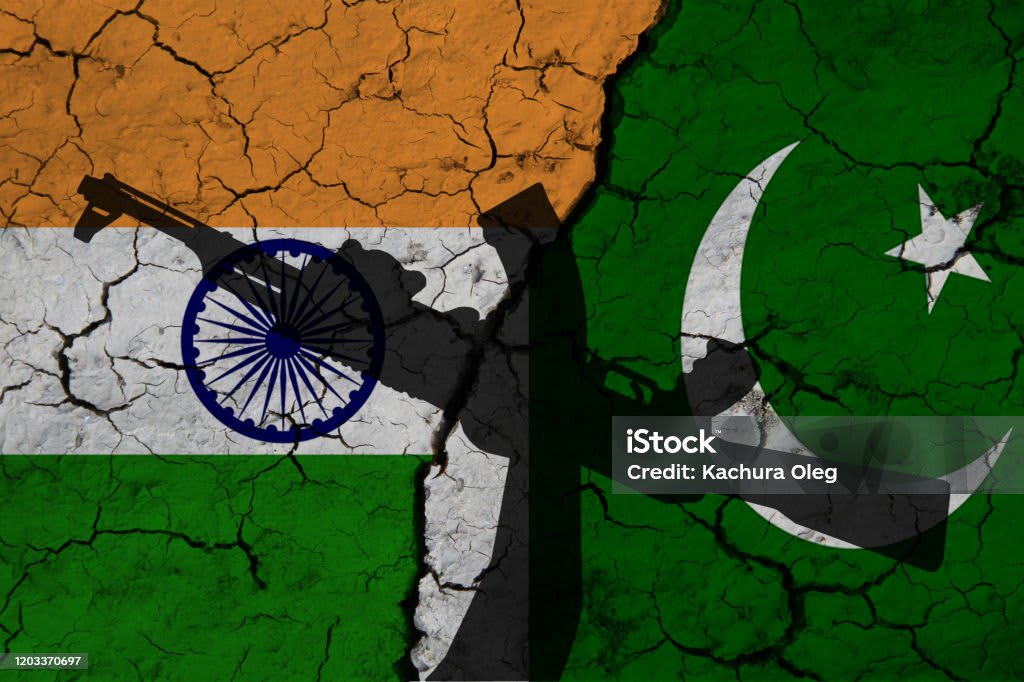
In 2025, long-standing tensions between India and Pakistan erupted into full-scale military conflict. The world is witnessing a crisis with potentially catastrophic consequences, given that both nations are nuclear powers. The current conflict, which began in April, marks one of the most dangerous flashpoints in South Asian history and has drawn significant attention from global powers.
Origins of the Conflict
The immediate trigger occurred on April 22, 2025, when a deadly terrorist attack took place in Pahalgam, Jammu & Kashmir, killing 26 Hindu pilgrims. India held Pakistan-based terrorist groups responsible for the attack, leading to national outrage and swift calls for retaliation. While Pakistan denied involvement, India insisted that intelligence reports proved otherwise.
On May 7, India launched "Operation Sindoor," a coordinated military campaign targeting several alleged militant camps inside Pakistani-administered Kashmir. These airstrikes were described as precision operations meant to eliminate terror infrastructure. However, Pakistan viewed this as a violation of its sovereignty and declared it an act of war.
Escalation and Retaliation
In response, Pakistan initiated "Operation Bunyan-ul-Marsus" on May 10, launching missile and drone attacks against Indian military installations along the western border. The Pakistani military claimed these actions were purely defensive and targeted specific threats. Still, Indian authorities reported significant damage to infrastructure and civilian casualties.
The fighting quickly escalated with both nations using advanced weaponry, including combat drones, cruise missiles, and long-range artillery. The scale and intensity of the exchanges have not been seen since the Kargil War in 1999. Military analysts describe the situation as the world’s first large-scale "drone war," with both sides deploying swarms of AI-powered drones to conduct surveillance and attacks.
Nuclear Threat and International Concerns
The most alarming aspect of the conflict is the nuclear overhang. Both countries maintain sizeable nuclear arsenals and have adopted aggressive postures. Pakistan's Defense Minister publicly stated that the country faces a "clear and present nuclear threat" and warned that any further escalation could trigger "unimaginable consequences."
Global powers are watching the situation with growing alarm. The United States, United Nations, China, and the European Union have issued repeated calls for de-escalation. Backchannel diplomacy is reportedly underway, with neutral countries such as Switzerland and Qatar offering to mediate peace talks. Meanwhile, satellite images have shown the movement of nuclear-capable missile systems on both sides, raising the stakes even higher.
Humanitarian Crisis
The conflict has already led to a growing humanitarian crisis. Thousands of civilians in border regions have been displaced, with many fleeing their homes in fear of airstrikes. Hospitals in northern India and eastern Pakistan are overwhelmed with casualties. Educational institutions have been shut down, and food and medicine shortages are being reported in affected areas.
Non-governmental organizations are calling for immediate access to conflict zones to provide relief, but ongoing hostilities have made humanitarian efforts extremely difficult. International Red Cross and UNHCR have requested both governments to allow humanitarian corridors.
India and Pakistan, two neighboring countries in South Asia, have had a long and complex history marked by conflict and tension. Since their independence from British rule in 1947, both nations have fought multiple wars, primarily over the disputed region of Jammu and Kashmir.
The first war broke out in 1947–48, shortly after partition, when Pakistan-backed tribal forces entered Kashmir. India responded militarily, and the conflict ended with a UN-mediated ceasefire, leaving Kashmir divided between the two countries but still claimed in full by both. The second war occurred in 1965, again over Kashmir, leading to heavy casualties on both sides before a ceasefire was brokered by the Soviet Union and the USA. In 1971, the third and most significant war took place, not over Kashmir, but due to the Bangladesh Liberation War. India supported East Pakistan’s (now Bangladesh) independence movement, leading to Pakistan’s defeat and the creation of Bangladesh.
Tensions continued in the following decades, with the Kargil conflict in 1999 being a major flashpoint. That war involved Pakistani soldiers and militants occupying strategic Indian positions in the Kargil region. India launched a strong military response and eventually regained the territory.
The relationship between the two nuclear-armed nations remains fragile, with frequent border skirmishes and diplomatic tensions. Incidents such as the 2001 Indian Parliament attack and the 2019 Pulwama attack have further strained ties, leading to concerns over a potential full-scale war.
Despite efforts at dialogue and peace talks, mutual distrust, terrorism, and unresolved territorial disputes keep the region on edge. A lasting peace between India and Pakistan will require sincere political will, trust-building measures, and addressing the root causes of their rivalry—particularly the Kashmir issue.
About the Creator
Keep reading
More stories from Nur Alam Zihad and writers in Humans and other communities.
Average Doomsday Taylor
S Glimpse Avenjer doomsday Taylor the vast realm of speculative fiction and theoretical futurism, few concepts strike a chord like the idea of “doomsday.” It conjures images of desolate wastelands, crumbling civilizations, and humanity on the brink. But what if doomsday wasn't a singular catastrophic event, but rather a slow, creeping erosion of normal life? This is where the idea of “Average Doomsday Taylor” finds its place—a conceptual character representing a future where doomsday is not a moment, but a condition; not an explosion, but a slow fade. The term has emerged in niche internet culture, philosophy circles, and speculative media discussions, blending elements of science fiction, sociology, and existential thought.
By Nur Alam Zihad8 months ago in Humans
Hind Rajab: A Child the World Heard Too Late
Cinema has always been a powerful medium for telling stories that history books often reduce to numbers. When a film chooses to focus on a single child caught in the machinery of war, it forces audiences to confront reality not as statistics, but as human loss. The movie inspired by the tragic story of Hind Rajab, a young Palestinian girl, does exactly that. It is not merely a film; it is a testimony, a memorial, and a question posed to the conscience of the world. Hind Rajab’s name became known globally after reports emerged of her final hours during the Gaza conflict. She was a child trapped in circumstances no child should ever experience. The film based on her story does not sensationalize her death, nor does it turn her suffering into spectacle. Instead, it approaches her story with restraint, dignity, and an unwavering focus on innocence lost amid violence. The Story at the Heart of the Film The movie centers on a young Palestinian girl who becomes separated from safety during intense military escalation. Through her eyes, viewers witness fear, confusion, and the fragile hope that someone, somewhere, will come to help. The film follows her final journey—both physical and emotional—using minimal dialogue and powerful visual storytelling. Rather than relying on graphic imagery, the filmmakers choose silence, pauses, and close-up shots to convey terror and vulnerability. This artistic choice makes the film even more haunting. The audience is left to sit with the child’s fear, her calls for help, and the unbearable waiting that defines her final moments. By focusing on Hind as an individual rather than a symbol, the film restores her humanity. She is not portrayed as a political tool, but as a daughter, a child with dreams, and a life that mattered. A Child as the Center of a Global Tragedy What makes this movie particularly impactful is its refusal to shift focus away from the civilian cost of war. The story does not revolve around soldiers, strategies, or power struggles. It revolves around a child who should have been worried about school, friends, and play—not survival. This narrative choice challenges the audience to rethink how conflicts are discussed in media and politics. Wars are often framed in terms of borders, ideologies, and victory. This film asks a different question: What is the price paid by those who have no role in choosing the war? By centering the story on Hind, the film exposes the imbalance of power and the devastating consequences faced by the most vulnerable. Artistic Direction and Emotional Weight The film’s direction is deliberately restrained. There is no dramatic background score overpowering the scenes. Instead, ambient sounds—distant explosions, static-filled phone calls, the quiet breathing of a frightened child—carry the emotional weight. This realism makes the film deeply unsettling. The young actress portraying Hind delivers a performance that is heartbreakingly authentic. Her expressions alone communicate fear, confusion, and bravery far beyond her years. The filmmakers avoid overacting or melodrama, allowing the story’s truth to speak for itself. Cinematography plays a crucial role as well. Tight frames and limited perspectives reinforce the feeling of entrapment, while long, unbroken shots force viewers to experience time as Hind did—slow, uncertain, and terrifying. A Political Film Without Political Speeches One of the film’s greatest strengths is that it does not rely on speeches or overt political messaging. Its power lies in its simplicity. By telling one child’s story honestly, it exposes the broader reality of civilian suffering in conflict zones. The film does not tell audiences what to think. Instead, it asks them to feel—and that is far more powerful. Viewers are left to grapple with difficult questions about responsibility, accountability, and the value of human life. This approach has made the movie resonate across cultures and ideologies. Even those unfamiliar with the details of the Palestinian struggle can connect with the universal themes of childhood, fear, and loss. Reception and Global Impact Since its release, the film has sparked intense discussion on social media, in film circles, and among human rights advocates. Many viewers describe it as one of the most emotionally challenging films they have ever watched. Critics have praised its ethical storytelling and refusal to exploit tragedy. For many, the movie serves as an entry point into understanding the human cost of the Gaza conflict. It has been screened at independent film festivals and community events, often followed by discussions about civilian protection and children in war zones. Most importantly, the film ensures that Hind Rajab’s name is not forgotten. In a world where news cycles move quickly, cinema has given her story permanence. Why This Film Matters This movie matters because it stands against normalization of suffering. It reminds us that behind every headline about war are real people, real families, and real children whose lives are forever altered—or ended. By immortalizing Hind Rajab’s story, the film becomes an act of resistance against silence. It insists that her life had meaning and that her death deserves acknowledgment, reflection, and accountability. In the end, this is not just a film about one Palestinian girl. It is a film about every child trapped in conflict, every unanswered call for help, and every moment when humanity fails its youngest members. Cinema cannot undo tragedy, but it can refuse to let it be ignored. And in doing so, this film ensures that Hind Rajab’s story continues to speak—long after the screen fades to black.
By Hasbanullah6 days ago in Humans



Comments (1)
Pakistan zindabad