
In the United States, CT scans are expected to cause 100,000 new cancers.
Health


More Americans are receiving computed tomography (CT) scans than ever before, and while this technology can save lives, some scientists are concerned about the potential for low doses of ionizing radiation to increase cancer risks.
Patients should not be afraid to undergo these tests if they are deemed medically necessary because the theoretical chance of developing cancer from a CT scan is thought to be very low, if it exists at all. However, since 2007, the number of CT scans carried out annually in the United States has increased by more than 30%, leading researchers to believe that the public is being exposed to radiation that is not needed. Low levels of ionizing radiation from CT scans could theoretically account for 5% of all new cancer diagnoses in the United States, according to a team from the United States and the United Kingdom. CT scans conducted in 2023 could be responsible for an estimated 103,000 future cases of cancer.
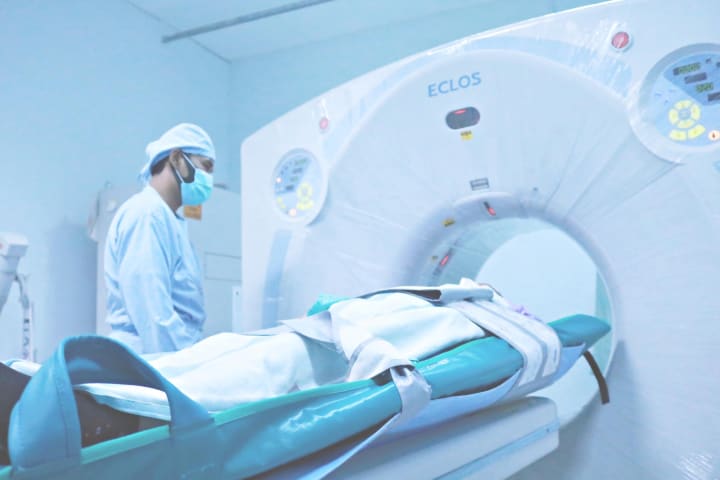
That's based on some assumptions and historical data from high radiation events, but if right, it would put CT scans on par with other significant risk factors for cancer, like alcohol consumption, at least at a population level.
The international team of analysts, led by epidemiologist Rebecca Smith-Bindman from the University of California, San Francisco, wrote, "CT is frequently lifesaving, yet its potential harms are often overlooked." Additionally, the team noted, "Even very small cancer risks will lead to a significant number of future cancers given the tremendous volume of CT use in the United States." CT is frequently lifesaving.
These are only theoretical risks at this time, but that doesn't mean they shouldn't be considered. High doses of radiation are known to cause cancer, but there is no conclusive evidence linking low-level radiation to cancer. The potential association is mostly based on long-term studies of atomic bomb survivors and those exposed to nuclear power plant meltdowns. For instance, in a group of 25,000 Hiroshima survivors who received a dose of ionizing radiation on par with three or more CT scans, there was a slight but significant increase in cancer risk across a lifetime.
The theoretical risks must be balanced against the numerous benefits of this technology, which can now alert patients and doctors to a wide variety of hidden diseases and injuries with very low doses of radiation (about the same amount you absorb from your environment over three years). Whether those results extend to CT scans is still up for debate. Again, these historical tragedies serve as the basis for the new cancer risk predictions. However, in comparison to previous analyses, these predictions take into account a greater degree of detail regarding the actual radiation exposure, which can be affected by the type of CT device, the length of the scan, the patient's size, and the sensitivity of the body part being targeted.
The UCSF International CT Dose Registry catalogs the anonymous data from 143 US outpatient and hospital facilities. Based on data from 2016 to 2022, researchers predicted that 93 million CT scans would be performed on approximately 62 million patients in 2023. The team estimates that CT scans in 2023 may be linked to 103,000 future cancers on the basis of the associated radiation risks.
"To empirically quantify lifetime risk would require decades-long follow-up studies of very large populations," the authors admit.
However, their findings suggest that low-dose ionizing radiation may make some people more susceptible to cancer than others. The majority of CT scans are done on adults, but estimates indicate that children and adolescents are more likely to develop cancer as a result of radiation.
Those receiving CT scans at under one year of age, for instance, seem to have a higher potential lifetime risk for thyroid cancers, and this appears more common among female patients.
To determine whether and how low-dose ionizing radiation actually affects a person's cancer risk, much more research is required. Pradip Deb, a medical radiation specialist from RMIT University, states, "Estimated overall cancer risks from CT radiation doses are similarly high in Australian studies." She argues that if radiation-free procedures can accomplish the same result, CT scans should be avoided whenever possible. The Australian Society of Medical Imaging and Radiation Therapy President Naomi Gibson, a radiographer, concurs.
"Although the findings highlight the need for vigilance around long-term radiation exposure, this should not discourage the use of CT imaging when clinically justified," Gibson explains.
"The diagnostic and therapeutic value of CT scans significantly outweighs the potential risks associated with radiation in appropriately selected cases."
About the Creator
Keep reading
More stories from Tamanna Lima and writers in Humans and other communities.
9 Coolest Georgia Towns for a Summer Vacation in 2025
Georgia is full of small towns brimming with charm, history, and natural beauty. While cities like Atlanta and Savannah often steal the spotlight, the Peach State’s hidden gems are just as captivating—especially in the summer. From hiking wooded trails to soaking up local culture, these towns offer unforgettable experiences for every type of traveler. Love the outdoors? Tallulah Falls has a jaw-dropping gorge and waterfalls. Do you like the beach vibe? The sandy shores and historic lighthouse of Tybee Island await. Whether you’re into history, nature, or just discovering cool new spots, Georgia’s got something for everyone. Consider these nine of the coolest towns, all of which have fewer than 50,000 residents, for your summer vacation in 2025. Get on the road and pack your belongings—these hidden gems are just waiting to be discovered!
By Tamanna Lima10 months ago in Earth
Whiskey At Dusk
Guess the whiskey was more important to you in the end, wasn’t it? It was more than the well-being of your friends; more vital than showing up to the places you promised you would and could come to; more critical of a matter than fulfilling your damn responsibilities and getting the press off your back.
By Snarky Lisa6 days ago in Humans
What Is a Ward in Bridgerton?
Netflix’s beloved Regency-era drama continues to spark curiosity with every season, and season 4 Bridgerton is no exception. Among the many questions viewers have asked after the premiere is: what is a ward in Bridgerton, and why does the phrase carry so much emotional weight in the story?
By Saboor Brohi about 9 hours ago in Humans




Comments
There are no comments for this story
Be the first to respond and start the conversation.