
Imran Khan: The Lion of Lahore – A Cricketing Legacy
From the Grass Fields of Pakistan to World Cup Glory, the Story of a Cricket Legend Who Transformed a Nation
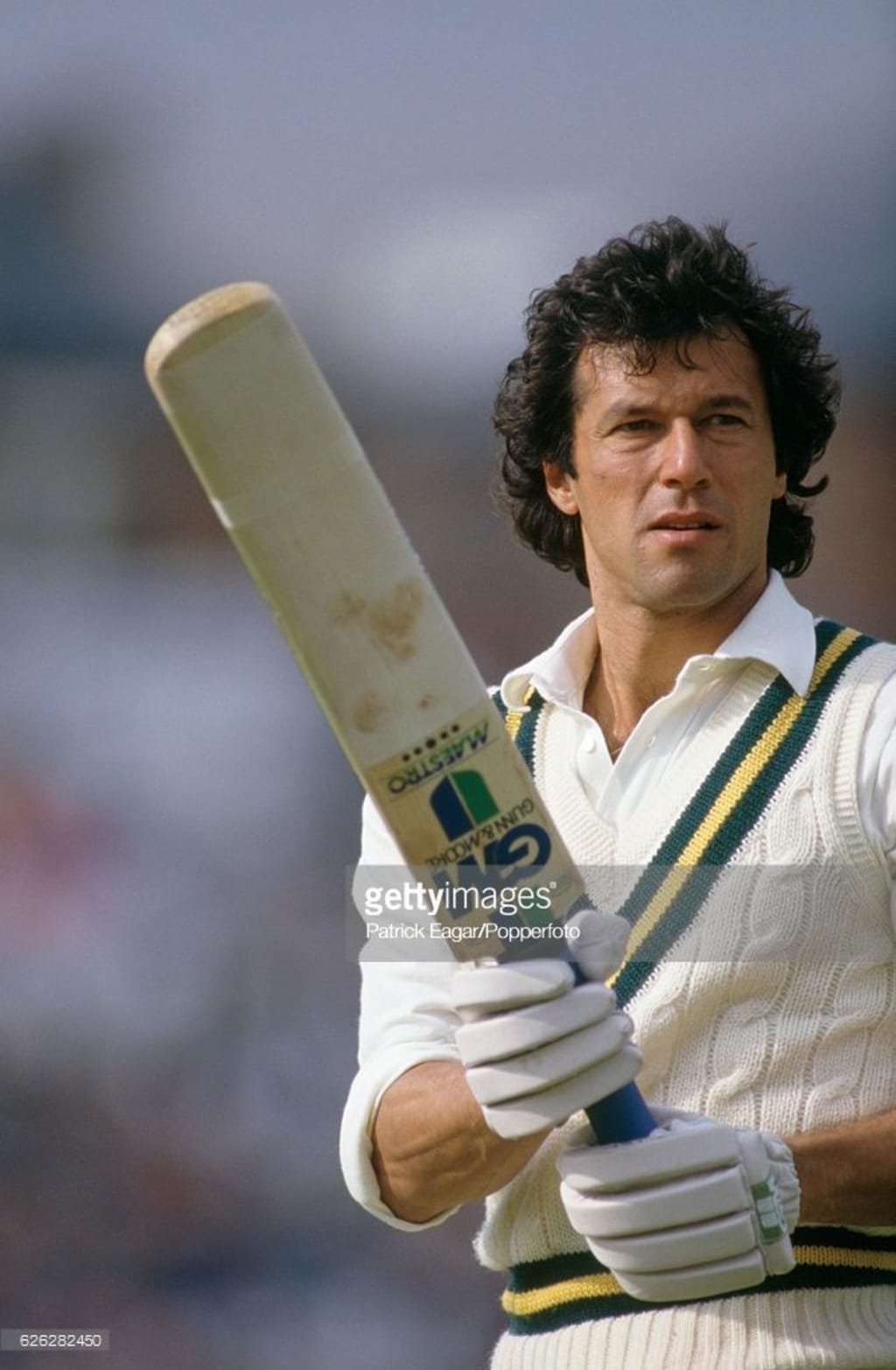
Chapter 1: The Spark in Lahore
On a warm autumn day in 1952, Lahore welcomed a boy who would change the course of Pakistan’s sporting history—Imran Ahmed Khan Niazi. Born into a well-educated Pashtun family, Imran was raised in privilege but groomed in discipline. At an early age, he showed a fascination with sports, particularly cricket. His days at Aitchison College and later at Royal Grammar School in England were defined not by textbooks, but by the echo of leather against willow.
Despite early doubts about his slight frame and quiet nature, Imran had one thing that stood out—an unshakable belief in himself.
Chapter 2: The Rise of the Fast Bowler
Imran debuted for Pakistan at just 18, facing England at Edgbaston in 1971. He wasn’t a sensation overnight, but those who watched him closely knew something special was brewing. Over the next few years, he transformed—both in physique and skill—into a ferocious fast bowler, developing one of the most elegant bowling actions the world had seen.
By the late 1970s, he was not just a bowler but a genuine all-rounder, blending pace, swing, and intelligence. His batting, once overlooked, matured into a weapon. He began to score crucial runs, often when the team needed them most.
His dedication to fitness and discipline stood in contrast to the often chaotic state of Pakistani cricket. In the gym while others rested, analyzing opponents while others joked, Imran was laying bricks for something far bigger than just personal fame.
Chapter 3: The Captain Who Dared
In 1982, Imran Khan was handed the captaincy. It was both an honor and a burden. Pakistani cricket was volatile—talent was abundant, but unity was rare. Imran saw potential in his team that few else did. He believed they could beat anyone, anywhere, but only with structure, discipline, and above all, belief.
He introduced a new culture—one of professionalism. He demanded fitness, mental toughness, and national pride. While his leadership sometimes sparked friction, it also lit a fire in the team. Under his command, Pakistan became a formidable force, winning Test series abroad and rising in international rankings.
It wasn’t always easy. Injuries, internal politics, and defeats tested him. But Imran had a rare resilience. He didn't play just to win—he played to inspire. And nowhere would that be more visible than in 1992.
Chapter 4: The Cornered Tigers – World Cup 1992
The 1992 World Cup in Australia and New Zealand was supposed to be Imran’s farewell tour. At nearly 40, he was recovering from a shoulder injury. Pakistan’s start to the tournament was dismal—they lost to India, West Indies, and had a washout against England. The team looked lost. The critics called them done.
But Imran rallied his men, famously calling them “cornered tigers.” He urged them to fight with their backs against the wall. He wore a T-shirt with a tiger emblem to every match, not just for symbolism but to burn the image into their minds.
Match by match, the team clawed back. Inzamam-ul-Haq exploded onto the scene. Wasim Akram’s swing turned deadly. Javed Miandad steadied nerves. And Imran, playing with pain, anchored innings, bowled key spells, and led with unwavering will.
On March 25, 1992, Pakistan faced England in the World Cup final at the Melbourne Cricket Ground. Imran scored a captain’s knock of 72 runs, guiding his team to 249. His decision to bring on Wasim Akram in the middle overs changed the match—two quick wickets shattered England’s chase. Pakistan won. A nation erupted.
Holding the trophy high, Imran said he was proud to win it “for the people of Pakistan.” But he had more than just cricket in mind—he immediately announced he would use his fame to build a cancer hospital in memory of his mother.
Chapter 5: The Cricketer Who Became a Symbol
Imran retired from international cricket after the 1992 World Cup, leaving behind not just records but a legacy of belief. He finished with 362 Test wickets, over 3,800 Test runs, and as one of the greatest all-rounders the game has known.
But more than numbers, it was his spirit that endured. He gave Pakistani cricket an identity—a blend of aggression, pride, and resilience. He mentored future legends like Wasim Akram and Waqar Younis. His emphasis on fitness and professionalism changed how Pakistan approached the game.
Even after retirement, his cricketing shadow loomed large. He became a reference point: “What would Imran do?” became a guiding question for cricketers and captains alike.
Chapter 6: Beyond the Boundary
Imran’s cricket story did not end with the final wicket. It became the foundation for everything that followed. In the late '90s, he entered politics, aiming to fight corruption and bring justice to ordinary Pakistanis. In 2018, he became Prime Minister of Pakistan—a journey that began on a cricket field.
While politics brought its own turbulence, the determination that defined his cricket career remained intact. He continued to inspire both loyalty and criticism—but never indifference.
His legacy in cricket, however, remains untainted. Stadiums still echo his name. Young players still idolize his fire and elegance. And Pakistanis, even in moments of division, unite in remembering the day their cornered tigers roared under his command.
Epilogue: The Legacy of a Lion
Imran Khan’s cricket career was more than victories—it was a movement. It taught a generation to dream bigger than boundaries, to rise when beaten, and to lead not for self, but for country.
Whether on the field, in the dressing room, or from the Prime Minister’s office, Imran Khan has always played for Pakistan. His story is not just of a cricket legend—it is the story of a man who turned a game into a mission, and a mission into history.
And so, the lion of Lahore roared—and the world listened.
About the Creator
Keep reading
More stories from muhammad shah and writers in Humans and other communities.
Kyrsten Sinema
Kyrsten Sinema is an important American political leader. She worked for many years in the U.S. government and became known for being different from many others in politics. This article uses easy English and clear subtitles to help you understand who she is, where she came from, what she did, and what is happening now with her.
By Farhan Sayed3 days ago in Humans



Comments
There are no comments for this story
Be the first to respond and start the conversation.