
Imran Khan: From Prime Minister to Prisoner — The Rise, the Reforms, and the Resistance
A Leader Who Dreamt Big, Delivered Change, and Faced Unprecedented Trials

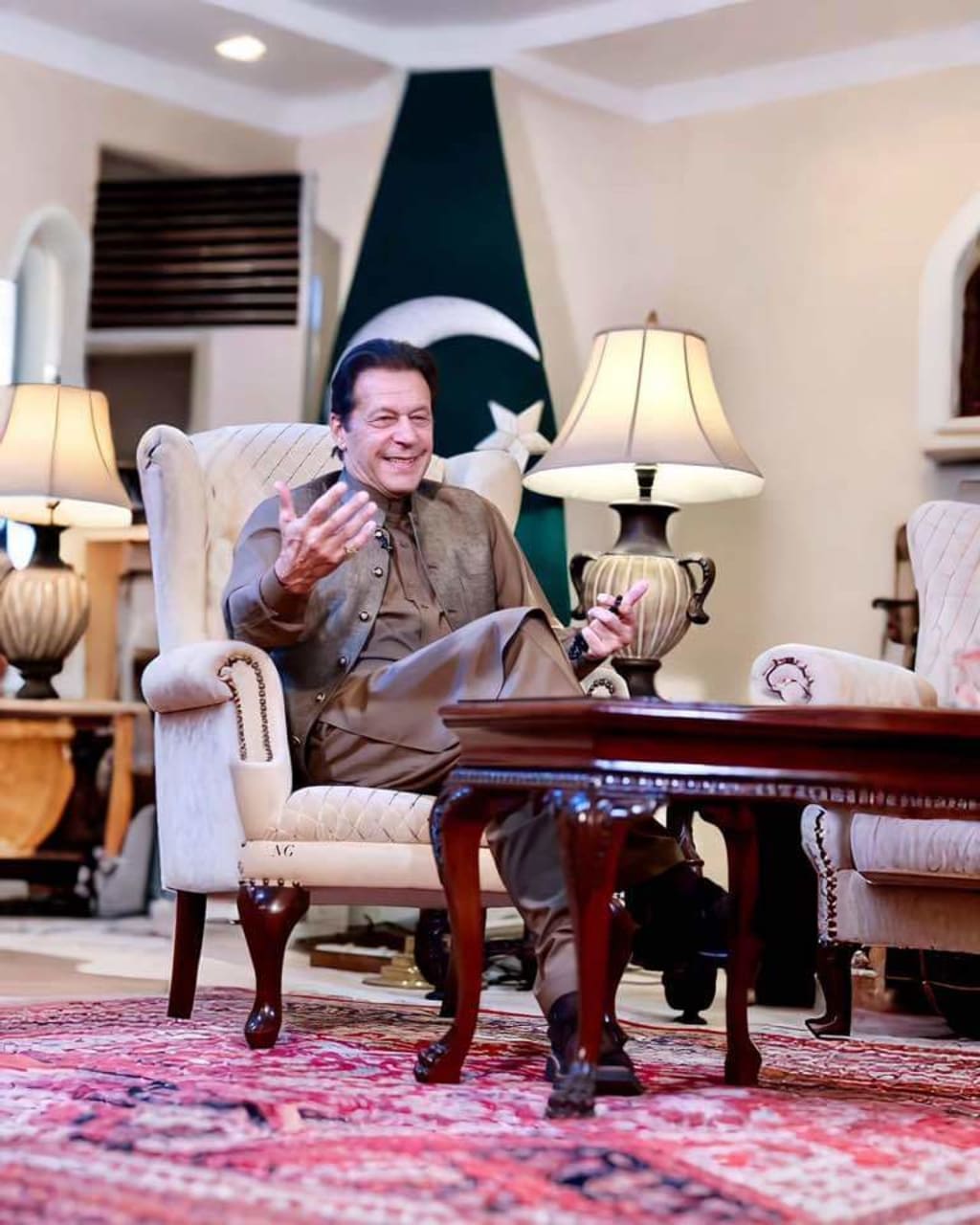
Imran Khan didn’t need politics to be famous. He was already a legend — a cricket world champion, an Oxford graduate, and a humanitarian. Yet, something kept pulling him toward a larger purpose. He had seen the potential of Pakistan, and the pain of its people. He wanted to fix a broken system — not for power, but for justice. And so began the second innings of his life, one far tougher than the first.
In 1996, Khan founded Pakistan Tehreek-e-Insaf (PTI) — a party rooted in justice, accountability, and national pride. At first, people laughed. A cricketer in politics? He barely won a seat in the elections. For nearly two decades, he remained on the sidelines — mocked by political elites, ignored by media, underestimated by many. But what no one realized was that Imran Khan was building a movement, not just a party.
He travelled across cities, villages, and towns — shaking hands with farmers, talking to youth in universities, standing on trucks in rallies that shook the political status quo. He didn’t offer money or false promises. He spoke of Naya Pakistan — a country with honest leadership, strong institutions, and equal opportunities for all.
In 2013, PTI emerged as a powerful force in Khyber Pakhtunkhwa (KPK), forming a provincial government. It was a testing ground. In five years, Khan’s party reformed police, planted billions of trees, digitized services, improved healthcare and education, and took action against corruption. It wasn’t perfect — no government is — but for the first time, citizens saw change at the grassroots level.
The momentum was unstoppable. In 2018, Imran Khan became the 22nd Prime Minister of Pakistan. It was a historic moment — a man from outside the dynastic political system had risen purely on the back of public support. The expectations were sky-high, and the road ahead, full of obstacles.
Khan inherited a broken economy, massive debt, and global pressure. Yet, his government pushed forward. He launched Ehsaas Program, one of the region’s largest social protection schemes, aimed at helping the poor, widows, and orphans. He built shelter homes for the homeless, introduced a health card system giving free treatment to millions, and took a firm stance on climate change through initiatives like the 10 Billion Tree Tsunami.
Under his leadership, Pakistan navigated COVID-19 more effectively than many developed countries — keeping lockdowns smart, supporting daily-wage earners, and managing vaccination with transparency. Globally, Khan's image as a statesman grew, speaking at the UN against Islamophobia, calling for peace in Afghanistan, and standing firm on national sovereignty.
But not everyone welcomed his bold reforms and independent approach. Powerful lobbies — both local and international — felt threatened. His anti-corruption drive rattled many. Media campaigns, political alliances, and hidden forces started working to weaken him.
In April 2022, through a controversial vote of no-confidence, Imran Khan was ousted from power. He called it a foreign-influenced regime change, orchestrated through internal collaborators. What followed was unprecedented in Pakistan’s democratic history.
Khan was barred from elections, dozens of cases — from terrorism to corruption — were filed against him. His party was dismantled, leaders were jailed, workers tortured, and even basic speech was silenced. The man who once ruled the country was now trapped in legal battles, with threats to his life and freedom.
And yet — his popularity soared.
Even behind bars, even without media access, millions stood by him. From college students to overseas Pakistanis, from urban professionals to rural farmers — people still saw him as their only voice against a corrupt system. His message had taken root — one of self-respect, justice, and real independence.
Khan once said, “You only lose when you give up.” He hasn’t given up. Despite court trials, solitary confinement, and political bans, his message continues to echo across the country. People draw strength from his resilience, from his willingness to sacrifice everything for Pakistan’s future.
His story is no longer just about cricket or politics. It’s about a man who stood up to the most powerful forces, who could have lived a comfortable life abroad, but chose instead to fight for a nation he believed in — even if it meant walking alone.
Imran Khan’s political journey is far from over. It is a reminder to the world — that even in the darkest times, hope lives on. That courage can’t be silenced. And that one man, with a heart full of love for his country, can still change the course of history.
---
About the Creator
Keep reading
More stories from Muhammad Adnan and writers in Humans and other communities.
"The Rise of Intelligence: How AI Is Quietly Rewriting Our Future"
It started with a question. Not a complex one—just a simple query typed into a search engine: “What is AI?” For most people, that was the beginning. But for the tech world, Artificial Intelligence was already in motion—quietly learning, adapting, and preparing to change everything.“Artificial Intelligence visualized through a neural brain network—where data meets design to shape the future.”
By Muhammad Adnan7 months ago in Humans
Manly Shark Attack: The Tragedy That Changed How We See the Sea
The ocean often feels familiar. Waves repeat their rhythm. The shoreline feels welcoming. For generations, Manly Beach represented that comfort for countless swimmers and families. Then one moment shattered that sense of safety. The manly shark attack did more than take a life. It left a lasting emotional mark on a community and reshaped how people relate to the water. Even decades later, the story still surfaces in quiet conversations, cautious glances at the horizon, and the pause before stepping into the sea. This is not just a tale of danger. It is a story about memory, fear, respect for nature, and how a single event can echo across time.
By Muqadas khanabout 2 hours ago in Humans
PERCEIVE
I remember as a child growing up, I always look forward to night times where I could go to bed, close my eyes and imagine things. Every night was a continuation from where I left before dozing off the previous night. I imagined all kinds of things that I even created a vision board without realizing it. I imagined myself as someone from a particular family, having a certain skin tone and hair color and going to places with my parents. I remember cutting out pictures from magazines and sticking them onto one of my exercise books dedicated for that purpose. It was enjoyable doing it and I loved it! I don't know when I stopped and why I did. But that was my world of being a child, free from worries and stress, free in my mind, free to create an imaginary world where I found my excitement in. Now if you ask me to tap into this child in me and redo those things, the experience would be different. I would look forward to night times so I can get good night rest.
By Emos Sibu Poriei (Kaya)about 9 hours ago in Chapters


Comments
There are no comments for this story
Be the first to respond and start the conversation.