
Imran Khan
A Life of Purpose, Passion, and Change

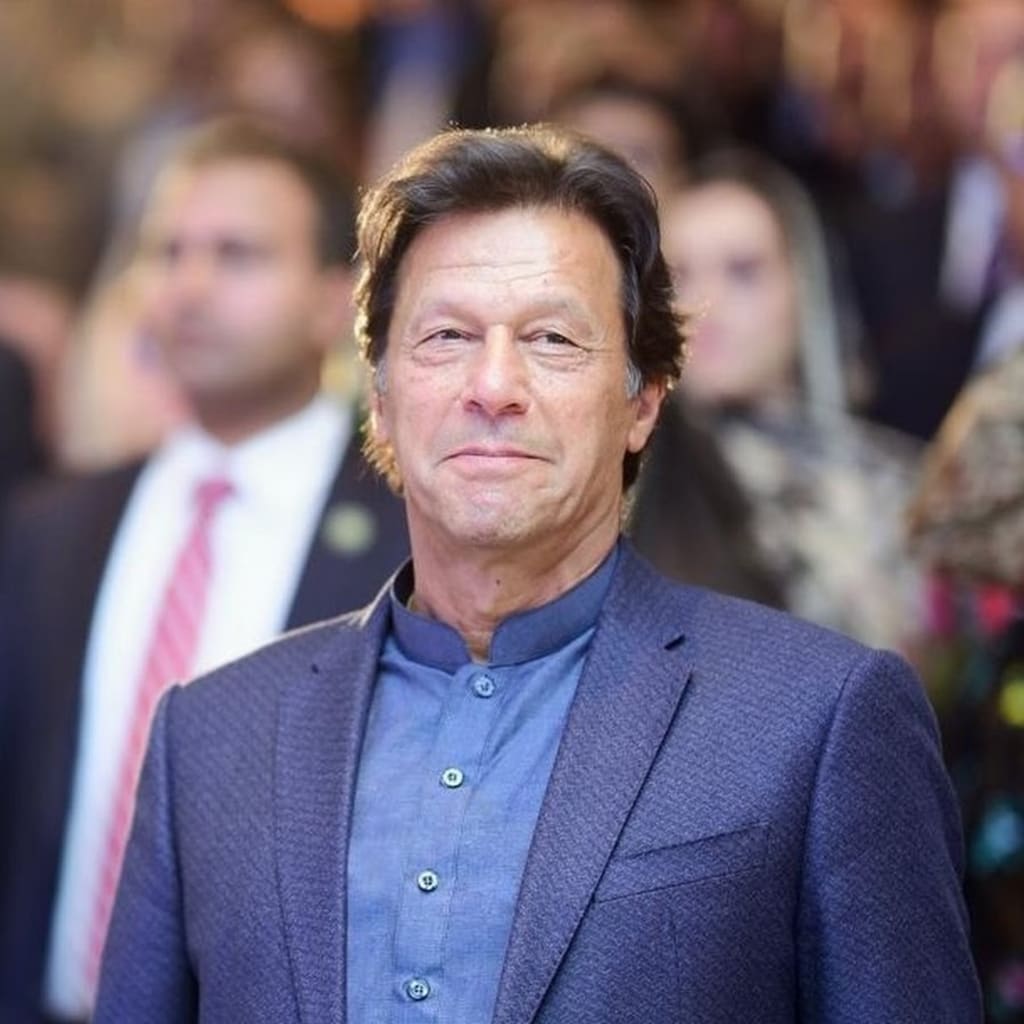
Imran Khan's life has been marked by a relentless pursuit of excellence, be it in sports, philanthropy, or politics. Born on October 5, 1952, in Lahore, Pakistan, he was the only son of Ikramullah Khan, a civil engineer, and Shaukat Khanum, a housewife. His family belonged to the elite class of Lahore, but from a young age, Imran exhibited a keen sense of purpose, a drive that would later define his extraordinary journey.
Early Years and Education
Imran Khan's early education began at Aitchison College in Lahore, one of Pakistan's most prestigious schools. However, his academic journey was marked by a desire to excel beyond the confines of the classroom. In 1968, Imran moved to the United Kingdom to complete his schooling at the Royal Grammar School in Worcester. There, he developed his passion for cricket, a sport that would later dominate his life. He also attended Keble College, Oxford, where he studied Philosophy, Politics, and Economics (PPE), a field that would later play a significant role in his political career.
Rise to Cricketing Stardom
Imran Khan’s passion for cricket, which began in his youth, blossomed during his time in England. By 1971, Imran had already made his debut for the Pakistan national cricket team, and his early years in the game were spent honing his skills as an all-rounder. Over the next few years, Imran established himself as one of the most promising young cricketers in Pakistan.
However, it wasn’t just his skills on the field that set him apart—it was his leadership. By the early 1980s, Imran was captain of the Pakistan cricket team. His captaincy would soon become legendary. Under his guidance, Pakistan achieved its first World Cup victory in 1992, a moment that remains one of the most defining moments in the country’s history. The victory united a nation that had long been divided by regional, ethnic, and political differences. Imran's leadership on the field was admired worldwide, and he was lauded for his ability to inspire and motivate his team under the most pressure-filled circumstances.
In addition to his success as a player, Imran's efforts to improve Pakistan's cricket infrastructure were invaluable. He was instrumental in raising the profile of Pakistan’s cricketing infrastructure, making it a more organized and professional entity. After his retirement from cricket in 1992, Imran’s cricketing legacy was firmly cemented.
The Founding of Shaukat Khanum Memorial Cancer Hospital & Research Centre
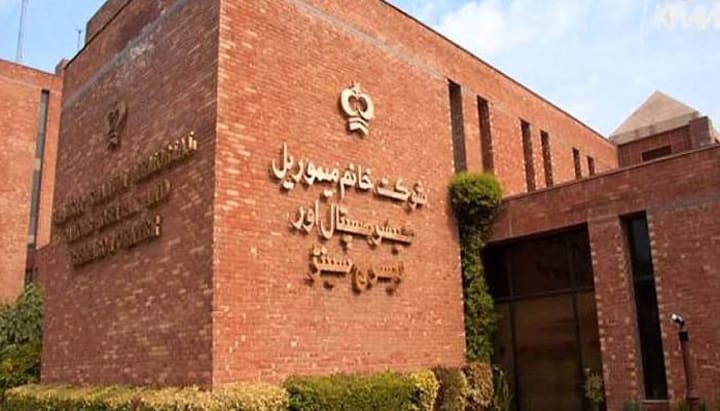
Though Imran Khan’s career in cricket was at its peak, his thoughts often turned to the needs of the people of Pakistan. His mother, Shaukat Khanum, had passed away in 1985 after battling cancer, and her struggle inspired him to make a difference in the lives of others facing similar battles. In 1994, Imran Khan embarked on a monumental project to build a cancer hospital in her name—the Shaukat Khanum Memorial Cancer Hospital & Research Centre (SKMCH&RC) in Lahore.
The hospital was to offer world-class treatment for cancer patients, especially those who could not afford the expensive medical costs. Imran Khan’s determination to raise funds for the hospital was unprecedented. He held numerous charity events and sought donations from around the world, personally traveling to different countries to raise awareness. The success of the hospital was a testament to Imran’s tenacity and his ability to mobilize resources for a noble cause. Today, SKMCH&RC stands as one of the premier cancer treatment centers in the region.
Transition to Politics: The Birth of PTI

While Imran Khan’s philanthropic endeavors were making a significant impact, he was increasingly disillusioned by the state of Pakistan’s politics. Corruption, inefficiency, and the power struggles between the traditional political parties, such as the Pakistan Peoples Party (PPP) and Pakistan Muslim League-Nawaz (PML-N), made it clear to him that true change in Pakistan could only come through political reform.
In 1996, Imran Khan founded the Pakistan Tehreek-e-Insaf (PTI), a political party dedicated to eradicating corruption and promoting justice, accountability, and merit. PTI's message resonated with a growing number of Pakistanis who were frustrated with the political establishment. However, for many years, PTI struggled to gain a foothold. In 2002, Imran Khan’s PTI entered the general elections, but the party didn’t win a significant number of seats, and his influence in the political landscape was limited. Yet, Imran never lost hope, and his perseverance would eventually bear fruit.
The Struggles and the Rise of PTI
Throughout the next decade, Imran Khan became a vocal critic of the government’s policies, particularly corruption and mismanagement. His political journey was turbulent, with PTI often being dismissed as a “one-man party.” However, Imran’s unwavering commitment to his ideals—reform, transparency, and accountability—found an increasing number of supporters, particularly among the youth. His message of change began to resonate across Pakistan, and PTI steadily grew in popularity.
The 2013 general elections marked a turning point for Imran Khan and PTI. Though they did not win the majority, PTI emerged as a significant opposition force. Imran Khan led large protests in 2014, accusing the ruling government of rigging the elections. His relentless drive for free and fair elections began to solidify his reputation as an advocate for democracy.
Prime Minister of Pakistan: A Vision for a "Naya Pakistan"
Imran Khan’s vision for Pakistan materialized in 2018 when PTI won the general elections, and Imran Khan became the 22nd Prime Minister of Pakistan. His victory was a historic moment in the country's politics, symbolizing the possibility of change. As Prime Minister, Imran faced numerous challenges: an ailing economy, rising inflation, foreign policy complexities, and internal opposition from entrenched political forces.
Yet, Imran Khan remained resolute in his vision for a "Naya Pakistan"—a new Pakistan where merit, justice, and accountability would prevail. His government introduced welfare schemes for the underprivileged, including health cards for free medical treatment and the Ehsaas program to support low-income families. Imran focused on tackling corruption, revitalizing Pakistan’s relations with its neighbors, and seeking investment in Pakistan’s infrastructure.
Despite challenges such as the COVID-19 pandemic, economic struggles, and international pressure, Imran Khan continued to push for reforms. His foreign policy was aimed at repositioning Pakistan as a responsible global player, and his stance on regional issues like Kashmir and Afghanistan drew attention worldwide.
Legacy
Imran Khan’s life journey—from cricket legend to political leader—has left an indelible mark on Pakistan. Whether as a sports icon or as Prime Minister, he continues to inspire millions. His story is one of resilience, vision, and a belief that through hard work and integrity, a better future is possible. While his tenure as Prime Minister has been met with both praise and criticism, his unwavering commitment to his vision of a fairer, more just Pakistan remains his most defining trait.
From leading his country to World Cup victory to navigating the complexities of governance, Imran Khan's life is a testament to the power of perseverance and the pursuit of a noble cause. Today, Imran Khan is not just a politician or a former cricketer; he is a symbol of hope for those who believe in the potential for change, a beacon of possibility in a world often clouded by uncertainty.
About the Creator
Muhammad Hameedul Haq
2nd-year student & story writing enthusiast. I craft captivating tales, blending imagination & emotion to bring characters to life. Always exploring new ideas to create narratives that touch the heart. 📖✍️
Keep reading
More stories from Muhammad Hameedul Haq and writers in Humans and other communities.
UConn Dominates UCLA in Final Four, Advances to National Championship
In a highly anticipated Final Four matchup, the UConn Huskies delivered a masterclass in basketball, obliterating the UCLA Bruins 85-51. The lopsided victory not only showcased UConn’s dominance on both ends of the court but also underscored their championship pedigree as they advanced to the national championship game. This victory marks yet another significant chapter in UConn’s storied history, further cementing their place as one of the top programs in women’s college basketball.
By Muhammad Hameedul Haq11 months ago in Gamers
Cassie and Johnny
I’m the kind of dame you notice. I’m no femme fatale, but you can’t ignore me, at least not until I warn you about what’s coming, then everybody ignores me. Hell, they usually blame me afterwards and give Johnny all the credit for saving the day, but my Johnny couldn’t save a seat at the movies without my help. Sure, he’s brawny, but brainy? Not so much. Like that time I asked him to spot me five bucks, and he said he didn’t see it anywhere on me, and believe you me, he looked but good.
By Harper Lewis6 days ago in Critique




Comments
There are no comments for this story
Be the first to respond and start the conversation.