
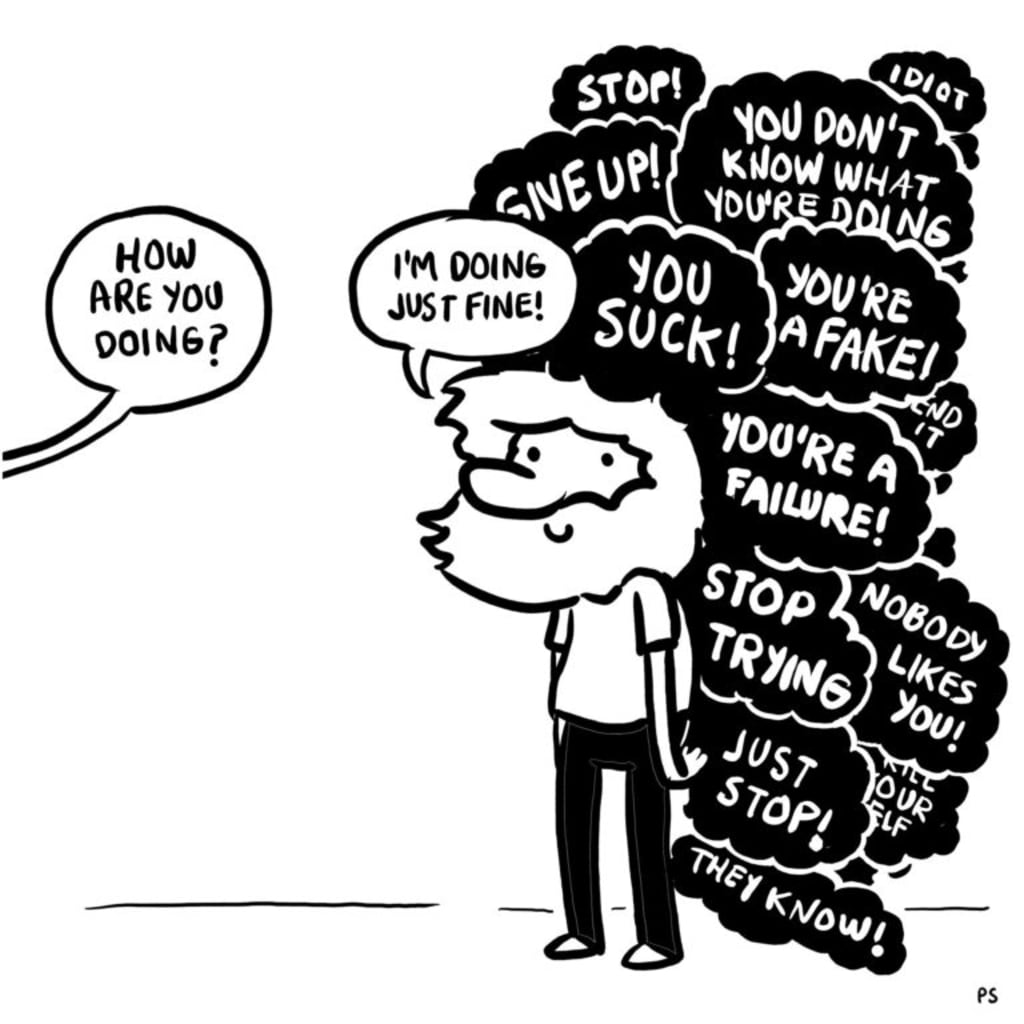
I grew up taking excel, Honors, and AP courses, and excelled in these courses. I was praised for my academic achievements, along with my success in golf and my leadership skills. Then college came around and entered Imposter Syndrome.
Imposter Syndrome is doubting your abilities and feeling like a fraud. It occurs in high achieveing people, who don't feel like they deserve their achivements.
College brought this out because I would see people staying up late to complete tasks that I had completed in a few hours. I thought to myself, 'ok maybe I didn't put in enough work, I should try harder.' But I would still receive excellent grades on the assignments. That thought that I didn't deserve it never went away though. I never thought anything was good enough, and that I didn't put in enough work, even though I couldn't have possibly done anything more.
To this day, I still feel like a fraud in the things that I do. The job that I do isn't what I studied in college and I know there are people out there who could do it better than me. I see other people my age having successful lives and I think that I'm a fraud, I'm not working hard enough, I should be doing more. This is all the Imposter Syndrome talking.
My writing, this post included, will never feel good enough. I'll always assume that it could have been better, I could have researched something more, could have expanded on a thought, used a different word. Despite these thoughts that I have someone else will read my work and they won't see those mistakes, they will praise it.
Part of getting over Imposter Syndrome is accepting these praises. Building self-confidence and knowing that you did in fact work hard to get to where you are. I know that I have put in the time to improve myself, and that I do in fact know what I'm doing, thats why I'm doing it. Especially when starting something new, I get hit with Imposter Syndrome, but I know that I have the ability to learn new skills, and everyone does. Will I always be perfect at it? No, definitely not. But I can put in the work and be proud of what I have done.
I don't think I'll ever forget when I received a message from my boss saying "Small piece of advice to help with the imposter syndrome. We judge ourselves by what we don't know instead of what we do know." He had meant to send this to a co-worker of ours. While the advice is wonderful and provides true insight on what Imposter Syndrome is like, my main take away was that another one of my co-workers, someone that I looked up to and took a lot of advice from, was also struggling with Imposter Syndrome. Even my boss admitted to having Imposter Syndrome from time to time. I realized at the moment that we all are too hard on ourselves and are judging ourselves based on unrealistic expectations. We think that our peers know all, and so we should know all, but in reality, we are all just trying our best to get along.
Imposter Syndrome affects a lot of people as the idea of excelling and the idea that we are high achievers is instilled in us at a young age. It can detrimentally impact us as adults. Overcoming it requires a strong amount of self-confidence and requires us to believe in our abilities and to accept that we may not be perfect at everything, but that we do in fact deserve the things that we achieve.
About the Creator
Keep reading
More stories from Devon Matson and writers in Humans and other communities.
A Tragedy in Three Parts
Picture this: it's October 2018. You're driving in the car with your boyfriend of five years to your family lake house after spending the night with him at his college. He looks over at you suddenly and says that you need to talk. Your heart sinks.
By Devon Matson4 years ago in Families
Whiskey At Dusk
Guess the whiskey was more important to you in the end, wasn’t it? It was more than the well-being of your friends; more vital than showing up to the places you promised you would and could come to; more critical of a matter than fulfilling your damn responsibilities and getting the press off your back.
By Snarky Lisa5 days ago in Humans
A Little Vocal Reciprocal Challenge
Introduction I think this is a good thing to try again This is just an idea I had for maybe bringing Vocal Creators closer together. I did produce this piece to add favourite creators to your profile a while back and while it got good feedback I've only seen a handful of people implement it, though I personally found it good for discovering new creators. If my friends like a creator, then the chances are I will also like their work.
By Mike Singleton 💜 Mikeydred 5 days ago in Humans


Comments
There are no comments for this story
Be the first to respond and start the conversation.