
I Thought I Needed to Be Liked — But I Needed to Like Myself
I spent years trying to be who others wanted. But the freedom I was chasing didn’t come until I started choosing me


🧠 Introduction:
For most of my life, I thought being liked was the key to happiness.
So I shaped myself around other people’s expectations.
I became agreeable. Reliable. Low-maintenance. Easy to be around.
I avoided saying “no” even when I wanted to. I laughed at things that weren’t funny. I said “it’s fine” even when it wasn’t.
Every time someone approved of me, it felt like a little hit of safety.
I mattered. I was enough. Right?
Except… I wasn’t.
Because the person they liked wasn’t really me.
It was a filtered version, built to impress and never offend.
And the more others liked me, the less I liked myself.
🔹 1. I confused being liked with being safe
When I was a kid, praise felt like protection.
Teachers, family, friends — everyone around me seemed warmer when I performed well or stayed quiet.
So I learned early: approval = safety.
That pattern followed me into adulthood. I became addicted to being liked.
The idea of someone misunderstanding me, being disappointed, or not getting the “best version” of me made my chest tight.
I wasn’t trying to connect.
I was trying to survive.
🔹 2. The masks worked… until they didn’t
For a while, it looked like my strategy “worked.”
People liked me. I was invited, included, even admired.
But I started to realize something: they liked the version of me I was working overtime to maintain — not the real one.
Not the me who had messy opinions.
Not the me who questioned things.
Not the me who sometimes felt lost, unsure, or flat-out tired of saying “yes.”
Under all the approval... I felt completely unknown.
🔹 3. It started with this question: do I even like me?
One evening, after another day of saying all the right things to all the right people, I sat down and asked myself:
"Do I even like me?"
Not the me others see — but the one who’s there when the noise fades.
The silence that followed was loud.
Because the truth was harsh: I barely knew myself, let alone liked myself.
That question wrecked me — and reshaped me.
Because I realized I was living someone else’s definition of “acceptable.”
🔹 4. I started choosing honesty over likability
I didn’t flip a switch. I wasn’t suddenly bold or unapologetically authentic.
But I did start telling the truth more often.
I said “no” and didn’t explain.
I voiced opinions that risked disagreement.
I let myself be quiet when I didn’t feel like performing.
It was terrifying — and healing.
Not everyone liked it.
Some pulled away. Some were surprised. Some didn’t stay.
But for every person I lost, I got a piece of myself back.
🔹 5. I learned that self-respect feels better than approval
Being liked by others feels good.
But being liked by yourself? That’s peace.
Now, I value my own opinion more than reactions.
I’m not perfect at it — but the more I choose myself, the less I feel like I’m begging the world to choose me.
When self-worth isn’t outsourced, life gets much quieter — and easier.
You wake up and aren’t waiting for confirmation you’re good enough.
You already know you are — even on the days you’re messy, unsure, or off.
🎯 Final Thoughts
I used to bend, shrink, and edit myself so I could be liked.
Now I stretch, expand, and speak — even if it costs me approval.
Choosing myself didn’t happen in one moment.
It happened in tiny choices, uncomfortable conversations, honest reflections, and lonely days that asked, “Who are you when no one’s clapping?”
The answer?
Someone I’m finally getting to know.
Someone I don’t need to explain.
Someone I actually like.
Approval is cheap.
Self-acceptance is everything.
About the Creator
Fereydoon Emami
"Just a human, trying to make sense of it all — and leaving footprints in language.
Honest thoughts, lived struggles, and the quiet work of becoming.
— Fereydoon Emami "
Keep reading
More stories from Fereydoon Emami and writers in Humans and other communities.
Thief In The Night
To the thief in the night that took and replicated what once was mine: Honestly, I feel kind of bad for you. It’s funny, because we hardly know each other. I only know of you through the magazines you’ve written and the broadcasts you have televised in the past — as well as through the public mentions of you from your show business connections there.
By Snarky Lisa8 days ago in Humans
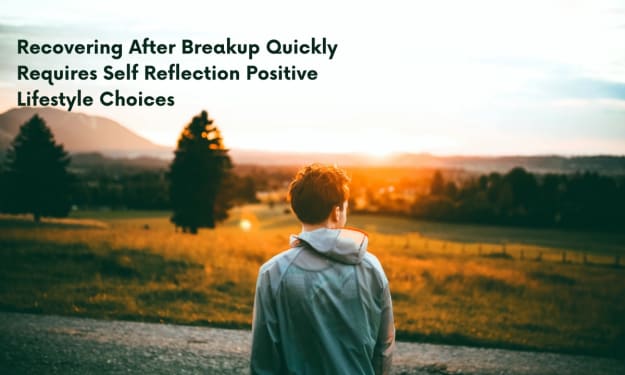
Recovering After Breakup Quickly Requires Self Reflection Positive Lifestyle Choices
The process of getting back on their feet after a break is usually initiated by the first step of accepting the feelings that ensue after a relationship. Most individuals feel depressed, perplexed, angry or disappointed. It is a significant step to healing to allow yourself to experience these feelings instead of pushing them away. Self-reflection makes one realize what he has learnt throughout the relationship and how it influenced his or her expectations. Analyzing the real-life experience in a truthful way, individuals are able to locate the patterns, strengths, and areas of development. The process helps to clear the emotions and avoid unresolved feelings. Tolerance and introspection provide a base to continue further with more confidence and self-knowledge.
By Robert Smith7 days ago in Humans



Comments
There are no comments for this story
Be the first to respond and start the conversation.