
Humanity First
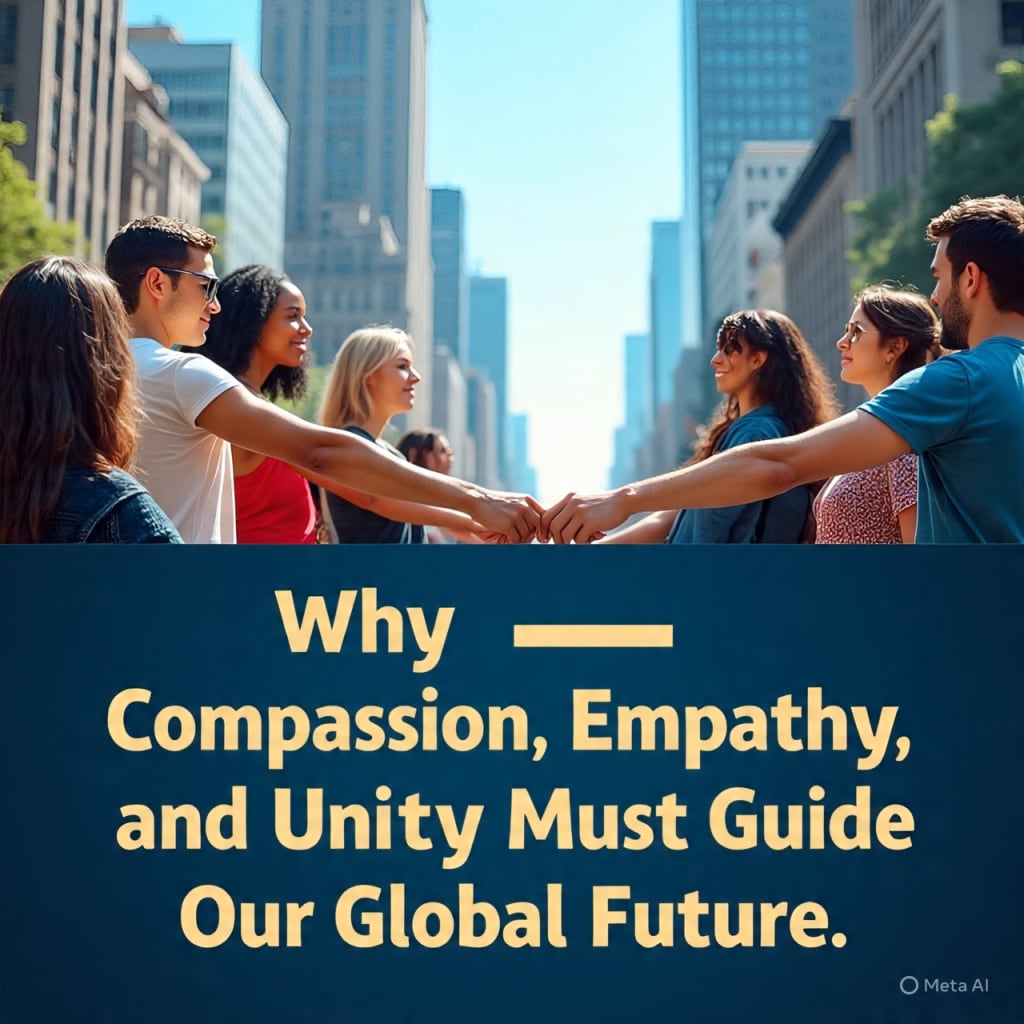
Why Compassion, Empathy, and Unity Must Guide Our Global Future

Introduction
In a world driven by technological advancement, economic competition, and national interests, it is easy to lose sight of the most fundamental value that binds us together: our shared humanity. Amidst the noise of politics, power struggles, and profit margins, the principle that should take precedence above all else is the welfare, dignity, and rights of every human being. Humanity must be our first priority—not only as a moral imperative but as the most sustainable path forward for a peaceful, just, and thriving global society.
The Meaning of Humanity
To prioritize humanity means to center our actions, systems, and institutions on human life, dignity, and well-being. It transcends race, religion, nationality, and economic status. Humanity is expressed through compassion, empathy, and the willingness to act in the interest of others—even those we do not know. It demands that we look beyond self-interest and tribal boundaries and recognize the inherent value of every individual.
Yet in today’s world, we are increasingly witnessing the erosion of this foundational principle. Wars rage on, refugee crises worsen, inequality deepens, and people are too often treated as statistics, tools, or collateral damage. In such an environment, reaffirming the primacy of humanity is not just idealistic—it is urgently necessary.
Human Life Is Not a Commodity
In a global economic system that prizes productivity and profit above all, people are often reduced to numbers. Labor is seen as a resource, not a person’s livelihood. Health is a cost, not a right. Education is a privilege, not a necessity. This commodification of human life leads to systemic injustices where the rich flourish while the poor suffer, where access to healthcare, clean water, and safety is determined by geography or wealth.
But societies that treat human beings as commodities ultimately face unrest, instability, and moral decay. A truly advanced civilization is not measured by its GDP or military strength, but by how it treats its weakest members—the elderly, the sick, the poor, the displaced, and the voiceless. By placing humanity first, we ensure that progress is inclusive, sustainable, and truly beneficial.
Lessons from Crisis: Humanity in Action
History shows that in times of great crisis, the value of humanity becomes unmistakably clear. During natural disasters, pandemics, or wars, people often come together in remarkable ways to help each other, transcending boundaries of nation, class, and religion.
Take the COVID-19 pandemic as an example. While it exposed many failures of governance and inequality, it also brought out extraordinary acts of kindness and solidarity—from frontline health workers risking their lives, to communities organizing food and support networks for the vulnerable. These acts reflect a basic truth: when we prioritize humanity, we are at our strongest.
The challenge is not to limit such compassion to times of crisis but to embed it in the everyday functioning of our world.
Humanity and Governance
Governments have a moral responsibility to protect and promote the welfare of their citizens. But good governance should go beyond national borders. In an interconnected world, policies in one country can profoundly affect people across the globe. Climate change, for instance, disproportionately affects the poorest nations despite being driven largely by the wealthiest. Migration policies can save or end lives. Foreign aid, diplomacy, and trade must be guided by ethics as much as by interest.
A humanity-first approach in governance means putting people’s lives and rights at the center of decision-making. It means designing laws that prevent exploitation, providing universal access to education and healthcare, ensuring justice for all, and protecting minority rights. This approach not only strengthens societies but builds legitimacy and trust in institutions.
Technology Must Serve Humanity
We live in an age of unprecedented technological capability. Artificial intelligence, biotechnology, space exploration, and digital platforms have the power to reshape the future. But this power must be guided by ethical considerations. Technology must serve humanity—not control, replace, or exploit it.
Social media, for instance, has connected the world but also fostered division, misinformation, and mental health crises. Surveillance tools can prevent crime but also enable authoritarianism. AI can increase efficiency but also displace workers and amplify bias. The ethical use of technology requires that we prioritize human well-being and dignity over convenience or profit.
Tech companies, governments, and innovators must embrace the responsibility of ethical foresight. Development should be human-centric, inclusive, and aimed at solving the real problems faced by communities—poverty, education, health, and sustainability.
Unity in Diversity
One of the most beautiful aspects of humanity is its diversity—of cultures, languages, beliefs, and identities. Yet too often, difference is used as a weapon. Racism, xenophobia, sectarianism, and nationalism divide us and justify cruelty. Prioritizing humanity requires that we embrace and protect diversity, recognizing it not as a threat but as a strength.
We must work to build inclusive societies where all individuals, regardless of origin or identity, are respected and given equal opportunity. Education plays a critical role here—by teaching empathy, critical thinking, and global citizenship, we can raise generations that see beyond borders and biases.
The Role of Individuals
While systemic change is essential, every individual also has a role to play in making humanity the first priority. Small acts of kindness, standing up against injustice, helping a neighbor, or speaking out for those who cannot speak for themselves—these acts accumulate into societal shifts.
In our daily lives, we can choose compassion over indifference. We can listen more and judge less. We can support causes that uphold human dignity. And we can vote, work, and live in ways that reflect a commitment to the greater good.
A Call to Action
To make humanity the first priority, we need a global shift in values. This shift requires cooperation between governments, civil society, business leaders, and citizens. It requires courage to challenge entrenched systems of exploitation and indifference. And most importantly, it requires hope—the belief that a better, more compassionate world is possible.
We need to reform our institutions to center human rights. We must invest in public services and safety nets. We must hold the powerful accountable. We must listen to the marginalized and amplify their voices. And we must build global solidarity—not just in times of crisis, but as a permanent ethic.
Conclusion
The fate of our world depends not on how much we can build, earn, or dominate—but on how we treat each other. In the end, every political, economic, or technological decision should answer one simple question: does this uphold and uplift human life?
Let us build a world where every person matters—not for what they produce or where they come from, but simply because they are human. Let us make humanity the first priority.
Because without humanity, there can be no true progress.
About the Creator
Julia Christa
Passionate writer sharing powerful stories & ideas. Enjoy my work? Hit **subscribe** to support and stay updated. Your subscription fuels my creativity—let's grow together on Vocal! ✍️📖
Keep reading
More stories from Julia Christa and writers in Humans and other communities.
Beneath the Concrete Sky
The city never sleeps, but for those who live beneath its neon glow, survival is a restless dream. On a forgotten corner of 9th Avenue, near the underpass where cars roared like distant waves, an old man named Joseph sat hunched beneath a threadbare blanket. His face, lined with years and sorrow, barely moved as the wind picked up, carrying with it the indifference of a thousand strangers.
By Julia Christa7 months ago in Humans
Why I No Longer Sell on Amazon
When I published my first book in 2011, I used Lulu. At the time, it was one of the few print-on-demand options that allowed authors to retain control over content, pricing, and distribution. Over the years, I explored other publishing routes, including limited digital placement on Amazon Kindle, but I remained consistent with Lulu for physical books. As of this writing, I am still evaluating whether those remaining Kindle titles will stay available.
By Dr. Mozelle Martin4 days ago in Humans




Comments
There are no comments for this story
Be the first to respond and start the conversation.