
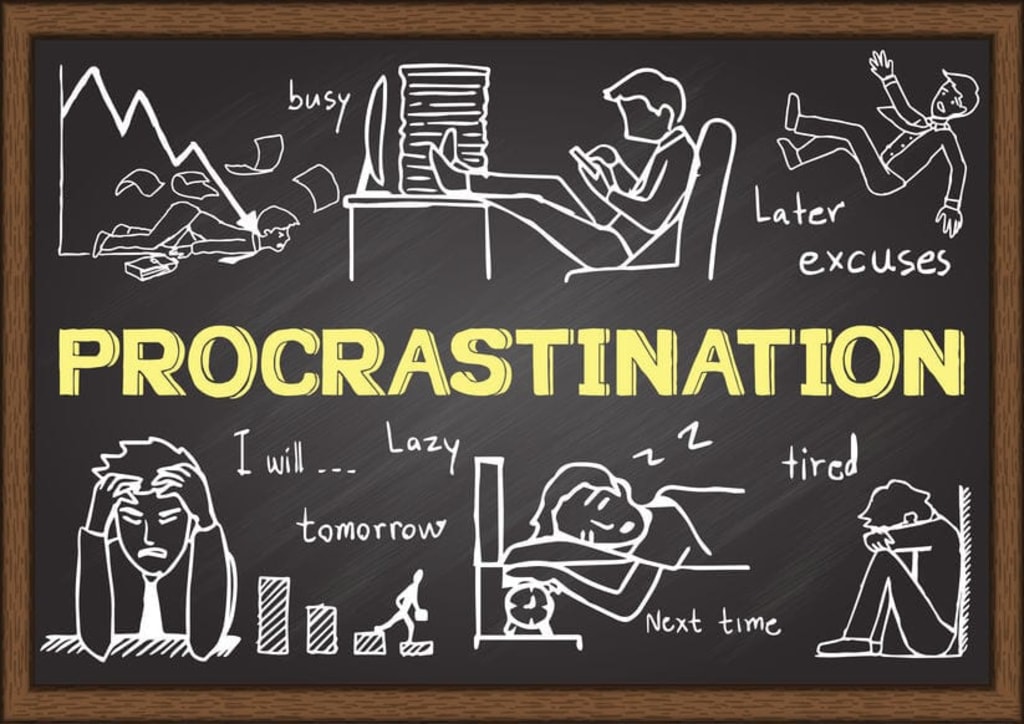
Procrastination is the act of delaying or postponing tasks or responsibilities. It's a common problem that can have negative effects on your productivity and overall well-being. Procrastination can be caused by a variety of factors, including lack of motivation, lack of clear goals, fear of failure, and difficulty managing time. It can also be a symptom of underlying issues such as anxiety, depression, or low self-esteem. If you're struggling with procrastination, there are strategies that you can use to overcome it. Some strategies include setting specific and achievable goals, creating a schedule, eliminating distractions, finding accountability, taking breaks, and seeking support.
Procrastination can be a difficult habit to break, but there are a few strategies that may be helpful in overcoming it:
Set specific and achievable goals:
Setting specific and achievable goals can be a helpful strategy for overcoming procrastination. Here are a few tips for setting effective goals:

Make your goals SMART: Specific, Measurable, Attainable, Relevant, and Time-bound. This acronym can help you ensure that your goals are clear, achievable, and have a deadline.
Break down your goals into smaller tasks: Large, overwhelming goals can be intimidating and may lead to procrastination. Breaking your goals down into smaller tasks can make them feel more manageable and help you stay on track.
Set deadlines: Having a specific deadline can help you stay focused and motivated to complete your tasks.
Be realistic: It's important to set goals that are achievable and realistic. If your goals are too difficult or ambitious, you may become discouraged and be more likely to procrastinate.
Review and adjust your goals: It's okay to adjust your goals as needed. If you find that you're not making progress, it may be necessary to reassess your goals and make any necessary adjustments.
Create a Schedule
Creating a schedule can be a helpful strategy for overcoming procrastination. Here are a few tips for creating an effective schedule:

Identify your most important tasks : Prioritize your tasks based on their importance and level of difficulty. This will help you focus on the most important tasks first and avoid getting bogged down by less important tasks.
Block out time for specific tasks: Set aside specific blocks of time in your schedule for different tasks. For example, you might set aside a block of time in the morning for your most important tasks and a block of time in the afternoon for less important tasks.
Be flexible: It's important to be flexible with your schedule and allow for unexpected events or changes in your plans.
Use a planner or calendar: A planner or calendar can be a helpful tool for organizing your schedule and keeping track of your tasks and deadlines.
Take breaks: It's important to take breaks and allow yourself time to rest and recharge. However, be mindful of how you use your breaks and try to avoid activities that might further contribute to procrastination.
Eliminate Distractions
Eliminating distractions can be an important step in overcoming procrastination. Here are a few tips for reducing distractions:

Identify your distractions: Take some time to identify the things that most frequently distract you while you're working. These might include social media, emails, notifications, or other activities.
Set boundaries: Consider setting boundaries around your work time. For example, you might turn off your phone or log out of social media while you're working on important tasks.
Create a designated workspace: Having a dedicated workspace can help you focus on your work and reduce distractions. If possible, choose a quiet and comfortable space that is free from distractions.
Use tools to block or limit access to distractions: There are a variety of tools available that can help you block or limit access to distractions. For example, you might use a website blocker to prevent yourself from accessing certain websites or a notification blocker to limit the number of notifications you receive.
Take breaks: Taking breaks can be an effective way to reduce distractions and stay focused. However, be mindful of how you use your breaks and try to avoid activities that might further contribute to procrastination.
Finding Accountability :
Finding accountability can be a helpful strategy for overcoming procrastination. Here are a few ways to find accountability:

Work with a mentor or coach: Having someone to hold you accountable, such as a mentor or coach, can be a helpful way to stay motivated and avoid procrastination.
Join a group or community: Joining a group or community of people who are working towards similar goals can provide a sense of accountability and support.
Work with a accountability partner: Consider finding an accountability partner who can help you stay on track with your goals. You can check in with each other regularly to discuss your progress and provide encouragement and support.
Use a productivity tool: There are a variety of productivity tools available that can help you track your progress and hold yourself accountable. For example, you might use a goal-tracking app or a habit-tracking tool.
Seek support from a therapist or counselor: If you're struggling with procrastination, it can be helpful to seek support from a therapist or counselor. They can help you identify the underlying causes of your procrastination and develop strategies to overcome it.
About the Creator
Are Fat People Disabled or Are Disabled People Fat?
There is a question people ask quietly, sometimes without even realising they are asking it. It lives in looks, assumptions, and comments muttered under breath. It sounds like concern, but it is actually judgement. It goes something like this: why are so many fat people in pain? Why are so many fat people using mobility aids? Why are so many fat people struggling to move?
By No One’s Daughter7 days ago in Humans


Comments
There are no comments for this story
Be the first to respond and start the conversation.