
How To Decide Which Knee Brace To Buy
Get the Support You Need for a Pain-Free Life!


One of the most incapacitating conditions for lifters, exercisers, and runners alike is knee discomfort.
It can make you feel uncomfortable throughout your workout or keep you from achieving your training objectives, whether it's a persistent discomfort or a dull, lingering ache. Nonetheless, a knee brace may be a very useful tool for relieving pain and for treating certain injuries and conditions.
Knee Conditions That May Need a Knee Brace
Several different knee ligament injuries and problems might result in chronic knee diseases.
These are a few instances of knee problems:
An ACL injury
An ACL injury refers to the tearing or spraining of the anterior cruciate ligament (ACL), which is one of the major ligaments in the knee joint. This type of injury commonly occurs in athletes, especially those who play high-impact sports such as basketball, soccer, and football. An ACL injury can be very painful and may require surgery and a lengthy rehabilitation period before the affected individual can return to their usual activities.
Jumper's knee, often known as Patellar Tendonitis
Jumper's knee, also known as Patellar Tendonitis, is a common knee injury that occurs due to overuse of the patellar tendon, which connects the kneecap (patella) to the shinbone. It is a type of tendinitis that causes pain and inflammation in the patellar tendon, particularly at the bottom of the kneecap. This injury often affects athletes who engage in activities that involve repetitive jumping, such as basketball and volleyball players. The condition can range from mild to severe, and if left untreated, it can lead to chronic pain and a reduction in physical activity.
MCL Injury
An MCL injury refers to damage or sprain to the medial collateral ligament, which is located on the inside of the knee joint. This type of injury typically occurs when a force is applied to the outside of the knee, causing the ligament to stretch or tear. MCL injuries can range from mild to severe and can cause pain, swelling, and instability in the knee. Treatment for an MCL injury may include rest, physical therapy, and in some cases, surgery.
Sprains and/or other torn ligaments/cartilage.
Sprains and/or other torn ligaments/cartilage refer to injuries that occur when the ligaments or cartilage in a joint are stretched or torn, usually due to sudden twisting or bending of the joint beyond its normal range of motion. This can cause pain, swelling, stiffness, and difficulty moving the affected joint. Common examples of sprains and torn ligaments include ankle sprains and ACL tears, while examples of torn cartilage injuries include meniscus tears in the knee.
Arthritis
Knee arthritis is a type of arthritis that affects the knee joint. It is a degenerative joint disease that occurs when the cartilage in the knee joint wears away, causing the bones to rub against each other. This can lead to pain, stiffness, and swelling in the knee joint, and can make it difficult to perform daily activities such as walking or climbing stairs. Knee arthritis can be caused by a variety of factors, including age, genetics, previous knee injuries, and obesity. There are several treatment options available for knee arthritis, including medication, physical therapy, and surgery.
Knee Brace Variations
Of course, there are several braces for various knee problems. They may be divided into four broad types:
Functional Braces:
Functional knee braces are devices that are designed to provide support and stability to the knee joint during physical activity. They are commonly used by individuals who have experienced knee injuries or have knee conditions that make their knees unstable or prone to injury.
Functional knee braces are typically made of lightweight materials such as neoprene, foam, or carbon fiber and are designed to fit securely around the knee joint. They work by applying pressure to the knee joint and surrounding muscles, which helps to improve joint stability and reduce the risk of injury.
These types of knee braces are different from prophylactic knee braces, which are designed to prevent knee injuries from occurring. Functional knee braces are intended for use by individuals who have already experienced knee injuries or have knee conditions that require additional support and stability.
Rehabilitative Braces:
Rehabilitative knee braces are medical devices designed to assist in the healing and recovery of a knee injury. These types of knee braces are typically prescribed by a medical professional as part of a rehabilitation program following knee surgery or injury. Rehabilitative knee braces provide support and stability to the knee joint, helping to reduce pain and inflammation and allowing for a more rapid recovery. They are often used in conjunction with physical therapy exercises to help strengthen the muscles around the knee and improve range of motion. Unlike prophylactic knee braces or functional knee braces, rehabilitative knee braces are not designed for use during sports or other physical activities.
Unloader Braces:
Unloader knee braces are a type of knee brace designed to provide relief for individuals with knee osteoarthritis. They work by shifting the weight-bearing load from the affected side of the knee joint to the unaffected side, thereby reducing pain and discomfort. Unloader knee braces have a hinge mechanism that provides support to the knee joint and limits the range of motion to reduce the load on the affected side. These braces are typically prescribed by a doctor or physical therapist and are custom-fitted to the individual's leg to ensure proper fit and effectiveness.
Prophylactic Braces:
Prophylactic knee braces are preventive knee braces that are designed to protect the knee from injuries. They are typically worn by athletes who engage in high-impact sports to reduce the risk of knee injuries. Prophylactic knee braces are also used by individuals with a history of knee injuries to prevent future injuries. These braces are designed to provide support to the knee joint and prevent excessive movement in the knee, which can lead to injury. Prophylactic knee braces are different from other types of knee braces in that they are not used to treat existing injuries but rather to prevent them from occurring.
Selecting the Best Knee Brace for Your Needs
While checking out a new brace, there are a few things to bear in mind.
Your Preference
What feels good to one person may not be for another. The most important thing is to keep moving and finding exercises and activities that feel good, says Stauffer.
Keep an eye on how you're feeling during and after your workout
Never should exercising be painful. Although some discomfort after working out is fine, you shouldn't ever have joint pain. If you do, think about consulting a specialist to establish what is right for you.
A knee brace won't be a replacement for an injury like an ACL rupture, though.
Try These Top Knee Braces.
Disclaimer: As Amazon Associates, we earn from qualifying purchases - we will only recommend products with your best interest in mind.
Many ailments, including edoema, repeated knee injuries, sports injuries, and degenerative joints can benefit from the use of this knee brace:
Donjoy Hinged Knee Brace:

Check out the Donjoy Hinged Knee Brace on Amazon here: https://amzn.to/3JKfiWL
These braces are beneficial for knee ligament sprains as well as other knee instability. Also useful for mild osteoarthritis:
DonJoy Braces Running:
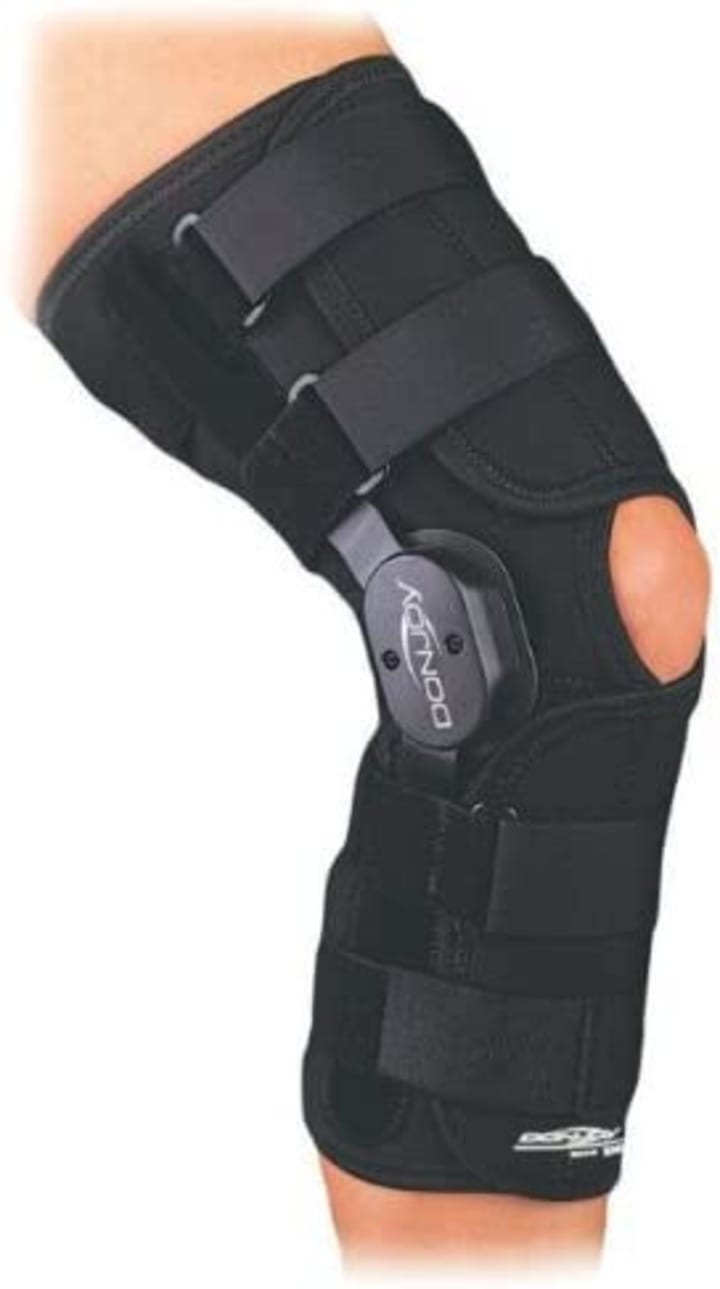
Check out the Donjoy Braces Running on Amazon here: https://amzn.to/3YS4GcE
Shock Doctor Ultra Knee Support:

Check out the Shock Doctor Ultra Knee Support on Amazon here: https://amzn.to/3mYI651
This brace is useful for meniscus offloading following surgical surgery or for mild to severe osteoarthritis:
Breg Fusion Oa Plus:
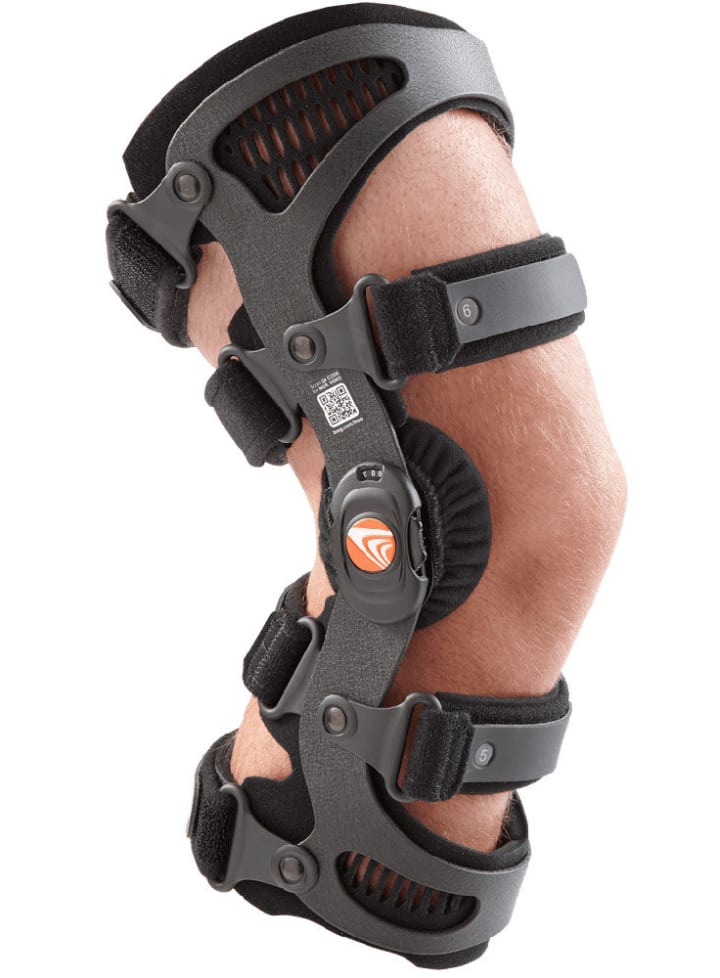
Check out the Shock Doctor Ultra Knee Support on Amazon here: https://amzn.to/3lmH1Uc
Conclusion
In conclusion, knee discomfort can be a debilitating condition for athletes and fitness enthusiasts alike. Knee braces can be helpful in treating knee injuries and conditions, such as ACL injuries, patellar tendonitis, MCL injuries, sprains, torn ligaments/cartilage, and knee arthritis. Knee braces are available in various types, including functional braces, rehabilitative braces, unloader braces, and prophylactic braces. However, it is essential to consult with a medical professional to determine the most suitable knee brace for the individual's specific knee problem or injury. With the proper knee brace and treatment plan, individuals can reduce pain, improve knee stability and support, and return to their regular activities.
About the Creator
My Fitness Equip
Hey everyone! We’re MyFitnessEquip and our mission is to empower people to stay active and healthy.
www.myfitnessequip.com
Keep reading
More stories from My Fitness Equip and writers in Humans and other communities.
Best Exercises For Runners: Get The Most Out Of Your Runs
Benefits of Exercise for Runners. For runners of all levels, there’s one surefire way to boost performance: exercise! Whether you’re an avid runner who’s just beginning your journey or an experienced marathoner, exercises can provide significant benefits to help you get the most out of your runs. In this article, we’ll discuss the importance of exercise, plus a few of the best exercises for runners. We’ll also cover some helpful products that will make your exercise sessions that much more effective. Let’s get started!
By My Fitness Equip3 years ago in Humans
Autonomy Is The Real Privilege
Good morning, freedom-seekers! Today we’re gonna be looking at autonomy. A strange word, I know; one many would probably look at blankly and run away from on sight. We’re gonna figure out what it actually means, consider how it’s achieved, and decipher just how deeply most of us are tangled up in dependence without realising it.
By That ‘Freedom’ Guyabout 13 hours ago in Humans
Asia Shares Rise on AI Optimism as Receding Fed Rate-Cut Bets Lift the Dollar
Asian stock markets moved higher as optimism around artificial intelligence (AI) continued to energize investors, helping offset concerns about global monetary tightening. At the same time, the U.S. dollar strengthened after expectations for aggressive interest-rate cuts by the Federal Reserve began to fade, reshaping global currency and equity dynamics. The contrasting forces — enthusiasm for technological growth versus tighter financial conditions — highlight how markets are navigating a complex and rapidly evolving economic landscape. AI Optimism Drives Asian Equity Gains Across major Asian markets, investor sentiment received a boost from renewed confidence in artificial intelligence and related technologies. Shares of technology firms, chipmakers, and data infrastructure companies led gains, reflecting expectations that AI-driven growth could remain resilient even as borrowing costs stay higher for longer. In Japan, technology-heavy stocks benefited from global demand for advanced semiconductors and AI-related hardware. South Korea’s market also saw gains, particularly among companies linked to memory chips and electronics manufacturing, sectors viewed as critical to the expansion of AI systems worldwide. China’s markets showed more cautious optimism. While economic recovery remains uneven, AI-focused companies and firms tied to digital innovation helped support broader indices, signaling that investors are selectively betting on future growth areas rather than the overall economy. Why Artificial Intelligence Is Lifting Markets AI has emerged as one of the strongest narratives driving global markets over the past year. Investors see artificial intelligence not just as a technological breakthrough, but as a structural shift capable of boosting productivity, corporate profits, and long-term economic growth. From cloud computing and data centers to robotics and automation, AI’s reach spans multiple industries. For Asia — home to major semiconductor producers, electronics manufacturers, and software developers — the potential upside is particularly significant. Market participants believe that AI investment could help cushion the impact of slower growth elsewhere, providing a rare source of optimism at a time when many economies face inflationary pressures and tighter financial conditions. The Dollar Strengthens as Fed Rate-Cut Bets Fade While equities climbed, currency markets told a different story. The U.S. dollar strengthened against most major currencies after investors reassessed expectations for Federal Reserve interest-rate cuts. Recent economic data from the United States suggested that inflation remains sticky and the labor market resilient, reducing the urgency for the Fed to ease policy aggressively. As expectations for early and deep rate cuts receded, U.S. Treasury yields edged higher, making dollar-denominated assets more attractive to global investors. This shift lifted the dollar and put pressure on Asian currencies, including the yen and the yuan. For global markets, a stronger dollar often creates mixed effects — supporting capital inflows into the U.S. while tightening financial conditions elsewhere. How Dollar Strength Impacts Asian Markets A rising dollar presents both challenges and opportunities for Asia. On the negative side, a stronger dollar can: Increase the cost of dollar-denominated debt Put pressure on local currencies Make imports more expensive For emerging markets, this can tighten liquidity and reduce risk appetite. However, export-oriented economies may benefit. A weaker local currency can make Asian exports more competitive in global markets, supporting corporate earnings in manufacturing and technology sectors. This dynamic helps explain why Asian shares were able to rise even as the dollar strengthened — particularly in economies with strong export bases. Investors Balance Growth and Policy Risks The current market environment reflects a delicate balancing act. On one hand, AI optimism is encouraging investors to take on risk, especially in sectors linked to innovation and future growth. On the other, higher-for-longer interest rates in the U.S. are forcing markets to remain cautious. Investors are increasingly selective, favoring companies with strong balance sheets, clear growth strategies, and exposure to structural trends like AI. Speculative assets, meanwhile, face greater scrutiny in a world where cheap money is no longer guaranteed. This selective optimism suggests that markets are not ignoring risks — they are simply prioritizing opportunity where they see long-term value. China’s Role in the Market Equation China remains a key variable for Asian markets. While AI-related optimism has lifted certain sectors, concerns persist over China’s property market, consumer confidence, and regulatory environment. Investors are watching closely to see whether policymakers introduce additional stimulus to support growth. For now, China’s technology sector offers pockets of opportunity, particularly in areas aligned with government priorities such as advanced manufacturing and digital infrastructure. However, broader market gains remain constrained by economic uncertainty. What This Means for Global Investors The combination of rising Asian shares and a strengthening dollar sends an important signal: markets are adjusting, not retreating. Rather than pricing in a sharp economic slowdown, investors appear to be preparing for a world where: Interest rates remain elevated Growth is uneven but not collapsing Innovation continues to drive select sectors AI has become a central theme that cuts across regions, helping to unify market sentiment even as monetary policy diverges. Risks Still Lurking Beneath the Surface Despite recent gains, risks remain. Geopolitical tensions, fragile supply chains, and uncertainty around central bank policy could quickly disrupt market momentum. A stronger dollar could also weigh more heavily on emerging markets if financial conditions tighten further. Additionally, some analysts warn that AI enthusiasm could become overheated if expectations outpace actual earnings growth — a reminder of past technology-driven market cycles. For now, however, optimism appears measured rather than euphoric. Final Thoughts Asian shares rising on AI optimism, even as receding Fed rate-cut bets lift the dollar, captures the complexity of today’s global markets. Investors are navigating competing forces — innovation-driven growth on one side and restrictive monetary policy on the other. The result is a market environment defined not by blanket risk-taking or fear, but by selective confidence. As long as AI continues to deliver tangible economic value and global growth avoids a sharp downturn, markets may find room to advance — even in a world where interest rates stay higher for longer.
By Muhammad Hassan5 days ago in Humans
The Devil's Cut
“Comrade, finally you’re awake.” The voice was smooth, sensual. A flickering incandescent bar was all that lit the white, sterile room. All Vladimir remembered was everything going black. He tried to move his arms and found them strapped to the gurney.
By Matthew J. Fromm7 days ago in Fiction




Comments
There are no comments for this story
Be the first to respond and start the conversation.