
How Should We Perceive Immigration?
A Fight for Justice in Favor of Human Rights for All Humans and Immigrants


Introduction
In the 21st century, the scale of interaction between different countries and cultures has increased to an unprecedented extent. These interactions take on various forms—financial investments, trade, and, most crucially, the movement of people. However, while financial capital flows freely across borders, human mobility remains highly restricted. Some individuals enjoy almost unrestricted travel opportunities, while others are confined by borders and visa restrictions, limiting their chances of seeking a better future.
Freedom of movement is a fundamental right that should be at the heart of modern political discourse. No nation should have the authority to prevent people from seeking a new place to live. If money moves freely while people remain trapped, economic disparities will persist, reinforcing systemic inequalities. Nevertheless, free movement alone will not resolve all injustices; it must be viewed as a starting point for broader discussions on global equality.
The Reality of Immigration Policies
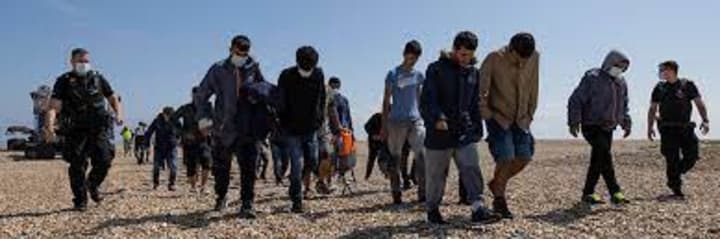
Today, governments decide who is allowed to enter their borders, for how long, and under what conditions. This results in a stark division: those who are permitted entry and those who are labeled as "illegal." This term has been weaponized by populist and anti-immigration politicians to vilify individuals seeking a better life. Often, these individuals flee war, persecution, or economic hardship, yet their desperate journeys are met with hostility and criminalization.
While asylum seekers have the legal right to apply for refuge, the process is often lengthy and bureaucratic. The Syrian refugee crisis exposed the inefficiencies and inhumanity of asylum systems worldwide, with some applications taking years to be processed. Meanwhile, those waiting for asylum remain in limbo, unable to work or integrate into society.
The Case for Consistency in Movement Policies
Different forms of movement—whether financial or human—are governed by vastly different sets of rules. While countries welcome foreign investments, they often reject the people behind them. This contradiction raises an important question: Should the movement of people be as unrestricted as the movement of financial capital?
Historically, developed nations have encouraged the emigration of their own citizens while simultaneously restricting immigration. The United States, for example, has long advocated for the right of political dissidents to flee authoritarian regimes, yet it has frequently denied entry to individuals fleeing economic hardship or gang violence. This double standard reflects a broader hypocrisy in global migration policies.

The Economic Argument for Free Movement
From an economic perspective, both labor and financial capital contribute to growth. Without workers, industries stagnate; without investments, economies shrink. Yet, while financial capital is welcomed with open arms, labor capital—human workers—faces extreme barriers.
Historically, countries like Germany, France, and the United States have benefited immensely from immigrant labor. Whether in agriculture, healthcare, or technology, migrant workers have filled essential roles that native populations have been unwilling or unable to take. However, the economic contributions of immigrants are often overlooked in favor of narratives that portray them as burdens.
The Ethical Dilemma: Borders and Human Rights
The current border system perpetuates systemic violence. Heavily militarized zones, often equipped with armed guards and surveillance technology, create hostile environments where migrants risk their lives. Border deaths have become so frequent that they are perceived as an unfortunate but inevitable reality. Between 2014 and 2015, over 3,500 people died attempting to cross from Morocco to Europe. Such tragedies should not be normalized.
Rather than protecting nations, restrictive border policies fuel human trafficking and exploitation. When legal entry is impossible, desperate migrants turn to smugglers who subject them to inhumane conditions. European shores are littered with the remains of those who perished seeking a better life—an undeniable testament to the failures of existing immigration policies.

Implementing Freedom of Movement
The European Union offers a model for free movement that could be expanded globally. EU citizens can travel, work, and reside in any member state with minimal restrictions. While some border checks exist, movement within the EU remains largely unrestricted. This framework could serve as a blueprint for a more just and humane global migration policy.
It is unrealistic to expect borders to disappear overnight. However, pragmatic reforms can be implemented to facilitate freer movement while maintaining basic security measures. Documentation requirements should be standardized, and criminal background checks could be used to ensure safety without resorting to exclusionary policies. The goal should not be to eliminate borders entirely but to dismantle the systemic violence they currently uphold.
Consistency in Immigration and Emigration
The principle of consistency suggests that if a country supports emigration, it should also allow immigration. Yet, many nations advocate for their citizens' right to migrate while restricting entry to foreigners. This contradiction is evident when democracies criticize authoritarian regimes for preventing emigration while simultaneously enforcing strict immigration controls. If a country benefits from its citizens working abroad and sending money home, it should equally recognize the right of others to seek better opportunities within its borders. Otherwise, these policies become hypocritical and self-serving.
Some argue that immigration should be selective, favoring individuals based on skills or economic contribution. However, treating people as economic assets rather than individuals with rights raises ethical concerns. Should societies categorize potential immigrants based on perceived usefulness, as they would with commodities? This approach risks fostering systemic discrimination, favoring certain professions, nationalities, or even personal characteristics over others. True equality demands a more just and inclusive immigration system.
Borders and the Violation of Human Rights
Borders, often portrayed as symbols of national security, have become sites of systemic violence. Militarized zones and armed patrols criminalize migration, leading to thousands of preventable deaths. From 2014 to 2015 alone, over 3,500 people died attempting to cross from Morocco to Europe. Governments deflect attention from this crisis by labeling migrants as "illegal" or dangerous, ignoring the humanitarian disaster unfolding at their borders.
Rather than offering protection, border enforcement often pushes desperate people toward even greater risks, such as treacherous sea crossings or reliance on human traffickers. This manufactured danger turns migration into a life-threatening ordeal. Meanwhile, media coverage selectively amplifies tragedies, portraying them as unavoidable rather than the result of deliberate policies. Instead of militarizing borders, governments should focus on humane policies that respect the dignity and rights of all individuals seeking a better future.
Conclusion
Freedom of movement is not just an economic or political issue—it is a moral imperative. The ability to seek a better life should not be a privilege reserved for the few but a fundamental right accessible to all. Current migration policies are plagued by inconsistencies, contradictions, and outright injustices. As long as money moves freely while people remain trapped, true economic and social equality will remain out of reach.
The world must move toward a more humane approach to immigration—one that recognizes the shared humanity of all people, regardless of where they were born. While open borders alone will not solve all global inequalities, they are a necessary step toward a more just and equitable future.
Written by Sergios Saropoulos
About the Creator
Sergios Saropoulos
As a Philosopher, Writer, Journalist and Educator. I bring a unique perspective to my writing, exploring how philosophical ideas intersect with cultural and social narratives, deepening our understanding of today's world.
Keep reading
More stories from Sergios Saropoulos and writers in Humans and other communities.
Rethinking Justice and Revenge: Echoes from the Oresteia
The stage opens with blood and ends with law. Aeschylus’ Oresteia, a trilogy of ancient Greek tragedies, charts a world suspended between the emotional and the institutional. At its heart lies a question that still haunts us: What is justice, and how does it differ from revenge? The plays present a cyclical, generational pattern of violence: Agamemnon sacrifices his daughter Iphigenia. His wife Clytemnestra murders him in return, and their son Orestes, in turn, kills her. Each act is a response to a prior harm, each justified by the language of duty, loyalty, and moral outrage. But then, something shifts. Athena intervenes, and the cycle halts. Not through more blood, but through judgment, argument, and law. What began as vengeance ends with justice, or so it seems. While the trilogy is often seen as a celebration of justice triumphing over revenge, a deeper reading reveals how both impulses share a common emotional and neurological origin. Drawing on philosophical insights from Plato and contemporary thinkers like Martha Nussbaum and Jonathan Haidt, as well as findings from neuroscience, the piece argues that justice and revenge are not opposites but reflections of the same human desire to restore moral balance. This article explores the fragile boundary between justice and revenge, using Aeschylus’ Oresteia as a philosophical lens.
By Sergios Saropoulos9 months ago in Humans
I am dead
I am dead. I haven’t always been dead. I was born alive to zombie parents but I slowly became dead once I was a little older. My zombie parents raised me as their own kind even when I wailed, ate, slept and carried on as a human. Zombie-kind was always good to me because of how I was protected by others. By this structure of zombie-run society, I was able to create my own identity and be free to express myself in any way I choose.
By Melissa Ingoldsby4 days ago in Humans
A Knight of the Seven Kingdoms Series Review (Season 1)
As one of the biggest properties in fantasy, A Song of Ice and Fire remains immensely popular with audiences. After reaching far into the past with House of the Dragon, a second spin-off was on the cards. A Knight of the Seven Kingdoms serves up a bite-sized slice of action and drama, but it still claims a spot among the best small-screen titles.
By Robert Cain3 days ago in Geeks




Comments
There are no comments for this story
Be the first to respond and start the conversation.