
How Property Management Software for Commercial Use Saves Time and Money for Managers
Save time, cut costs, and manage commercial properties with ease.

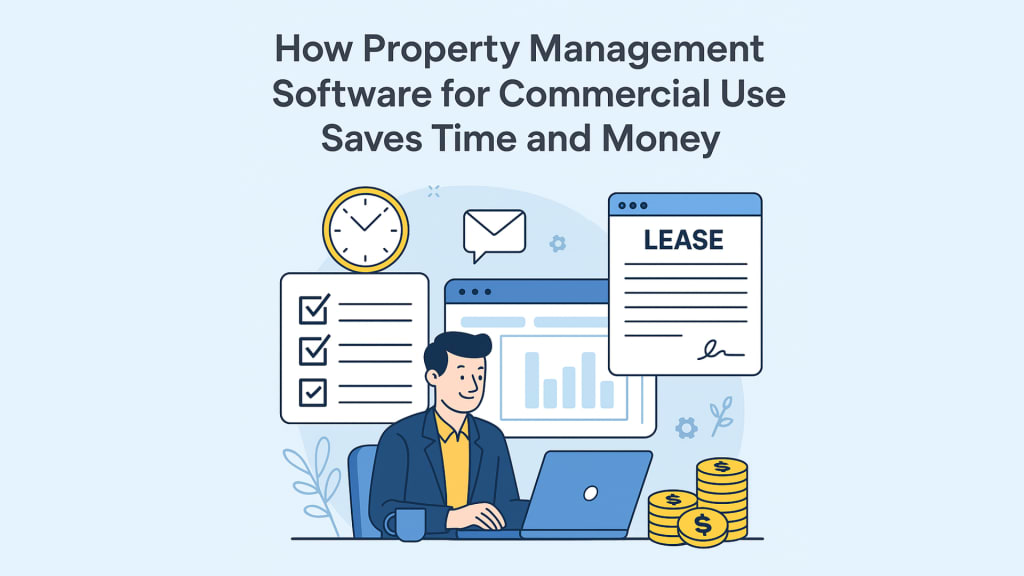
Managing commercial real estate is a complex task involving high-value leases, long-term tenants, recurring maintenance, and strict compliance requirements. Unlike residential property management, the stakes are higher, the contracts are more detailed, and the tenant expectations are elevated.
That’s why more property managers are turning to property management software for commercial use digital platforms that streamline operations and replace outdated manual processes. In this blog, we’ll explore how commercial property managers save significant time and money using software designed specifically for the demands of commercial real estate.
1. Automated Rent Collection and Invoicing
Rental Mangement is one of the most time-consuming and critical parts of managing commercial properties. With tenants paying on different schedules and sometimes with variable rent structures, tracking payments manually can lead to delays, errors, and even disputes.
How software helps:
- Automatically generates rent invoices based on lease terms.
- Sends automated payment reminders to tenants.
- Supports multiple payment methods, including direct debit and online transfers.
- Tracks overdue payments and applies late fees when necessary.
Real-world impact:
A commercial property manager who once spent 8–10 hours per week chasing payments can now automate this process, freeing up their time for higher-level strategy and tenant relations.
2. Efficient Maintenance Tracking and Vendor Management
Commercial properties must be well-maintained to retain value and ensure tenant satisfaction. Maintenance tasks in office buildings, retail spaces, and warehouses can range from HVAC servicing to security system upgrades.
Property management software for commercial use allows managers to:
- Log maintenance requests directly from tenants.
- Assign jobs to approved vendors.
- Monitor job progress and completion status.
- Store service history for future reference.
Why it matters:
Quick response to maintenance issues improves tenant satisfaction and retention. In addition, preventive maintenance tools in the software help avoid costly repairs and equipment failures.
3. Centralised Lease and Document Management
Commercial leases are legally binding documents with complex clauses around base rent, operating expenses, rent escalations, and more. Manually managing these documents can lead to missed deadlines and non-compliance.
- Software advantages include:
- Central storage of all lease documents in a secure cloud-based system.
- Searchable lease data for quick retrieval.
- Automated alerts for renewal dates, rent escalations, and option clauses.
Example:
A property manager overseeing 20 commercial units can receive automatic alerts about expiring leases and rent increase dates — avoiding the risk of undercharging or forgetting to renew.
4. Advanced Financial Reporting and Budget Management
Property owners and investors expect detailed financial reporting, and manual bookkeeping often falls short. With built-in accounting features or integrations with tools like Xero or QuickBooks, software helps generate:
- Income and expense reports.
- Balance sheets and profit/loss statements.
- Budget tracking across multiple properties.
- CAM (Common Area Maintenance) reconciliation.
How it saves money:
Accurate, automated reports reduce reliance on third-party accountants, minimise tax errors, and provide insights that help reduce operational costs.
5. Improved Tenant Communication and Satisfaction
Clear and timely communication is essential in commercial property management. Whether it’s informing tenants about scheduled maintenance or responding to service requests, communication delays can hurt your reputation and tenant relationships.
Features that enhance communication:
- Tenant portals with 24/7 access to lease documents, invoices, and support.
- In-app messaging and announcements.
- Automated alerts for maintenance updates or building notices.
Result:
Tenants feel heard and valued, which increases lease renewals and reduces vacancy rates.
6. Portfolio-Wide Oversight and Scalability
As your portfolio grows, managing operations across multiple buildings becomes increasingly complex. Property management software for commercial use provides a centralised dashboard, allowing managers to view performance data across all assets in one place.
Scalability benefits:
- Consistent processes across all properties.
- Single sign-in for managing multiple locations.
- Consolidated financial and operational reporting.
For example:
A manager with 10 buildings in different cities can view key performance indicators (KPIs), rent roll summaries, and maintenance statuses — all from one screen.
7. Better Compliance and Risk Management
Commercial property managers must comply with a wide range of regulations, including fire safety, accessibility standards, environmental requirements, and lease terms.
Compliance tools include:
- Scheduled compliance inspections.
- Digital document storage for audit trails.
- Alerts for permit renewals or mandatory inspections.
Time and cost savings:
Avoiding non-compliance penalties, lawsuits, and operational downtime can save thousands of dollars annually.
8. Customisable Workflows and Integrations
Every commercial property operation is unique. The best platforms allow managers to tailor workflows and connect with tools they already use — from CRMs to building automation systems.
Example integrations:
- Accounting software (Xero, MYOB, QuickBooks).
- Communication tools (Slack, Microsoft Teams).
- Facility management platforms.
This customisation improves productivity and ensures the software fits naturally into your existing workflow — rather than forcing new habits.
9. Cloud Access and Mobile Functionality
Today’s property managers are on the move — inspecting buildings, meeting clients, or resolving maintenance issues. Cloud-based platforms with mobile apps ensure you stay connected wherever you are.
Benefits:
- Access real-time data from any device.
- Submit updates, photos, or notes directly from the field.
- Approve invoices or work orders on the go.
This flexibility is not just convenient — it accelerates decision-making and helps reduce response time for critical tasks.
Discover how to excel in every aspect of the role with our latest blog: Property Management Duties and Responsibilities — your guide to running efficient, profitable, and tenant-friendly properties.
Final Thoughts
The commercial property landscape is evolving fast, and managers must adapt to stay competitive. Relying on spreadsheets, emails, and paper files is no longer sustainable in a world where efficiency, accuracy, and tenant satisfaction are paramount.
By adopting property management software for commercial use, managers gain access to powerful tools that save time, reduce costs, and enhance service delivery. From automated rent collection to real-time maintenance tracking and advanced reporting, the benefits are measurable and long-lasting.
Ready to streamline your operations and boost your bottom line?
About the Creator
Ava Bennett
I’m Ava Bennett, an accomplished SEO Manager at Rentaaa, a cutting-edge software company that simplifies rentals for Fleet ,rental accommodation , self storage and co working space management software.
Keep reading
More stories from Ava Bennett and writers in Humans and other communities.
Why Every Property Manager Needs Rental Property Management Software in 2025
In 2025, the property management industry is no longer what it used to be a decade ago. With technology rapidly reshaping every aspect of real estate—from virtual property tours to AI-driven maintenance alerts—property managers who rely solely on traditional methods are falling behind. One of the most transformative tools in modern property management is rental property management software.
By Ava Bennett10 months ago in Humans
Dating Advice For Singles Facing Repeated Attraction To Wrong Partners
There are cases where many singles repeat the experiences of being attracted to a partner only to realize that the partner is not compatible or emotionally unavailable. These repetitive experiences tend to cause frustration, confusion and self doubt. The first move towards significant changes in dating decisions is to identify relationship patterns that appear to recur.
By Robert Smith2 days ago in Humans



Comments (1)
Commercial real estate management is tough. Software helps big time with rent collection and maintenance. I've seen manual processes be a headache. This digital stuff streamlines it all.