
How much is the excretion of one billion people a day? Where is the excreta produced discharged?
How to deal with human excreta mechanically and scientifically
Human beings have not reached the first level of civilization and are still in a state of maintaining life through the cycle of food metabolism and excretion. How much excretion does 8billion people have a day? After these excreta are produced, where will they eventually be discharged? Will they pollute the environment?
According to the research of scientists, the human body produces about 1.7 kg of excretion every day. If the population is 1billion, the total excretion per day is about 2million tons.
It will reach 24million tons in 10 days and 240million tons in less than three months. It is really shocking to think that if such a large amount of excreta cannot be reasonably treated, the living environment of human beings will be unimaginable.
Fortunately, modernization has many scientific and technological means and mechanical equipment for auxiliary treatment, which can ensure that people's life is in a clean and orderly running state, and human excreta has also been mechanically and scientifically treated, so there is a more reasonable arrangement.
Now the automatic flushing of the toilet in the bathroom has become one of the common household devices. After human excreta is flushed into the sewer, it will enter the underground septic tank where the building is located. The septic tank is designed to be layered. After these wastes come down, they will be precipitated and treated, and will be connected with the urban sewage pipe.
In short, the work of the septic tank is divided into three steps: the first stage anaerobic chamber, the second stage anaerobic chamber and the clarification chamber. The two anaerobic chambers digest and hydrolyze the sewage discharged from the sewer, settle bacteria and impurities, and then enter the clarification chamber.
After separation, the liquid will enter the sewage treatment plant through the sewage pipe. The solid waste left in the septic tank under the community building will gradually accumulate, and there will be a septic truck to treat it regularly. After collection and treatment, these will be turned into fertilizer or buried in the waste treatment station.
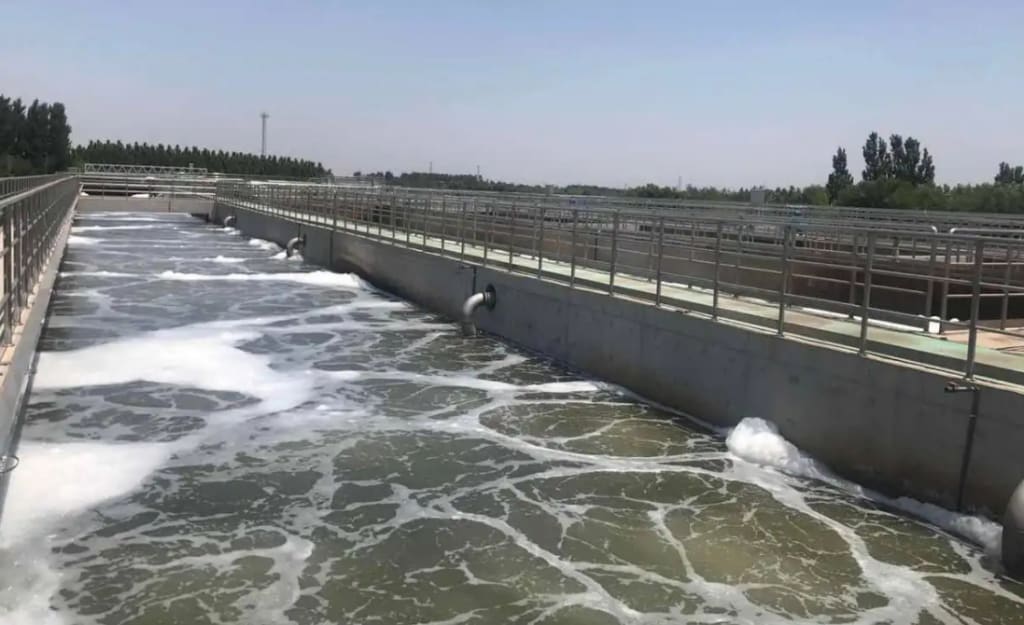
After the separated excreta liquid enters the sewage treatment plant, the sewage treatment plant should further separate the bathing domestic sewage mixed in these liquids and the chemical components. Many sewage treatment plants usually use activated sludge, which contains a large number of beneficial microorganisms and can help decompose the impurities in the sewage. It is also a relatively pollution-free environmental treatment method.
After the sewage treatment plant separates these liquids, the water will be discharged to the water source through the sewage pipe after the water quality meets the discharge standard.
The sewage discharged into the water source will become a water source that can be reused through natural sedimentation, purification and regulation in more water areas. The water extracted by some waterworks from the water source will be disinfected and purified, recycled back to the city's water supply system, and then used by people. Seeing here, many netizens may feel a little nauseated, In fact, theoretically speaking, there will be some simple sense of picture.
But in fact, through the aseptic operation of modern scientific and technological means, these sewage has been turned into recyclable purified water again, and has been naturally purified by nature, and has completely reached the standard of reuse.
In fact, the human body itself is composed of organic matter, which will also become decomposed inorganic matter in the future. If you think from this point of view, there is actually no unacceptable garbage, especially after using modern treatment methods for efficient treatment.
Even mega cities with tens of millions of people can maintain a clean and orderly cycle of urban systems, which can only be achieved by two high-tech means. Otherwise, when people used latrines before the 1980s, there was no way to carry such a large urban population.
In the past, detection relied on manual cleaning, which was inefficient and seriously polluted, and even caused some epidemics and bacteria during the treatment process, because the urban population was not so dense at that time.
Moreover, the treatment methods of detection are simply centralized composting and open air drying, and there are also many leftover problems, such as occupying land and causing certain impact on the environment, and also forming unpleasant smell and flying around. These practical problems have plagued humans for many years.
It was not until the upgrading of modern industrial level and the construction of many automatic dung extractors and sewage treatment plant treatment systems that these situations changed significantly, and the detection in the city almost disappeared, replaced by the automatic flushing system connecting the sewage pipe of the sewage plant.
The continuous development of human civilization has brought more convenience and comfort to modern life. These are only superficial phenomena that people see. Behind the orderly operation of the huge machine of the city, there are countless scientific and technological means to support the city cleanliness maintenance system, so that human beings can always live in a clean and tidy environment.
After reading these introductions, we finally know that human excreta, even if there is a very amazing amount, can be treated and effectively reused at all levels. Even cities in developed regions have built a complete set of automatic excreta collection and treatment systems, which can automatically separate and treat excreta and garbage, and can also carry out aseptic and disinfection operations, which not only makes the environment better, And it has also made a good contribution to reducing environmental pollution.
About the Creator
Keep reading
More stories from writers in Humans and other communities.




Comments
There are no comments for this story
Be the first to respond and start the conversation.