
How I redefined my sexuality after marriage
It's hard enough when you're single...
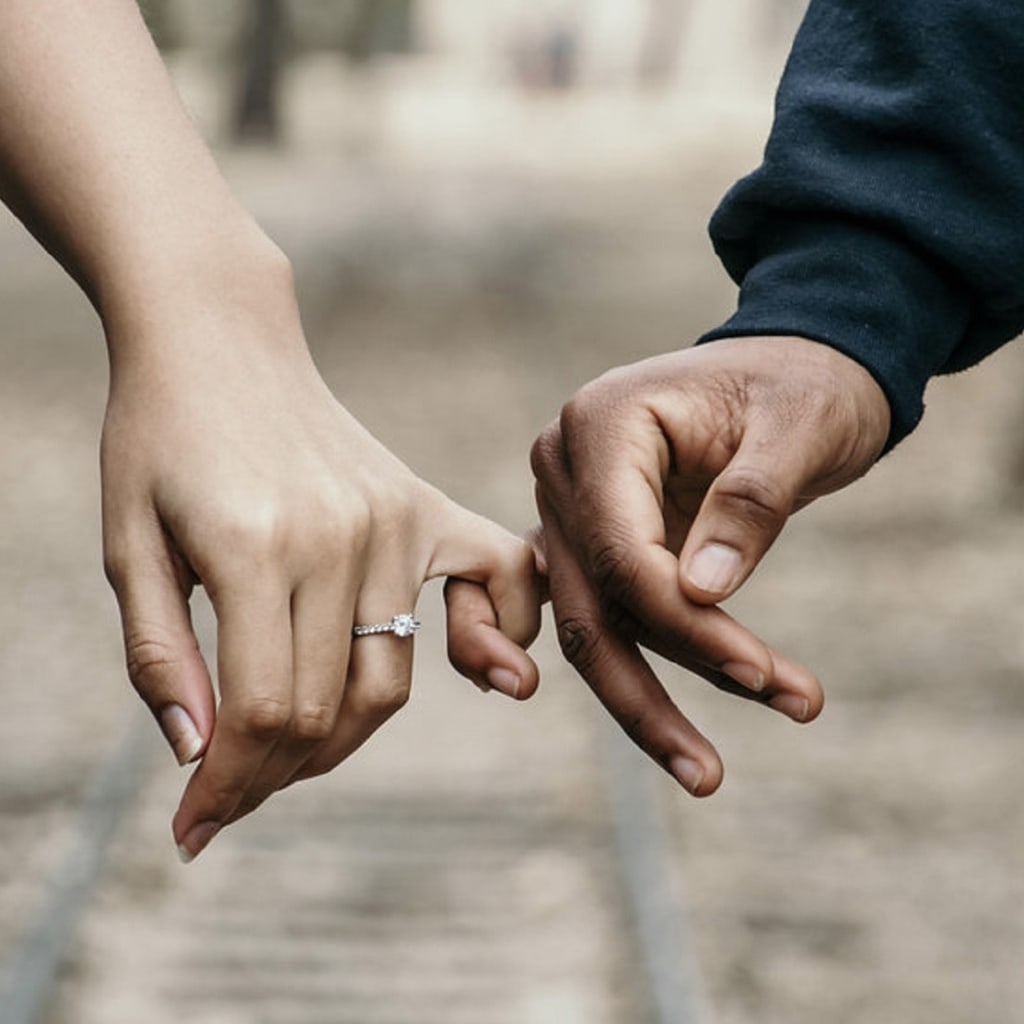
A few days ago, I woke up to a Buzzfeed article about True Blood actress Anna Paquin defending her marriage to a cisgender heterosexual man as a bisexual woman. I am paraphrasing, but the comment was that it was “unfortunate” that her marriage “does little for the cause.” In 2021 that could be the conclusion some reach, but years ago that was far from the thought I had when I first learned that an openly bisexual woman married a straight man. My first thought was more along the lines of. . . “You can do that?”
It feels a little silly now, but thinking back, I grew up viewing bisexuality as a type of “off brand” homosexuality. Filtered through the intense homophobia I had grown up surrounded by, bisexuality was a little referenced subject, and I’d come to think of it as “a few shades right of wrong” if that makes sense. To my teenaged mind, people who were bi weren’t pigeon holed by the rigid standards of our ideals. That meant that, naturally, bisexual people did not get married. How could they? Didn’t bisexuals, I thought, flit from person to person based on what they were in the mood for? What if they were with one sex, I thought, and missed the other? It didn’t help that my first bi friend in my first year of high school maintained that she always had both a boyfriend and a girlfriend at the same time who knew nothing about each other. According to her, this was the way all bi people exist.
Thus, the idea of bisexuality morphed into this cool type of rebellion. “I am not bound to marry a man (or woman), nor will I be stereotyped as lesbian (or gay)! I can, and will, have both!” declared the defiant bisexual. I apologize for how cringe inducing this train of thought is but, given the circumstances, I’m honestly surprised that more of the damaging homophobic stereotypes I grew up with didn’t stick.
The irony is that I’ve since come out as a bisexual to my husband and a few close friends. I fill it out on forms. I’ve slowly found the courage to weave being bi into my average everyday existence. I now find myself familiar with the situation Anna Paquin finds herself defending. But reading that article made me realize that there had been a moment the year before that made me question the “Straight *but open” label I had gotten comfortable wearing.
I turned to one of my closest friends and swore him to secrecy. This is someone I’d spent ten years discovering sexuality with. I didn’t think twice about confiding in him about something that seemed to fit right in with the conversations we often had as teenagers. So, I told him that I knew I loved my husband more than anything or anyone. And that I knew I was still attracted to him, and men in general. But I also knew that every time I was around a certain friend, I had the overwhelming urge to kiss her and I didn’t know what that meant. I opened up about how afraid I was that my feelings would make my husband hate me. I told him that I’d never speak to her again if it was what my husband wanted. I didn’t want to ruin the life I’d finally earned with the amazing man I’d found.
His response: that I needed to “suppress my urges” and that out of respect for my husband I should “control myself.”
Thinking about it now, this fed directly into those deeply ingrained, heavily damaging, bisexual stereotypes I’d believed years before. That people who felt the way I did could not exist in monogamous relationships and were likely to sabotage any they did find themselves in. I was filled with guilt at the idea that my “rampant lustful urges” could endanger my relationship with the person I’d promised to spend forever with. That even my closest friend found my admission so overly sexual and I’d need to “tone myself down” to have any hope of keeping my marriage. After that, I committed to my “Straight *but open” label. What did that asterisk matter anymore? I’d landed in a heteronormativity relationship. For all intents and purposes, I was straight. It took me a while for me to find my way out of the mental and emotional maze that conversation created.
Fortunately for me, my husband was more magnanimous with me than I was with myself. The more I opened up, the more space he gave me to do so. He didn’t, and doesn’t, sexuality or fetishize my identity. He didn’t react with the revulsion I was so afraid of. He listens. He laughs with me. He’s explored queer cultures and identities with me. I can’t count how many “I had a crush on that girl!” realizations he has sat with me through as I dissect my past and find the moments of that queer identity peeking through. I can now fully identify with Anna Paquin when she responded to that person:
“I’m a proud bisexual who is married to a wonderful human being who happens to be a man. If he doesn’t have a problem with it, why should anyone else?”
Even as I write this, I’m still coming to terms with myself. Am I anxious about wearing a queer identity because I exist in a relationship with a cisgender heterosexual man and therefore pass as straight? Yes.
Am I afraid that I’m “co-opting” a culture that doesn’t belong to me in a community where many feel I don’t actually belong or don’t even exist? Yes.
Do I still suffer from years of internalized homophobia and a sneaking hidden fear that I’m actually just gay and one day with a snap of my fingers my marriage will implode? Yes. Too much.
Even after reading this, my husband smiled his reassuring smile and promised that no matter what happened he would always love me and that was all that mattered. There’s still guilty and anxiety and a swirl of emotions I’m not sure I will ever truly find peace with. But my husband is an amazing partner and ally. To the LGBTQIA+ community, and to his bisexual wife.
About the Creator
Keep reading
More stories from Samantha Williams and writers in Humans and other communities.
We Need to Talk
My experience took place when I was seven. I’m not going to go into detail, partly because over the years I’ve pushed a lot of them out of my mind. It almost feels like a weird nightmare at this point, 20 years later. Also, I take trigger warnings seriously and wouldn’t want anyone to be affected by the violent details I do remember. What I will say is that it involves being locked in a closet with two younger brothers while the older brother played video games with his back against the door. All of the perpetrators were under 15. And because of something some people familiar with fundamental religions call “the two witness rule” no one was ever charged. My attackers grew up and moved away unscathed. No one ever knew.
By Samantha Williams5 years ago in Viva
Kindred Spirits vs Soulmates: Key Emotional Differences.
The terms “kindred spirit” and “soulmate” are often used interchangeably, but they describe fundamentally different kinds of connections. Both are meaningful, but the emotional dynamics, depth, and purpose of each connection vary. Understanding these distinctions helps you recognize the nature of your relationships and navigate them with clarity, emotional balance, and intention.
By Wilson Igbasi3 days ago in Humans


Comments
There are no comments for this story
Be the first to respond and start the conversation.