
How English Transformed World
English has played a significant role in shaping the world as we know it today.


It is the dominant language of international business, science, technology, diplomacy, and popular culture. It has become the global lingua franca, spoken by over 1.5 billion people worldwide, making it the most widely spoken language in the world.
The rise of English as a global language can be traced back to the British Empire. As the British colonized and expanded their territories, they brought the English language with them. English became the official language of many colonies, including India, Canada, Australia, and New Zealand. As a result, English spread rapidly around the world. Today, it is the official language in over 70 countries and is spoken as a second language by billions of people.
The rise of the internet and globalization in the 20th century has further cemented English as the dominant language of international communication. The majority of websites and online content is in English, making it the primary language for accessing information online.
In addition, English is the language of choice for international business, with most companies conducting their business in English. This has led to a growing demand for English proficiency, with many people around the world seeking to learn the language to advance their careers and access new opportunities.
In addition to its role in business and technology, English has also played a major role in shaping popular culture. The majority of movies, music, and literature produced in the world is in English, making it the primary language of entertainment. This has led to the export of American and British culture around the world, influencing the way people think, dress, and behave.
English has also played a crucial role in diplomacy and international relations. It is the language of choice for international organizations such as the United Nations, the International Monetary Fund, and the World Bank.
English is also the language used by most international airlines, making it the primary language for air travel. This has led to the development of a common language for international communication, making it easier for people from different countries to understand each other and collaborate.
However, the dominance of English as a global language has also led to concerns about linguistic imperialism and the erosion of local languages and cultures.
Critics argue that the spread of English has led to the marginalization of other languages and cultures, making it harder for people to maintain their own identities.
Despite these concerns, it is clear that English has had a profound impact on the world. It has become the dominant language of international communication, shaping the way we do business, access information, and interact with each other.
English has opened up new opportunities for people around the world, making it easier for them to communicate and collaborate. It has also played a major role in shaping popular culture, influencing the way people think and behave.
It is also important to note that the spread of English has not only brought opportunities but also challenges. The pressure to learn and speak English can lead to linguistic and cultural homogenization, which can have negative effects on individuals, communities, and nations.
However, it is possible to promote linguistic and cultural diversity while also valuing the role of English as a global language. The key is to find a balance between promoting multilingualism and preserving local languages, cultures, and identities while also providing access to the opportunities provided by English.
In conclusion, English has transformed the world in many ways. It has become the dominant language of international business, science, technology, diplomacy, and popular culture. It has played a crucial role in shaping the way we communicate, access information, and interact with each other.
English has opened up new opportunities for people around the world, making it easier for them to communicate and collaborate. However, it also has its drawbacks such as the erosion of local languages and cultures. But overall, it's undeniable that English has had a profound impact on the world and will continue to shape the future in many ways.
About the Creator
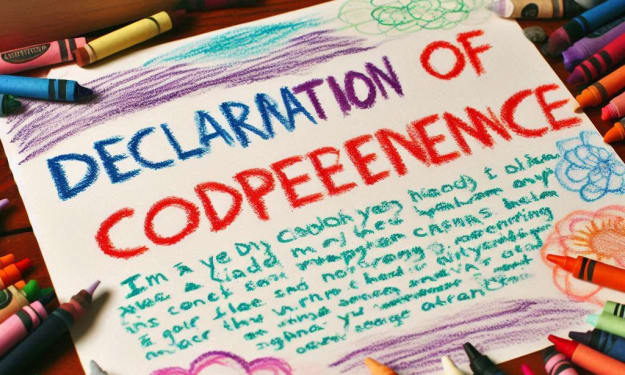
A Historic Declaration
We the People of the Husbands of the United States of America, in Order to form a more perfect Union, and I mean you...with me...establish Justice, insure domestic Tranquility, provide for the common defence, promote the general Welfare, and secure the Blessings of Liberty to ourselves, after Puberty, do ordain and establish this Declaration of Co-Dependence.
By Gerard DiLeo5 days ago in Humans
When the Sky Burned Red
When the Sky Burned Red The first bomb did not sound like thunder. It sounded like the sky tearing apart. Aamir had never heard silence scream before. But that morning, when the explosion shattered the windows of his small family home, silence screamed louder than the blast itself. For a moment, everything froze — the birds mid-flight, the wind mid-breath, his mother’s voice mid-sentence.
By Tazamain khan a day ago in Humans
A Planetary Alignment will coincide with Mercury Retrograde
Double phenomena in the heavens Some people say in jest that the planets have aligned in their favor when life works the way they desire. Were you aware that there are seasons when things do line up in the heavens? There will be a planetary alignment AKA a planet parade, on February 28, 2026.
By Cheryl E Preston6 days ago in FYI



Comments
There are no comments for this story
Be the first to respond and start the conversation.