
How Ancient Humans Survived a Global Climate Disaster 8,200 Years Ago
Adaptation, Innovation, and Resilience in the Face of Sudden Climate Change

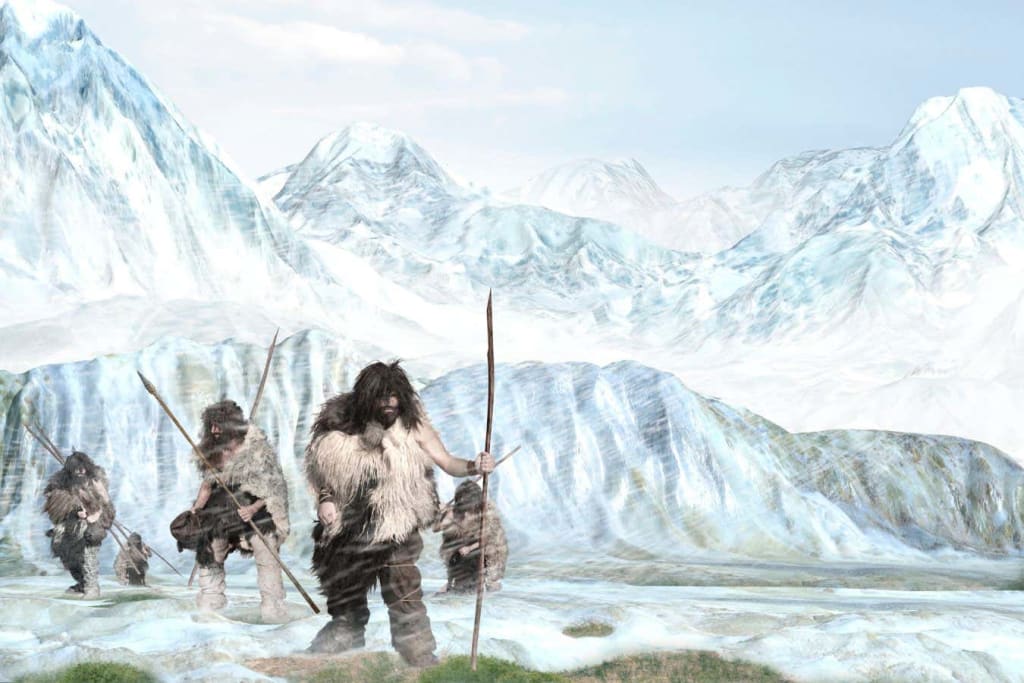
Around 8,200 years ago, Earth faced one of the most significant abrupt climate events in human prehistory. Known as the 8.2-kiloyear event, this period brought a sudden global cooling that disrupted weather patterns, transformed ecosystems, and challenged early human societies. Despite lacking modern technology, ancient humans demonstrated remarkable resilience, adaptation, and innovation that helped them survive this crisis.
What Happened?
The 8.2-kiloyear event occurred around 6200 BCE and lasted for approximately 150 to 400 years. It was brought on by the sudden and massive release of meltwater from glaciers from the North American Laurentide Ice Sheet. The Atlantic Meridional Overturning Circulation (AMOC), a crucial ocean current that controls the climate, was disrupted as Lakes Agassiz and Ojibway drained into the North Atlantic Ocean. This caused a rapid drop in temperatures by 1 to 3°C (up to 5°F) in many regions, particularly across Europe, the Middle East, and parts of North Africa. Rainfall patterns shifted, leading to prolonged droughts in some areas and excessive floods in others.As temperatures dropped and crops failed, early societies adapted—migrating, mixing wild and farmed foods, and innovating tools. Their resilience, creativity, and unity turned a global disaster into a powerful story of endurance.thus they fall in a great problem in that time .
Impact on Ancient Societies
The timing of this event was critical. Humans had begun transitioning from nomadic hunter-gatherer lifestyles to more settled agricultural communities. The Neolithic Revolution was underway in regions like Mesopotamia, the Levant, and Anatolia, where farming, animal domestication, and early urban settlements were developing.
The sudden cooling brought major challenges:
Crop Failures: Drought and cooler weather affected early agriculture, reducing yields of barley, wheat, and other staple crops.
Livestock Stress: Grazing land became less productive, and water sources dried up, putting stress on early herders.
Migration: Scarcity of resources forced some communities to migrate in search of more favorable conditions.
Social Disruption: Resource shortages may have led to conflicts or the collapse of early settlements.
How Did Humans Survive?
Despite the harsh conditions, ancient humans adapted in several remarkable ways:
1. Migration and Mobility Mobility was one of the most effective ways to survive. Groups who had recently settled in marginal areas often reverted to nomadic lifestyles or migrated to more hospitable regions. Archaeological evidence shows population shifts during this time, including movements in the Fertile Crescent, the Nile Valley, and Central Europe.
2. Diversification of Food Sources
Communities began to diversify their diets by combining farming with foraging, hunting, and fishing. This mix helped reduce reliance on vulnerable crops. In some areas, ancient people turned to wild grains, nuts, and aquatic resources like fish and shellfish.
3. Technological Innovation
Humans adapted their tools and farming practices. For example, they developed irrigation systems to manage water more efficiently and built storage facilities to preserve food during shortages. Pottery became more common, helping with food storage and cooking.
4. Cultural and Social Adaptations
Social cooperation likely played a major role in survival. Communities shared resources, exchanged knowledge, and possibly formed alliances. Some researchers suggest this period spurred the development of more complex social and religious structures, helping to maintain order during instability.
Legacy and Lessons
The 8.2-kiloyear event stands as a powerful example of how climate change can impact human societies. Yet it also highlights the resilience of our ancestors. Through mobility, adaptation, innovation, and cooperation, ancient humans weathered a climate disaster without modern tools or science.
Modern societies, equipped with advanced technology and global networks, still face significant challenges from today’s climate crisis. Studying how early humans responded to sudden environmental shifts reminds us of the importance of flexibility, community, and sustainability in the face of uncertainty.
About the Creator
Keep reading
More stories from Jishan Ahmed and writers in Humans and other communities.
The Day Constantinople Was Officially Declared the ‘New Rome’
The year was 330 AD, and the Roman Empire stood at a critical juncture. For centuries, Rome had been the heart of imperial power, culture, and administration. Yet, under Emperor Constantine the Great, a profound transformation was underway—one that would reshape the empire and echo through history. On May 11, 330 AD, Constantine officially declared the ancient Greek city of Byzantium as Nova Roma—“New Rome.” This day marked the foundation of Constantinople, a city that would soon eclipse its predecessor and become the jewel of both the Roman and Byzantine worlds.
By Jishan Ahmed9 months ago in History
Whiskey At Dusk
Guess the whiskey was more important to you in the end, wasn’t it? It was more than the well-being of your friends; more vital than showing up to the places you promised you would and could come to; more critical of a matter than fulfilling your damn responsibilities and getting the press off your back.
By Snarky Lisa2 days ago in Humans
Keon Coleman and the Pressure of Becoming More Than Potential
Some names carry expectation long before they carry achievement. Keon Coleman is one of those names. From high school stadiums to national broadcasts, his journey has been watched closely, praised loudly, and questioned just as often. Fans see size, speed, and flashes of brilliance. Critics look for consistency and growth. Somewhere in between stands a young athlete learning how to exist under constant evaluation. Keon Coleman’s story is not just about football highlights or stat lines. It is about pressure, patience, and the quiet moments that shape a career long before the spotlight decides what it sees.
By Muqadas khan5 days ago in Humans


Comments
There are no comments for this story
Be the first to respond and start the conversation.