
History of Pride and Why It Still Exists
The Beautiful and Tragic Story

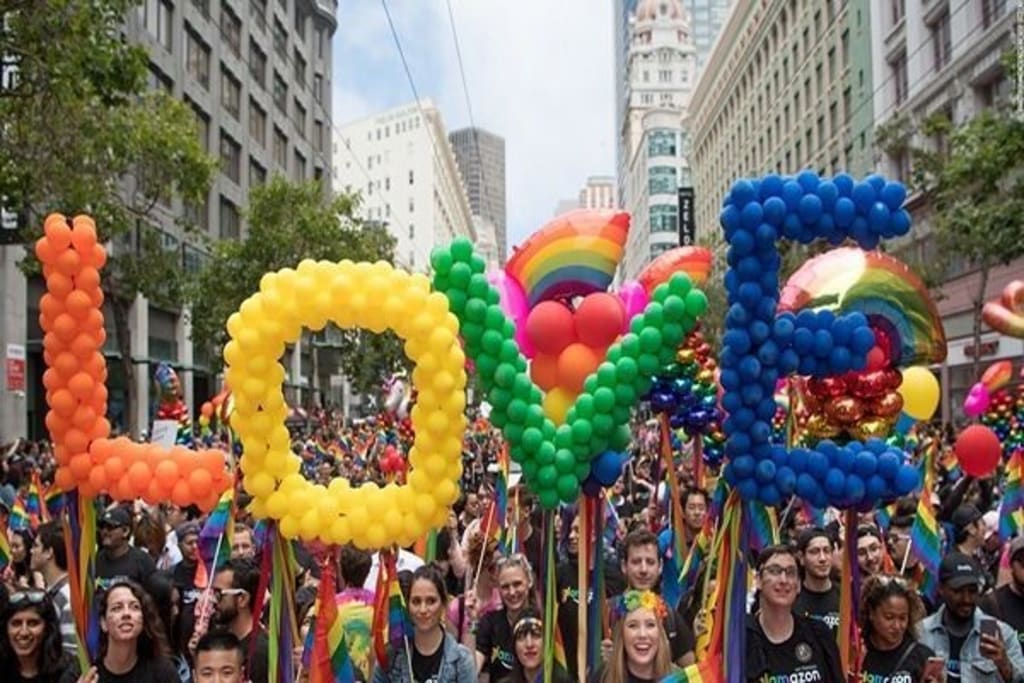
Pride has been in the news lately because it was pride month in June and a bunch of straight people wanted straight pride to be a thing. So let's dive in and see why pride is for LGBT+ and not straight people but first let's look at what pride is.
So here's the history for those who don't know. There is Pride month and then there are Pride events. Pride events and Pride month was and continues to be stance against discrimination and violence toward the LGBT community to promote their self-affirmation, dignity, equality rights, increase their visibility as a social group, build community, and celebrate sexual diversity and gender variance. Pride events usually held during pride month which is June or it's held during a time that is important to that place's LGBT history. For example Moscow Pride in May for the anniversary of Russia's 1993 decriminalization of homosexuality. Usually pride events can be anything from rallies to concerts and parades.
The first gay society started in 1924 by a guy named Henry Gerber in Chicago but they were found out and a lot of people were arrested. In the 1950s and 1960s the United States was not very friendly place for the LGBT community. The US was very repressive to the community to the point where it was illegal to be gay, it was also illegal to be a drag queen. There were some demonstrations that paved way to the pride events we know today. Daughters of Bilitis and the Mattachine Society were the communities or organizations that started these demonstrations and they also started the annual reminders that started in 1965. The annual reminders continued every year on July 4th and were used to remind people that the LGBT+ community didn't receive basic human rights.
At the time of the first demonstrations started homosexuality was consider mental illness. In 1968 Frank Kameny coined the phrase "gay is good" to counter social stigma and personal feelings of guilt and shame. On June 28, 1969 members of the LGBT+ community rioted after a police raid on the Stonewall inn (a gay bar in Manhattan). Further protests and rioting continued over a few nights and were a stepping stone to the modern day pride events. These are what are now known as the stone wall riots.
On November 2, 1969 Craig Rodwell, Fred Sargeant, Ellen Broidy, and Linda Rhodes proposed the first pride march. All that attended the meeting to vote on the pride march all voted in favor except for Mattachine Society. Planning for the march started in early January but there were issues getting some of the organizations to send representatives. The group's first march was on June 28, 1970 because they believed more people would go on a Sunday. The marches ended when the opposition got too much.
Before there was pride month there was pride day. Brenda Howard who helped organized one of the first marches also lead the way to make gay pride day into a week long celebration. Brenda as well as Robert A. Martin (aka Donny the Punk) and L. Craig Schoonmaker came up with the name pride for the festivities. On June 28, 1970 they celebrated the first anniversary of the stonewall riots with a march. The march didn't take as long as they scheduled it to both because of excitement and the fear of getting caught with gay signs and banners. They did meet very little opposition from on lookers and made the front page of the New York post. On Saturday, June 27, 1970, Chicago Gay Liberation organized a march, the date was chosen because the Stonewall riots started on the last Saturday of June and they wanted more people to see them. This march lead into parades in Chicago being held on the last Sunday of June.
The Chicago parades led into other parades and marches in other cities. There was other a "Gay-in" in San Francisco. In 1971, gay pride marches happened in Boston, Dallas, Milwaukee, London, Paris, West Berlin, and Stockholm. Then in 1972 marches happened in Atlanta, Brighton, Buffalo, Detroit, Washington D.C., Miami, and Philadelphia, as well as San Francisco. There were other events in certain cities including a "gay in" in San Francisco. In the 1980s the events became less about liberation and freedom and more about pride. The community became more organized and dropped liberation and freedom from the name of the events, they were just called gay pride events. Until 1973, being gay was a mental illness.
The month of June was chosen for pride month because that's when the original stone wall riots happened and when most of the marches happened through out the history of gay pride. Two presidents of the United States officially declared a pride month, Bill Clinton (1999 & 2000) and Barack Obama (2009 through 2016). In 2019, Donald trump became the first republican president to acknowledge pride month but he did it with a Tweet instead of an official proclamation.
In the past few years people have been bringing up the idea of straight pride. It started in 2011 in Brazil with democrats trying to make it a bill. There was also other people who had issues with gay pride, in 2008 a writer in Spain wrote a book where the queen voiced her disapproval of LGBT pride. In 2015 police in Turkey tried to end the LGBT Pride Parade using tear gas and rubber bullets.
In 2016 and 2017, the Istanbul Governor's Office didn't approve plans for the LGBT Pride Parade, citing security concerns and public order. In 2016, police in Uganda broke up a gay pride event in the capital. The criticism and issues aren't new or even exclusive to the straight community. In 1999, an openly gay writer wrote an article questioning the need and relevance of pride. He said that it was just a reminder of shame.
This year some people in the US mentioned that there should be a straight pride. There is even plans for a straight pride in Boston this year. The organizer, Mark Sahady, has a history of planning crazy events for the more right wing conservative crowd. There were even some famous people that supported the idea of straight pride.
As you can see straight pride has come along way. It still exists as a celebration of how far we come and how far we still have to go. People don't understand how horrible it is for some people. Even though gay marriage is legal in America it's still illegal in other countries. In a lot of countries people are being hurt and killed for being in the LGBT+ community and yes it does happen in America but we just don't talk about it. People are kicked out of their house or bullied for being in the LGBT+ community. Conversion therapy is still a thing and people in the community are committing suicide because of being ashamed of being in the community.
So let's support pride and the LGBT+ community. They've been through a lot and still have some way to go. Hope you enjoyed this post, sorry I didn't get it out during pride but I was busy but at least I got it up now.
About the Creator
Lena Bailey
Georgia born writer. Specializing in dating and true crime
If you have any questions or comments please email [email protected]
Keep reading
More stories from Lena Bailey and writers in Humans and other communities.
Why Dating Feels Hard Today And Practical Ways Overcome Challenges
Dating now is about apps and the internet, and the choices appear to be unlimited. Although this convenience may appear productive, it, in most cases, results in a state of decision fatigue, surface judgment, and dissatisfaction. Endless swiping may leave singles feeling disinterested and uninvolved, as well as provoke unrealistic standards.
By Willian Jamesa day ago in Humans
Early March 2026: 4 Goals Accomplished
It's early March and I've now accomplished my 4th writing goal for the year of 2026. Before diving into the behind-the-scenes of it... why not tell you up front what that accomplishment was? I was published in a 2nd publication for this year. Published in Helix Literary Magazine out of Central Connecticut State University. You can read it for free right now!
By Stephen Kramer Avitabile7 days ago in Writers



Comments
There are no comments for this story
Be the first to respond and start the conversation.