
Healthcare Interoperability: Vital for Improving Patient Outcomes
Healthcare Interoperability

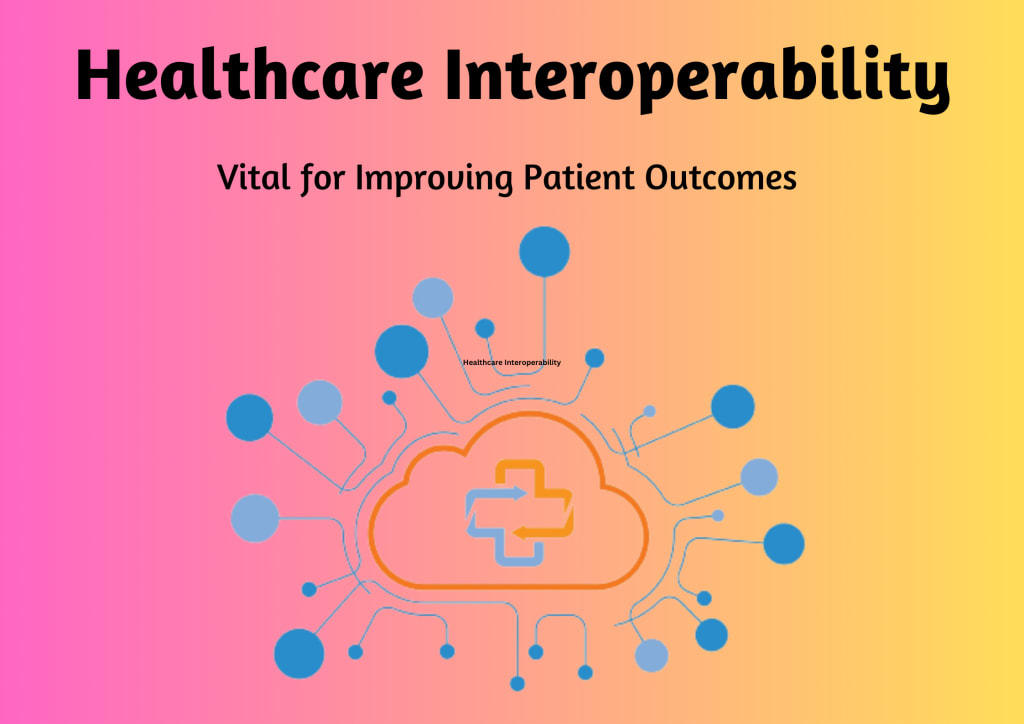
What is healthcare interoperability?
Healthcare interoperability refers to the ability of different healthcare information systems and devices to exchange, interpret, and use patient data seamlessly and securely. This means that medical data can be easily shared between different healthcare providers, such as doctors, nurses, hospitals, and other healthcare organizations, regardless of the specific electronic health record (EHR) system or software they use.
How to achieve interoperability in healthcare
Achieving interoperability in healthcare requires a collaborative effort from healthcare organizations, technology vendors, and regulatory bodies. Here are some key steps that can help achieve interoperability:
Adopt and implement standards: Healthcare organizations should adopt and implement interoperability standards, such as HL7 (Health Level Seven) and FHIR (Fast Healthcare Interoperability Resources), to ensure that patient data can be exchanged between different systems.
Use Application Programming Interfaces (APIs): APIs can be used to facilitate the exchange of patient data between different healthcare app solutions. APIs provide a standardized way for healthcare organizations to access and share patient data in a secure and efficient manner.
Ensure data quality and accuracy: Healthcare organizations should ensure that patient data is accurate and up to date. This can be achieved through data governance processes and data quality checks.
Ensure patient privacy and security: Healthcare organizations should ensure that patient data is exchanged securely and in compliance with relevant regulations, such as HIPAA (Health Insurance Portability and Accountability Act) and GDPR (General Data Protection Regulation).
Collaborate with other healthcare organizations: Healthcare organizations should collaborate with other healthcare organizations to develop and implement interoperability solutions. This can include sharing best practices, participating in industry initiatives, and engaging with technology vendors.
Encourage patient engagement: Patients can play an important role in achieving interoperability by actively participating in their care and sharing their health information with their healthcare providers.
Tips for successful interoperability?
Interoperability refers to the ability of different systems, devices, or applications to communicate and work together effectively. Here are some tips for achieving successful interoperability:
Standardization: Use common standards and protocols to ensure that different systems can communicate with each other. This can include standards such as HTTP, XML, or JSON for web services or HL7 for healthcare systems.
Openness: Use open architectures and interfaces that allow for easy Healthcare integration and data exchange between systems.
Compatibility: Ensure that different systems are compatible with each other by testing them together in real-world scenarios.
Flexibility: Design systems that can adapt and evolve to changing requirements and new technologies.
Security: Ensure that data exchanged between systems is secure and that proper authentication and access controls are in place.
Communication: Foster communication and collaboration between teams responsible for different systems to ensure that they understand each other's requirements and constraints.
Documentation: Maintain comprehensive documentation that describes the interoperability requirements, interfaces, and protocols used by different systems.
What Are Healthcare Interoperability Solutions?
Healthcare interoperability solutions are technologies and standards that enable different healthcare systems, devices, and applications to communicate and exchange data with each other seamlessly. In other words, interoperability solutions allow healthcare providers, payers, and patients to access and share health information across different systems and platforms, regardless of their proprietary technologies or data formats.
Healthcare interoperability solutions can encompass a variety of technologies, such as application programming interfaces (APIs), health information exchanges (HIEs), electronic health records (EHRs), and clinical data warehouses. These technologies allow healthcare providers to access remote patient monitoring real-time, exchange clinical information with other providers, and deliver coordinated care to patients.
The goal of healthcare interoperability is to improve the quality of patient care by facilitating the exchange of health information and enabling more efficient and effective communication between healthcare providers. It also aims to reduce costs, streamline administrative tasks, and enable patients to be more involved in their care by giving them access to their health records and other health-related data.
Emorphis Technologies can help if you are a healthcare provider wanting to connect cloud-based healthcare solutions. For assistance with Redox integration, get in contact.
About the Creator
Larisa Albanians
Hey, a healthcare technology solutions provider at emorphis, that is helping organizations to deliver better healthcare solutions.
Keep reading
More stories from Larisa Albanians and writers in Humans and other communities.
Custom Healthcare Software: A Smart Investment for Long-Term Success
An overview of the healthcare industry at present The healthcare industry is a vital sector that encompasses a wide range of organizations and professionals that provide healthcare services to people. It is a complex and rapidly evolving field that includes hospitals, clinics, medical device companies, pharmaceuticals, health insurance providers, and other healthcare-related businesses.
By Larisa Albanians3 years ago in Humans
Minnesota and Illinois Invoke the 10th Amendment in Lawsuits to Block Federal Agents in Their Cities — Here’s Why That Matters
States Push Back Against Federal Enforcement Minnesota and Illinois have launched high-profile lawsuits invoking the 10th Amendment of the US Constitution in an effort to block or limit the actions of federal agents—particularly immigration enforcement officers—operating within their cities. The legal challenges mark a significant escalation in the long-running conflict between state governments and Washington over who has the authority to enforce immigration laws and how far federal power can reach.
By Aarif Lashari4 days ago in Humans
How to Succeed at the Benson Directory®
Congratulations and welcome to the Benson Directory® employee #22391! As our newest call handler, you will have the privilege of speaking with dozens of unique and interesting people on a daily basis as well as the opportunity to earn bonuses for high performance. Contained within this handbook you will find a set of ease to follow instructions designed to help you settle in to your new role and begin paving the way to success.
By S. A. Crawford2 days ago in Fiction




Comments
There are no comments for this story
Be the first to respond and start the conversation.