
He Sat Alone Every Day — Until One Stranger Changed Everything”
What started as a silent lunch break became a life-changing friendship—and a reminder that a small act of kindness can rewrite someone’s entire story.


Every day at exactly 12:15 p.m., he arrived.
Same brown coat. Same plastic lunch bag. Same worn-out black cap pulled low over his eyes.
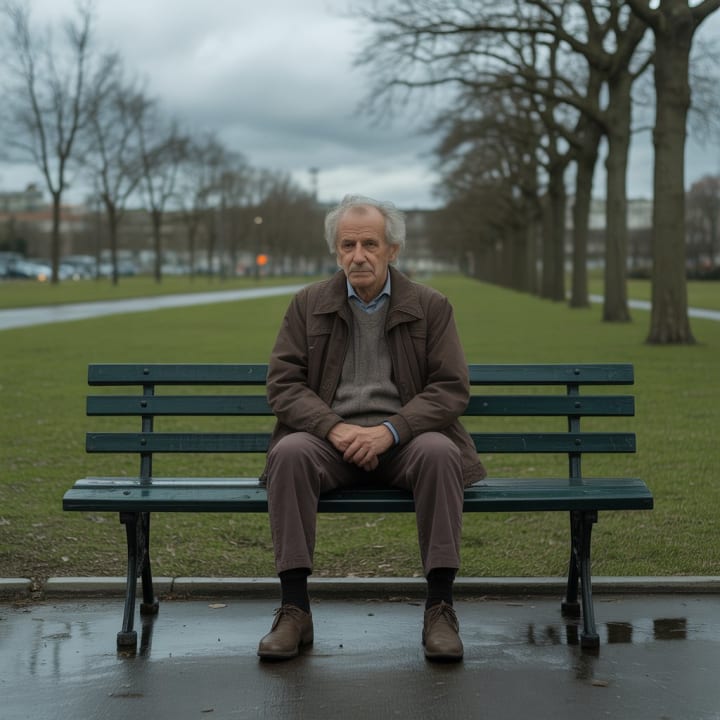
He sat on the third bench near the lake in Central Park. Always the third one. Always alone.
People passed him like a statue—unmoving, unseen. Joggers, tourists, mothers with strollers. But he didn’t seem to mind. He had his sandwich, his thermos, and a far-off look in his eyes like he was waiting for something—or someone—that never came.
I noticed him for weeks.
And for weeks, I walked by.
Until one rainy Wednesday changed everything.
I Almost Didn’t Stop
It was drizzling—light enough to walk, annoying enough to hurry.
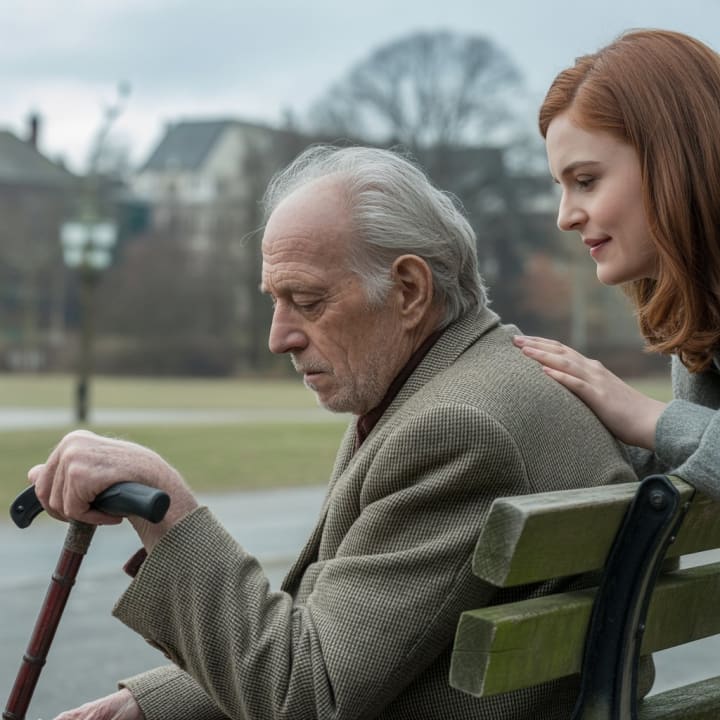
I was late, juggling an umbrella, a soggy wrap, and a dozen missed Slack messages when I spotted him again. But this time, he wasn’t eating. He was just sitting. Soaked. No umbrella. No hat. Just a soaked coat and a blank stare.
For reasons I still don’t fully understand, I stopped.
“You want to share some dry space?” I asked, raising my umbrella slightly.
He looked up, surprised. His eyes were sharp blue, rimmed with age and something heavier—grief, maybe.
After a long pause, he nodded.
The First Conversation
We sat in silence for a few minutes.
The rain fell softly on the path.
He finally said, “Most people don’t see me.”
“I see you,” I said.
He laughed, but there was no joy in it. “You do today.”
I offered him part of my lunch, which he declined. But he did start talking—about the ducks on the lake, about how the park had changed, about the bench.
He told me his wife used to sit beside him there every Wednesday. For 32 years. Until she didn’t.
“She passed?” I asked gently.
He nodded once.
“Three years ago. But I still come. Just in case she shows up.”
Why I Came Back
Something about his presence stayed with me all night. The next day, I went back. I brought two sandwiches.
He was there.
This time, he took the sandwich.
That was the start of a pattern neither of us announced. We just showed up.
Week after week.
I learned his name was Walter. He was a retired postmaster. A veteran. No children. No siblings left. Just the park. Just the bench.
And now, me.
The Things He Carried
Walter carried things he didn’t talk about for a long time.
But slowly, they emerged.
He had a daughter. Stillborn.
He had depression. Fought it silently for decades.
He lost his wife to cancer—but he blamed himself for not noticing the signs sooner.
“I wasn’t paying attention,” he whispered once. “She suffered in silence so I wouldn’t worry. And I let her.”
He cried that day.
We just sat in silence.
I didn’t try to fix it.
He didn’t try to stop the tears.
That day changed both of us.
The Day He Wasn’t There
One day, I came—and the bench was empty.
The next day: still empty.
Day three: panic.
I went to the local precinct. To the VA hospital. Nothing. Until a nurse gave me a name and a room number.
Walter had collapsed at home. Mild stroke. He was stable—but no visitors had come.
Until me.
When I walked in, his eyes lit up. I brought him soup. He cried again. Not from pain, but from being seen.
“I thought maybe you’d forget me,” he said
“I don’t forget friends,” I replied.
The Internet Found Him
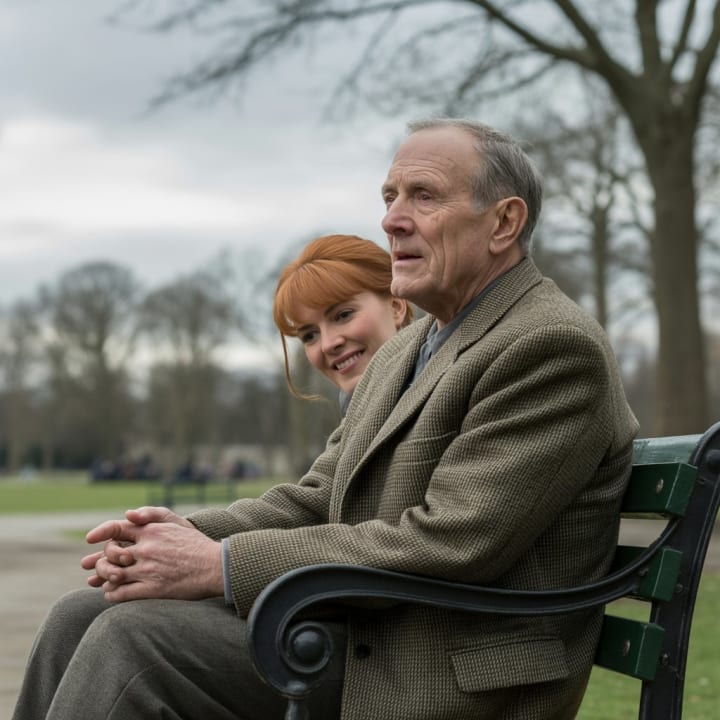
When Walter was well enough, I asked if I could share his story—just a photo of the two of us on the bench and a little caption about kindness.
He smiled and said, “If it helps people remember we still matter… go for it.”
The post went viral in two days.
Hundreds of thousands of shares. Comments. Messages. People from Australia to Brazil telling stories of their own “Walters”—family members forgotten, lonely neighbors they hadn’t checked on.
A movement started. People began visiting benches in their own parks, looking for someone to sit beside.
Walter saw every message. And he cried every time.
A Year Later
Walter’s health declined last spring.
But we still met—at the bench when we could, in his room when we couldn’t. The nurses knew me by name.
He passed away peacefully one night. I was there.
His last words were, “Thank you for seeing me.”
At his small memorial, I read a few of the comments from strangers around the world whose lives he touched.
I made sure his bench got a plaque:
“In memory of Walter — You were never invisible.”
Why This Story Matters
There are thousands of Walters.
Old men. Quiet women. Lost teenagers. Invisible humans sitting on invisible benches, waiting for someone to notice them.
You can be that someone.
You don’t need a degree. You don’t need money.
You just need to stop. Look. Sit down. Ask a name. Offer part of your sandwich.
The smallest act of kindness can echo louder than you think.
Walter thought he was forgotten.
He left the world with millions remembering him.
Because one stranger decided to stop in the rain.
🌍 Final Thought
If you're reading this, take this as your invitation.
Go to the park.
Sit beside someone.
Ask how their day is.
Listen.
And maybe—just maybe—change a life.
About the Creator
Awais ur rahman
Health explorer, storytelling enthusiast, and curious mind on a mission to simplify wellness. I write real stories, honest experiments, and everyday insights to help you feel better—body and mind.
Keep reading
More stories from Awais ur rahman and writers in Humans and other communities.
From Shadows to Sunrise: A Soul Forged in Darkness, Reborn in Light
I was born in the dark—not of literal night, but of silence, sadness, and shadows no child should ever know. Some homes are lit by laughter. Mine echoed with footsteps, slammed doors, and the kind of quiet that feels like punishment.
By Awais ur rahman8 months ago in Humans
Flirting Men Subtle Behaviors That Reveal Genuine Romantic Interest Clearly
Listening is one of the minor indicators of true interest in men. When the man is really attracted, he listens to what you say and does not plan his answer or get puzzled. He recalls little things about past discussions such as your hobbies, preferred activities or personal stories. This observation means that he cares about your ideas and experiences and does not just interact with you casually. A connection and trust are created by engaging in listening and this is an indication that he is emotionally interested. This is in contrast with shallow flirting, in which you are simply looking to appear appealing to someone, and this action proves that he is willing to know you as a person and establish an important relationship.
By Mark Hipster7 days ago in Humans



Comments
There are no comments for this story
Be the first to respond and start the conversation.