
Hamas Fighters Trapped in Tunnels Present New Obstacle to Gaza Ceasefire Progress
As negotiations inch forward, Israel’s underground warfare with Hamas creates a new layer of complexity — one that could delay peace and deepen Gaza’s humanitarian crisis.

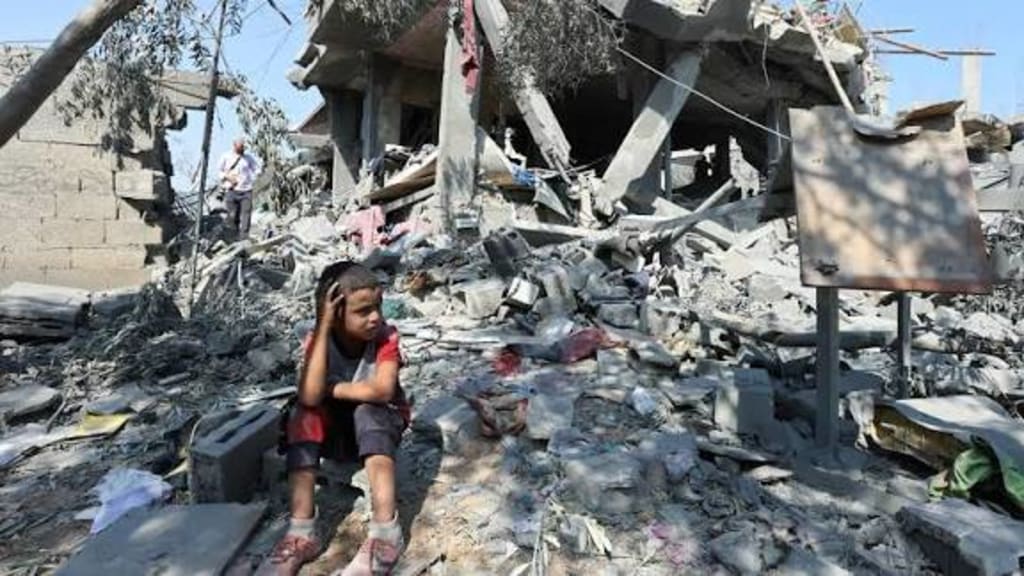
The search for peace in Gaza has always been a race against time — and now, a battle beneath the surface. As international mediators push for a fragile ceasefire between Israel and Hamas, a new obstacle has emerged: hundreds of Hamas fighters believed to be trapped in the group’s vast tunnel network, cut off by Israeli bombardments and ground incursions.
The development, revealed by intelligence officials and confirmed by recent military briefings, presents a grim paradox. The very tunnels that once gave Hamas strategic advantage have become cages of desperation, and their existence threatens to stall the ceasefire progress that diplomats have been painstakingly trying to achieve.
---
A War Beneath the Ground
For years, Hamas has used tunnels beneath Gaza as both protection and strategy — a subterranean city designed to evade Israeli detection and project military resilience. These passageways, stretching for miles under densely populated areas, have served as weapons storage sites, command centers, and escape routes.
But as Israeli forces intensified their operations in recent weeks, a large portion of the network collapsed or was sealed off, trapping dozens, possibly hundreds, of fighters underground. Reports suggest that many are now without food, air, or communication, creating a grim humanitarian issue even among combatants.
An Israeli military source described the situation bluntly:
> “These tunnels are no longer fortresses — they are tombs. Many fighters cannot surface without facing arrest or death.”
The destruction of tunnels was a central part of Israel’s recent strategy, aimed at crippling Hamas’s logistical capabilities. However, the consequences have rippled outward — stalling talks, hardening rhetoric, and worsening the suffering of civilians caught between two sides.
---
Ceasefire Negotiations at a Crossroads
Efforts toward a new ceasefire agreement, mediated by Qatar, Egypt, and the United States, have faced multiple breakdowns. The discovery that Hamas still maintains fighters underground complicates verification mechanisms that Israel insists on before halting operations.
Israel argues that unless the tunnel system is fully neutralized, Hamas could regroup and re-emerge once the ceasefire begins — effectively resetting the cycle of violence.
Hamas, on the other hand, views the tunnels as its last remaining strategic leverage — one it cannot surrender without guarantees of political recognition and humanitarian relief.
Diplomatic insiders suggest that both sides are playing a high-stakes waiting game. Israel wants proof that Hamas’s military structure is broken. Hamas wants the blockade eased and international aid to resume unrestricted. Between those conditions lies an uneasy silence — broken only by airstrikes and the distant rumble of collapsed earth.
---
The Human Cost of the Underground War
While political leaders debate terms, civilians continue to bear the brunt of the war above and below ground. Gaza’s health system has collapsed under repeated bombardments, and thousands remain displaced without electricity, clean water, or access to hospitals.
The tunnel crisis has also created a ripple effect across these communities. Many residential areas were built directly over tunnel zones, leading to widespread structural damage when the tunnels were bombed or collapsed. Families have been evacuated from entire neighborhoods due to fears of sinkholes and toxic air pockets.
Humanitarian groups warn that the destruction of underground networks may cause secondary environmental hazards — underground fires, gas leaks, and soil contamination — in an area already on the brink of unlivability.
A spokesperson from the UN Relief and Works Agency (UNRWA) said:
> “The tunnel war is not just a military issue. It’s a public safety disaster that will take years to recover from.”
---
International Pressure and Political Calculations
Globally, pressure is mounting for both sides to return to negotiations. The U.S. has called the tunnel crisis a “major complication” to ceasefire verification, while Egypt and Qatar are reportedly proposing a phased withdrawal plan — one that includes gradual tunnel clearance supervised by international observers.
However, Israel’s political leadership remains cautious. Prime Minister Benjamin Netanyahu, facing domestic criticism, insists that any truce must guarantee the complete dismantling of Hamas’s military infrastructure, including the tunnel network.
Meanwhile, Hamas leaders, speaking anonymously through intermediaries, have warned that surrendering the tunnels would be tantamount to “laying down arms” — a move that could fracture their control and credibility among supporters.
The deadlock is emblematic of the broader Gaza conflict: even when the guns go silent, the structures of war remain buried beneath the surface — both literally and politically.
---
A Ceasefire Buried in Sand
For mediators, the challenge now is twofold: rescuing the trapped fighters and rebuilding trust between the warring sides. Yet, each day that passes without resolution makes a ceasefire less likely.
Analysts suggest that the tunnel crisis could become a turning point, either forcing Hamas to the negotiating table or prompting Israel to intensify operations further. The risk is that both paths lead to more suffering, not less.
As one Middle East analyst put it,
> “Every time the ground shakes in Gaza, it’s not just earth that’s collapsing — it’s the hope for peace.”
---
In the end, the story of Gaza’s tunnels is more than a military problem. It’s a symbol of entrapment — of a region trapped in its own history, unable to rise until the walls below finally fall.
About the Creator
Fiaz Ahmed
I am Fiaz Ahmed. I am a passionate writer. I love covering trending topics and breaking news. With a sharp eye for what’s happening around the world, and crafts timely and engaging stories that keep readers informed and updated.
Keep reading
More stories from Fiaz Ahmed and writers in Humans and other communities.
Six Killed in Fire at Perfume Depot in Northwestern Turkey
Tragedy struck northwestern Turkey this week as a massive fire erupted in a perfume storage depot, killing six workers and injuring several others. The incident, which took place in the Kocaeli province, about 100 kilometers east of Istanbul, has shocked the nation and drawn attention to ongoing safety issues in Turkey’s industrial facilities.
By Fiaz Ahmed 4 months ago in Humans
Thief In The Night
To the thief in the night that took and replicated what once was mine: Honestly, I feel kind of bad for you. It’s funny, because we hardly know each other. I only know of you through the magazines you’ve written and the broadcasts you have televised in the past — as well as through the public mentions of you from your show business connections there.
By Snarky Lisa8 days ago in Humans
Co-Living Impacts Dating Dynamics Communication And Emotional Connection Significantly
Dating is greatly affected by co-living, in which couples or partners live together in one house. It brings about quick intimacy and interaction in real life and one gets a chance to learn about routines, habits, and preferences. Shared space brings intimacy as well as it reveals the possible difference of lifestyle including cleaning, schedules, and personal boundaries.
By Mark Hipster6 days ago in Humans




Comments
There are no comments for this story
Be the first to respond and start the conversation.