
Hamas Armed Wing Confirms Death of Abu Obeida and Other Senior Leaders
Militant group announces major leadership losses amid escalating conflict, marking a significant moment in the ongoing Middle East crisis.

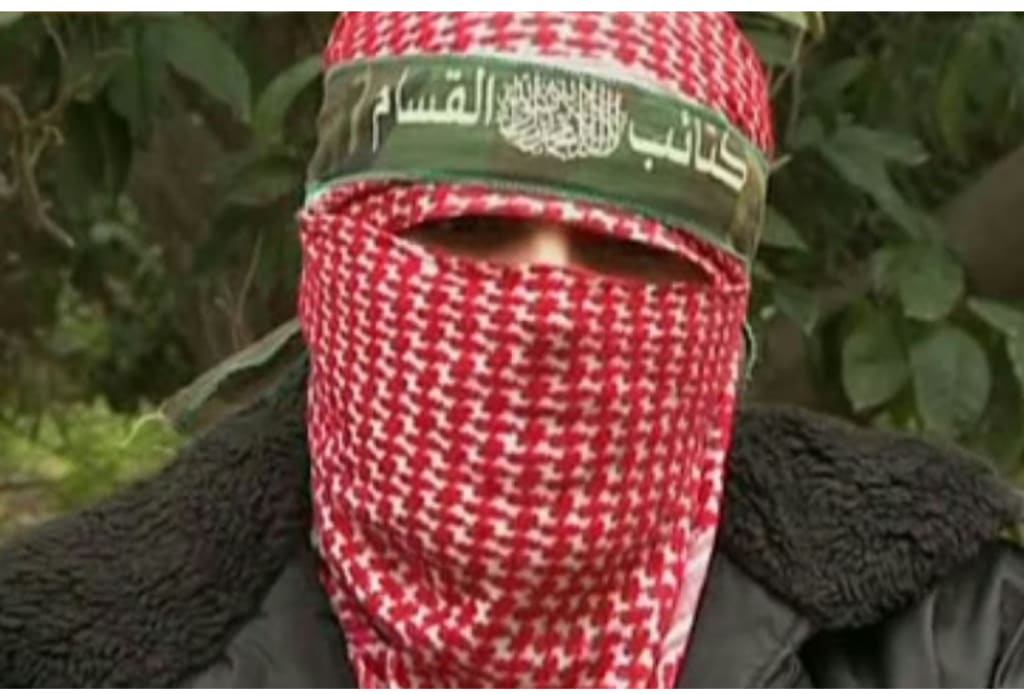
The armed wing of Hamas has officially confirmed the death of Abu Obeida, one of its most prominent senior figures, along with several other high-ranking commanders. The announcement, released through the group’s official communication channels, marks a significant development in the ongoing conflict and represents one of the most serious blows to Hamas’s leadership structure in recent years.
Abu Obeida, widely known as the masked spokesperson of the Izz ad-Din al-Qassam Brigades, had become a symbolic and strategic figure within the organization. His public statements, often delivered during periods of intense conflict, made him one of the most recognizable faces of Hamas’ military wing. The confirmation of his death has sent shockwaves across the region, signaling a potentially transformative moment in the dynamics of the ongoing war.
Confirmation and Circumstances
According to statements released by Hamas, Abu Obeida and several other senior commanders were killed during recent Israeli military operations targeting key command centers. While specific details regarding the location and timing of the incident were not fully disclosed, the group acknowledged that the losses were the result of intensified airstrikes and intelligence-led operations.
Israeli officials have not publicly commented on the individual deaths but have reiterated that their military campaign aims to dismantle Hamas’ leadership, infrastructure, and operational capabilities. Analysts say the confirmation by Hamas itself suggests the impact of the strikes was significant, as the group typically avoids acknowledging leadership losses unless unavoidable.
Who Was Abu Obeida?
Abu Obeida served for years as the public face of the Qassam Brigades, delivering statements during conflicts and conveying messages intended to rally supporters and intimidate opponents. Known for his carefully scripted appearances and masked identity, he became a symbol of the group’s military resistance narrative.
Though little was publicly known about his personal life, his role in shaping Hamas’ messaging and morale made him one of the most influential figures within the organization. His death represents not only a symbolic loss but also a strategic one, as leadership continuity is crucial for maintaining command and coordination within militant networks.
Impact on Hamas’ Structure and Operations
The deaths of multiple senior leaders are expected to create significant disruption within Hamas’ command structure. Experts suggest that while the group has historically shown resilience and an ability to replace leaders, the loss of experienced figures may temporarily weaken its operational efficiency and decision-making capacity.
Military analysts note that leadership decapitation can have mixed outcomes. In the short term, it may disrupt planning, communication, and morale. In the long term, however, militant organizations often adapt by promoting new leaders or decentralizing their operations. Whether Hamas can recover quickly from this blow remains uncertain.
Regional and International Reactions
News of the confirmed deaths has drawn widespread international attention. Regional governments, global observers, and humanitarian organizations are closely monitoring the situation, concerned about potential escalation in violence and its impact on civilians.
Calls for de-escalation have intensified, with international bodies urging all sides to protect civilian lives and pursue diplomatic pathways. At the same time, the developments have deepened fears of prolonged instability in the region, particularly as retaliatory actions remain a possibility.
A Turning Point in the Conflict
For many observers, the confirmation of Abu Obeida’s death marks a critical turning point in the current phase of the conflict. It underscores the intensity of ongoing military operations and highlights the high stakes involved for all parties.
While some view the development as a strategic victory against militant leadership, others warn that it could fuel further cycles of violence. History suggests that such moments often lead to shifts in strategy rather than immediate resolution.
Looking Ahead
As the situation continues to evolve, attention now turns to how Hamas will reorganize its leadership and how the broader conflict will unfold in the coming weeks. The loss of senior figures may reshape internal dynamics, influence future negotiations, and alter the trajectory of the conflict.
For the region, the confirmation of these deaths is a stark reminder of the human cost of prolonged warfare. Amid political calculations and military strategies, civilians continue to bear the heaviest burden. The international community faces renewed pressure to push for dialogue, restraint, and pathways toward lasting peace.
About the Creator
Muhammad Hassan
Muhammad Hassan | Content writer with 2 years of experience crafting engaging articles on world news, current affairs, and trending topics. I simplify complex stories to keep readers informed and connected.
Keep reading
More stories from Muhammad Hassan and writers in Humans and other communities.
An Attempt to Break People’: Bucha Holds Out Amid Russia’s Weaponisation of Winter
After four years of conflict, the city that became infamous in 2022 for the atrocities of Russian occupation is facing a different kind of battle. This time, the enemy is winter, weaponised by deliberate attacks on power grids, heating systems, and basic infrastructure. For residents, survival has become a daily struggle — and a test of resilience. Bucha’s Legacy of Survival Bucha is no stranger to suffering. During the early months of Russia’s invasion, the world was horrified by images of civilian massacres, abandoned homes, and streets lined with the evidence of violence. The city became a symbol of wartime atrocity. Now, though the guns have quieted somewhat, a new kind of pressure is emerging. Russian forces have deliberately targeted energy infrastructure, knowing that winter’s arrival would magnify the damage. Power plants, heating systems, and water facilities have been hit, leaving homes dark and cold, hospitals under strain, and schools struggling to function. For locals, this is not just an attack on infrastructure — it’s an attack on morale. It’s a calculated effort to make life unbearable, to test whether people will stay or flee, and to try to break the community from within. Life in the Dark Power outages have become a grim part of daily life. Residents report long stretches without electricity, traffic lights left dark, and homes turning into icy shells. Oleksandr Bartkov, owner of a local café, shares how daily business now depends on limited hours of electricity. “Of the eight or nine hours we usually operate, we might only have three or four hours of power,” he says. When a major strike occurred during a severe cold snap, Bartkov’s café stayed closed for days. Like many small businesses, they survive on generators — if they work — or close entirely. It’s not just businesses that suffer. Families huddle under blankets in freezing apartments, rationing food and water while the cold seeps into walls and floors. The winter is no longer just a season; it is a weapon, deployed against ordinary people. Weaponising Winter Officials describe these attacks as deliberate. By targeting energy infrastructure during the harshest months, Russian forces are not only cutting off electricity but also aiming to undermine the mental and physical resilience of communities like Bucha. Mayor Anatolii Fedoruk explains that even though Bucha’s electrical grid is relatively modern and distributed, the repeated strikes have severely strained its capacity. “Russia knew the severe frost was coming, and they wanted to hit the power plants,” Fedoruk says. This strategy is about more than freezing people’s homes. It’s psychological warfare, designed to make civilians feel vulnerable, unsafe, and powerless. It’s a chilling reminder that in modern conflict, energy systems can become as critical a battleground as any frontline. The Human Toll The effects on daily life are profound. In shelters, displaced families huddle in rooms warmed by generators or improvised heaters. Walls are thin, kitchens cold, and nights unbearably long. Vitalina Tsisar, a shelter manager, recalls nights when the generator failed and temperatures inside dropped near freezing. Children stayed in hats and coats, parents tried to keep spirits up, but the fear of the cold was constant. “It makes people afraid,” Tsisar says. “When it is this cold outside, you feel yourself freezing.” Hospitals and schools are also under pressure. With power and heating interrupted, critical services struggle to function. Even small inconveniences, like a broken refrigerator or a darkened hallway, become magnified threats in winter. Government Response and International Aid The Ukrainian government has declared a state of emergency, warning that energy reserves are dwindling and calling for international assistance. President Volodymyr Zelenskyy has stressed the need for preparedness and warned of the dangers of continued attacks. Experts describe the assault on infrastructure as part of a broader strategy — one that targets civilians indirectly to weaken resistance. Energy analyst Oleksandr Kharchenko puts it bluntly: “This is an attempt to break people.” International aid has provided some relief, from temporary shelters and heaters to emergency fuel for generators. But the scale of the attacks, combined with harsh winter conditions, makes the crisis ongoing and unpredictable. Resilience in the Cold Despite these enormous challenges, the people of Bucha are standing firm. History has taught them resilience. When Russian troops first occupied the city, they endured occupation, resistance, and ultimately liberation. Now, with winter turned into a weapon, the city is proving that its spirit is not so easily broken. Neighbors check on one another, communities share generators, and children still play in the snow, bundled in coats and hats. Streets may be dark, shops may be closed, and nights may be freezing, but life continues. The cold may freeze the city physically, but it cannot freeze the will of its people. A Message Beyond Bucha Bucha’s struggle is a stark reminder that war does not only involve guns and tanks. It can be fought in the silence of a blackout, the drop of a thermometer, and the slow creep of frost into homes. But it also shows the extraordinary human capacity to endure, adapt, and survive. In a winter weaponised against them, Bucha continues to hold out. And in doing so, the city sends a powerful message: oppression may try to break people, but resilience can shine even in the darkest, coldest hours.
By Muhammad Hassan3 days ago in Humans


Comments
There are no comments for this story
Be the first to respond and start the conversation.