
Growth Factor Concentrate (GFC) treatment
Treatment for hair loss
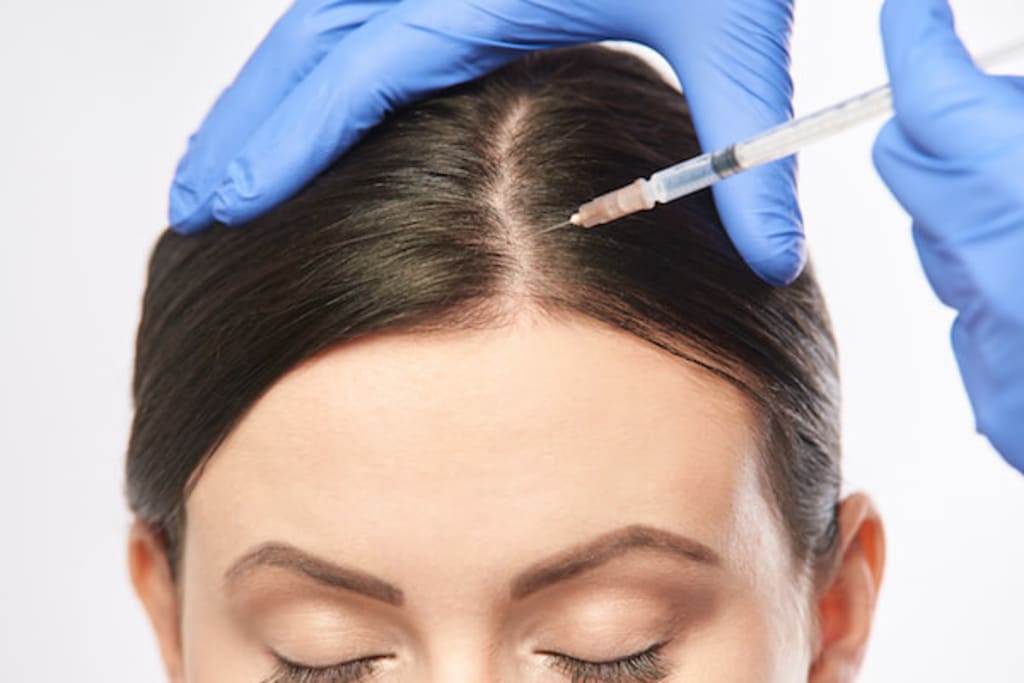
Growth Factor Concentrate (GFC) treatment for hair loss
Introduction
Growth Factor Concentrate (GFC) treatment for hair is a cutting-edge medical procedure that has gained popularity in recent years as a potential solution for hair loss and thinning. It involves using concentrated growth factors derived from the patient's own blood to stimulate hair follicle regeneration and improve hair density.
GFC is a type of regenerative medicine that uses the body's own healing mechanisms to repair and regenerate tissues. In the case of hair, GFC treatment is believed to promote the growth of thicker, healthier hair by activating dormant hair follicles and improving blood flow to the scalp.
While GFC treatment for hair is still a relatively new and evolving field, many patients have reported positive outcomes, including increased hair growth and improved hair quality. In this post, we'll explore the science behind GFC treatment for hair, its potential applications, and limitations, and what you can expect if you're considering this treatment option.
In this post on Growth Factor Concentrate (GFC) treatment for hair, we'll explore the following key topics:
1. What is Growth Factor Concentrate (GFC) and how does it work for hair?
2. The different hair conditions that can be treated with GFC.
3. The GFC treatment process for hair, including preparation, administration, and recovery.
4. The effectiveness of GFC treatment for hair and what to expect in terms of results.
5. The cost and accessibility of GFC treatment for hair, including insurance coverage options.
The potential risks and limitations of GFC treatment for hair, and what to consider before deciding if it's right for you.
I. What is Growth Factor Concentrate (GFC)?
Growth Factor Concentrate (GFC) is a type of regenerative medicine that uses the body's own growth factors and bioactive molecules to stimulate tissue repair and regeneration. GFC is made by taking a small sample of the patient's blood and processing it in a centrifuge machine to isolate the platelet-rich plasma (PRP).
PRP contains a high concentration of growth factors, cytokines, and other bioactive molecules that are naturally present in the body and play a critical role in tissue repair and regeneration. The PRP is then further concentrated to create a solution of growth factors that can be injected into the scalp.
The GFC solution is prepared by adding a specific activating agent to the PRP, which triggers the release of growth factors from the platelets. The resulting solution is then filtered to remove any impurities or clots and is ready to be injected into the scalp.
The growth factors in the GFC solution stimulate the cells in the hair follicles to divide and grow, which leads to the production of thicker, healthier hair strands. Additionally, GFC treatment is believed to improve blood flow to the scalp, which further supports the growth of new hair and the health of existing hair.
Overall, GFC treatment is a safe and effective procedure that uses the body's own growth factors to promote tissue repair and regeneration. By harnessing the power of the body's natural healing mechanisms, GFC offers a natural and minimally invasive alternative to traditional hair restoration treatments.
Various growth factors that are present in GFC and their role in tissue repair and regeneration
Growth Factor Concentrate (GFC) contains a range of growth factors, cytokines, and other bioactive molecules that play a crucial role in tissue repair and regeneration. These growth factors are naturally present in the body and are involved in various cellular processes that are essential for maintaining tissue health and promoting healing. Here are some of the key growth factors found in GFC and their roles in tissue repair and regeneration:
Platelet-derived growth factor (PDGF): PDGF stimulates the growth and division of cells involved in tissue repair, including fibroblasts and endothelial cells. It also promotes the formation of new blood vessels, which helps to deliver oxygen and nutrients to the damaged tissue.
Epidermal growth factor (EGF): EGF is involved in the growth and proliferation of epidermal cells, which play a critical role in skin regeneration. It also helps to promote angiogenesis and collagen synthesis, which are essential for tissue repair and regeneration.
Transforming growth factor-beta (TGF-beta): TGF-beta is involved in the regulation of cell growth and differentiation, as well as the production of extracellular matrix proteins such as collagen. It also plays a role in wound healing and tissue regeneration by promoting the formation of new blood vessels and the migration of cells to the site of injury.
Vascular endothelial growth factor (VEGF): VEGF is a key regulator of angiogenesis, which is the process of forming new blood vessels. It also plays a role in the growth and survival of endothelial cells, which are important for the maintenance of blood vessel function.
Insulin-like growth factor (IGF): IGF is involved in the regulation of cell growth and differentiation, as well as the production of collagen and other extracellular matrix proteins. It also promotes the survival of cells involved in tissue repair and regeneration.
Overall, the growth factors present in GFC work together to stimulate tissue repair and regeneration by promoting cell growth and division, angiogenesis, and the production of extracellular matrix proteins. This makes GFC an effective treatment option for a range of conditions, including hair loss and thinning, by promoting the growth of new hair follicles and strengthening existing ones.
II. How does GFC treatment work for hair?
Science behind how GFC treatment can help stimulate hair growth and improve hair density
The science behind how Growth Factor Concentrate (GFC) treatment can help stimulate hair growth and improve hair density lies in the growth factors that are present in the concentrated plasma.
Growth factors are proteins that are naturally occurring in the body and play a vital role in tissue repair and regeneration. In the case of GFC treatment for hair, the growth factors in the concentrated plasma stimulate the growth of new hair follicles and improve the overall health of existing follicles.
One of the most important growth factors found in GFC is called platelet-derived growth factor (PDGF). PDGF has been shown to promote the growth of new blood vessels and improve blood flow to the scalp, which is essential for healthy hair growth. It also stimulates the proliferation of hair follicle cells, which can lead to the development of new hair follicles and the regeneration of damaged follicles.
Another important growth factor found in GFC is transforming growth factor-beta (TGF-beta). TGF-beta plays a critical role in the regulation of hair follicle stem cells and can help to promote the development of new hair follicles. It also helps to reduce inflammation, which can be a contributing factor to hair loss and thinning.
Finally, vascular endothelial growth factor (VEGF) is another important growth factor found in GFC. VEGF plays a crucial role in the formation of new blood vessels and can help to improve blood flow to the scalp, which is essential for healthy hair growth.
Overall, the growth factors present in GFC stimulate the growth of new hair follicles, improve blood flow to the scalp, and reduce inflammation, all of which can help to promote healthy hair growth and improve hair density. By stimulating the body's natural healing processes, GFC treatment can help to restore the health and vitality of the hair and scalp, leading to thicker, fuller, and healthier hair over time.
Does GFC treatment can improve hair follicle health and promote the growth of thicker, healthier hair?
Growth Factor Concentrate (GFC) treatment can improve hair follicle health and promote the growth of thicker, healthier hair through several mechanisms.
Firstly, the growth factors present in GFC stimulate the production of new cells, which can help to regenerate damaged hair follicles and promote the growth of new hair. Growth factors like platelet-derived growth factor (PDGF) and transforming growth factor-beta (TGF-beta) stimulate the proliferation of hair follicle cells, leading to the development of new hair follicles and the regeneration of damaged follicles.
Secondly, GFC treatment improves blood flow to the scalp, which is essential for healthy hair growth. Growth factors like PDGF and vascular endothelial growth factor (VEGF) promote the formation of new blood vessels and improve blood flow to the scalp. This increased blood flow delivers more oxygen and nutrients to the hair follicles, promoting healthy hair growth.
Thirdly, GFC treatment reduces inflammation in the scalp, which can be a contributing factor to hair loss and thinning. Growth factors like TGF-beta help to reduce inflammation in the scalp, which can help to promote healthy hair growth and prevent further damage to the hair follicles.
Overall, GFC treatment can improve hair follicle health by promoting the growth of new hair follicles, improving blood flow to the scalp, and reducing inflammation. By stimulating the body's natural healing processes, GFC treatment can help to restore the health and vitality of the hair and scalp, leading to thicker, healthier hair over time. However, it's important to note that individual results may vary, and GFC treatment should always be performed by a trained medical professional.
III. Applications of GFC treatment for hair
Different hair conditions that can be treated with GFC, such as hair loss and thinning
Growth Factor Concentrate (GFC) treatment can be used to treat a variety of hair conditions, including hair loss, and thinning.
One of the most common conditions treated with GFC is androgenetic alopecia, which is a genetic form of hair loss that affects both men and women. Androgenetic alopecia occurs when hair follicles shrink over time, leading to thinner, weaker hair that is more prone to falling out. GFC treatment can help to stimulate the growth of new hair follicles and improve the health of existing follicles, leading to thicker, healthier hair over time.
GFC treatment can also be used to treat other forms of hair loss, such as alopecia areata and telogen effluvium. Alopecia areata is an autoimmune disorder that causes patchy hair loss, while telogen effluvium is a condition that causes hair to fall out in large quantities due to stress, illness, or hormonal changes. GFC treatment can help to stimulate hair growth and improve hair density in these conditions.
In addition to treating hair loss, GFC treatment can also be used to improve the overall health and appearance of the hair. For example, GFC treatment can help to strengthen weak, brittle hair and improve the texture and shine of the hair. It can also be used to address issues like dandruff and dry scalp, which can contribute to hair loss and thinning.
Overall, GFC treatment is a versatile and effective option for treating a range of hair conditions, from hair loss and thinning to improving the overall health and appearance of the hair. However, it's important to work with a trained medical professional to determine if GFC treatment is the right option for your specific hair concerns.
How GFC treatment works for hair growth and the expected outcomes?
Growth Factor Concentrate (GFC) treatment works by delivering a concentrated dose of growth factors to the hair follicles, which can help to stimulate hair growth and improve hair density. When applied to the scalp, the growth factors in GFC can help to increase blood flow to the hair follicles, which can provide the nutrients and oxygen necessary for healthy hair growth.
GFC treatment can also help to promote the proliferation of hair follicle cells, leading to the growth of new hair follicles and thicker, healthier hair over time. Additionally, GFC can help to improve the health of existing hair follicles by reducing inflammation and oxidative stress, which can contribute to hair loss and thinning.
The expected outcomes of GFC treatment for hair growth can vary depending on the individual and the severity of their hair condition. However, most patients can expect to see an improvement in hair density and thickness over time, with new hair growth appearing within a few months of treatment. The exact number of treatments required, and the length of time needed to see results can vary based on the individual, but many patients see significant improvements after just a few treatments.
It's important to note that GFC treatment is not a permanent solution for hair loss and thinning, and additional treatments may be necessary to maintain the results. However, GFC is a safe and effective option for improving hair density and promoting hair growth, with few side effects and little downtime. If you're considering GFC treatment for your hair, it's important to work with a trained medical professional to determine if it's the right option for your specific needs and to develop a treatment plan tailored to your individual concerns.
IV. GFC treatment process for hair
How GFC treatment for hair is administered, including the preparation and injection of the concentrate or application of topical products?
Growth Factor Concentrate (GFC) treatment for hair can be administered in a variety of ways, including injection of the concentrate or application of topical products. The method used will depend on the specific needs of the individual and the recommendations of the medical professional administering the treatment.
For GFC injection treatment, the patient's scalp is first cleaned and numbed with a topical anesthetic. The GFC concentrate is then prepared by mixing it with a solution to make it easier to inject. Using a small needle, the GFC concentrate is injected into the scalp at various points to ensure even distribution across the affected areas.
For GFC topical treatment, the patient's scalp is first cleaned and dried. The GFC concentrate is then applied directly to the scalp using a dropper or other applicator. The patient may be instructed to massage the GFC into the scalp to ensure even distribution.
Regardless of the method used, GFC treatment for hair typically requires multiple sessions spaced several weeks apart. The exact number of treatments needed will depend on the severity of the patient's hair condition and the desired outcome.
It's important to note that GFC treatment for hair should only be administered by a trained medical professional, as improper administration can result in negative side effects or a lack of results. Patients should work closely with their medical professional to determine the best treatment plan for their individual needs and to ensure the safest and most effective administration of GFC treatment.
Expected side effects and recovery time after treatment.
Growth Factor Concentrate (GFC) treatment for hair is generally considered safe with few side effects. However, as with any medical procedure, there is always the potential for some adverse effects. The most common side effects associated with GFC treatment for hair include mild pain or discomfort at the injection site, redness, and swelling. These side effects are generally mild and resolve on their own within a few days.
Some patients may also experience itching or tenderness at the injection site, but these side effects are typically short-lived and resolve quickly. In rare cases, patients may experience an allergic reaction to the GFC concentrate, which can cause more severe symptoms such as hives, difficulty breathing, or swelling of the face, lips, or tongue. Any concerning side effects should be reported to the medical professional administering the treatment immediately.
Recovery time after GFC treatment for hair is typically minimal. Patients can return to their normal activities immediately following the procedure, although they may experience some mild discomfort or tenderness at the injection site for a few days. Results from GFC treatment for hair may take several weeks to become apparent, and multiple sessions may be required to achieve the desired outcome.
Overall, GFC treatment for hair is considered a safe and effective option for those experiencing hair loss or thinning. Patients should work closely with their medical professionals to determine if GFC treatment is right for them and to ensure the safest and most effective administration of the treatment.
V. Effectiveness of GFC treatment for hair
Available research on the effectiveness of GFC treatment for hair growth
While research on the effectiveness of Growth Factor Concentrate (GFC) treatment for hair growth is still ongoing, current studies suggest that it may be a promising option for those experiencing hair loss or thinning.
Some studies have shown that GFC treatment can increase hair density, improve hair thickness, and stimulate hair growth. One study found that GFC treatment resulted in significant improvements in hair growth and density in patients with male pattern baldness. Another study found that GFC treatment improved hair thickness and density in patients with alopecia areata.
However, it is important to note that more research is needed to fully understand the effectiveness of GFC treatment for hair growth and to determine the optimal treatment protocols. Additionally, the results of GFC treatment may vary depending on the individual patient's hair condition, health status, and other factors.
Overall, while more research is needed to fully establish the effectiveness of GFC treatment for hair growth, current studies suggest that it may be a promising option for those seeking to improve hair density and stimulate hair growth. Patients should consult with their medical professional to determine if GFC treatment is right for them and to discuss the potential benefits and risks of the treatment.
Limitations of the research and areas for further study
While the available research on the effectiveness of Growth Factor Concentrate (GFC) treatment for hair growth is promising, there are still some limitations and areas for further study.
One limitation is that many of the studies conducted so far have been small and have included a relatively small number of participants. This makes it difficult to draw firm conclusions about the effectiveness of GFC treatment for hair growth.
Additionally, many of the studies have been conducted in a specific patient population, such as those with male pattern baldness or alopecia areata. More research is needed to determine the effectiveness of GFC treatment in other hair conditions and in different patient populations.
Another limitation is the lack of standardization in the preparation and administration of GFC treatment. There are currently no established protocols for preparing and administering GFC treatment, which can make it difficult to compare results across studies.
Further areas for study include investigating the optimal dosage and treatment frequency for GFC treatment, as well as long-term safety and efficacy of the treatment.
In summary, while the available research on GFC treatment for hair growth is promising, there are still limitations and areas for further study. Future research will help to better understand the potential benefits and risks of GFC treatment and to optimize treatment protocols for different hair conditions and patient populations.
VI. Cost and accessibility of GFC treatment for hair
Cost of GFC treatment for hair and insurance coverage options
The cost of Growth Factor Concentrate (GFC) treatment for hair can vary depending on the provider and location. Typically, the cost of GFC treatment ranges from several hundred to several thousand dollars per session. Since multiple sessions may be required for optimal results, the total cost of treatment can add up.
It's important to note that GFC treatment for hair is currently considered an elective cosmetic procedure and is not covered by most insurance plans. Patients interested in GFC treatment for hair should consult with their healthcare provider to determine if the treatment is appropriate for them and to discuss the costs and payment options.
Some healthcare providers may offer financing options or payment plans to help make GFC treatment more affordable for patients. Patients can also explore other financing options, such as personal loans or credit cards, to help cover the cost of treatment.
It's important to thoroughly research potential providers and treatment options before committing to GFC treatment for hair. Patients should also carefully review any contracts or agreements with their provider to understand the cost and payment expectations for the treatment.
Availability of GFC treatment for hair in different regions and the potential barriers to accessing the treatment
The availability of Growth Factor Concentrate (GFC) treatment for hair can vary depending on the region and country. GFC treatment for hair is currently not widely available in many regions and may only be offered by a limited number of healthcare providers.
One potential barrier to accessing GFC treatment for hair is the cost. As previously mentioned, GFC treatment can be quite expensive and may not be covered by insurance. This can make it difficult for some patients to access the treatment, particularly those with limited financial resources.
Another potential barrier is the availability of trained healthcare providers who can administer GFC treatment for hair. Since the treatment is relatively new and specialized, there may be limited numbers of healthcare providers who are trained and experienced in administering the treatment.
Additionally, regulations and approval processes for GFC treatment for hair may vary by region and country, which could impact availability. Some regions may have more stringent regulations in place, making it more difficult for providers to offer the treatment.
Despite these potential barriers, interest in GFC treatment for hair is growing and it is likely that availability will increase over time as more providers become trained and experienced in administering the treatment. Patients who are interested in GFC treatment for hair should consult with their healthcare provider to determine the best course of action for their individual needs and circumstances.
VII. Risks and limitations of GFC treatment for hair
Potential risks and side effects of GFC treatment for hair, such as scalp irritation or infection
As with any medical treatment, there are potential risks and side effects associated with GFC treatment for hair. While GFC is generally considered safe, it is important to be aware of the potential risks before undergoing the treatment.
One of the most common side effects of GFC treatment is scalp irritation, which may cause redness, swelling, or tenderness. In rare cases, an infection may occur at the injection site, leading to more serious complications. Some patients may also experience allergic reactions to the growth factors used in the treatment.
It is important to note that the safety and efficacy of GFC treatment for hair have not yet been fully established through large-scale clinical trials. As such, there may be unknown risks associated with the treatment that have not yet been identified.
If you are considering GFC treatment for hair, it is important to discuss the potential risks and benefits with your healthcare provider to determine if the treatment is right for you. Your provider can also provide information on how to minimize your risk of experiencing side effects and what to do if you experience any unexpected symptoms after the treatment.
Limitations of GFC treatment for hair, including its effectiveness for certain types of hair loss and the need for additional research.
Growth Factor Concentrate (GFC) treatment for hair has shown promising results in improving hair growth and thickness. However, there are also limitations to the treatment that should be considered.
One limitation is that GFC may not be effective for all types of hair loss. For example, it may not work as well for hair loss caused by autoimmune disorders or scarring alopecia. Additionally, the treatment may not work as well for individuals with advanced hair loss or baldness.
Another limitation is the need for additional research to fully understand the long-term effectiveness and safety of GFC treatment. While initial studies have shown positive results, larger and more rigorous studies are needed to confirm these findings and identify potential risks or side effects.
Furthermore, GFC treatment can be expensive and may not be covered by insurance, making it less accessible to some individuals. In addition, the treatment may not be available in all regions or countries, creating barriers for those seeking the treatment.
Finally, GFC treatment may also come with potential risks and side effects, such as scalp irritation, infection, or allergic reactions. It's important for individuals considering GFC treatment to discuss these risks with a qualified medical professional and to carefully consider the potential benefits and drawbacks of the treatment.
VIII. Conclusion
In this post, we discussed Growth Factor Concentrate (GFC) treatment for hair, which involves the use of growth factors to promote hair growth and improve hair density. We explained the science behind GFC treatment, including the various growth factors that are present in GFC and their role in tissue repair and regeneration.
We also discussed how GFC treatment works for hair growth and the expected outcomes, as well as the different hair conditions that can be treated with GFC, such as hair loss and thinning. Additionally, we explained how GFC treatment is administered, including the preparation and injection of the concentrate or application of topical products.
Furthermore, we highlighted potential risks and side effects of GFC treatment for hair, such as scalp irritation or infection, and limitations of the treatment, such as its effectiveness for certain types of hair loss and the need for additional research.
Finally, we discussed the cost of GFC treatment for hair and insurance coverage options, as well as the availability of GFC treatment for hair in different regions and potential barriers to accessing the treatment.
About the Creator
Keep reading
More stories from writers in Humans and other communities.
When True Love Never Questions Your Soul
“And she’s going to learn that this life will hit you, hard, in the face, wait for you to get back up, just so it can kick you in the stomach but getting the wind knocked out of you is the only way to remind your lungs how much they like the taste of air.” — Sarah Kay’s Poem — If I Should Have a Daughter
By Chantal Christie Weiss7 days ago in Humans




Comments
There are no comments for this story
Be the first to respond and start the conversation.