
Grief Doesn’t Go Away – It Just Changes Its Shape
A journey through loss, healing, and the quiet reshaping of sorrow into something you can live with.


I used to think grief was like a season. A bitter winter that you endured, clenched your jaw through, and waited for spring to melt away. I thought it would come, wreak havoc, and eventually leave. I didn’t realize grief doesn’t go away. It just changes its shape.
My mother died five years ago on a rainy Thursday. I remember the weather because I stood outside the hospital, drenched, just trying to breathe. People passed me by under umbrellas, hurrying home, while I stood motionless, my world collapsing inside me.
In the early days, grief was loud and heavy. It screamed. It filled the corners of every room. I would wake up with tears in my throat before my eyes opened. I couldn’t believe she was gone. The absence was suffocating. I couldn’t walk into her house without expecting to see her curled up on the couch, knitting or sipping tea.
Everyone said, “Time heals.” That was the lie we all tell, the blanket we wrap around the grieving. I understand now that it’s not time that heals—it’s time that teaches us how to carry it.
Three months after her death, I tried to pack up her bedroom. I lasted five minutes. The smell of her perfume in her pillowcase brought me to my knees. I left everything untouched and closed the door. Her world, frozen.
Grief changed after that. It became quieter, but more insidious. It was in the background of everything. I laughed less, even when I smiled. I was there but not really. Like someone had taken a piece of my reflection and cracked it, and now every moment was a little out of focus.
People stopped asking how I was. That’s the part no one tells you. After a while, the world expects you to be “better.” But grief isn’t an injury that scabs over. It’s more like an invisible scar that pulses under the skin on certain days.
It wasn’t until the following year—on what would’ve been her 61st birthday—that something shifted.
I was sitting alone in my apartment, lighting a candle next to a framed photo of her, a tradition I had started quietly. I didn’t post about it. I didn’t expect anything from anyone. I just wanted to feel close to her.
And then, out of nowhere, I started to laugh. Not cry—laugh. I remembered something she had said to me when I was thirteen, a ridiculous joke about puberty and deodorant, and it hit me like a wave. Not sorrow—warmth.
That was the first time I understood what people meant when they said “she’s still with you.” Not in some supernatural way, not as a ghost or a whisper. But in the imprint she left—in my voice when I comfort a friend, in the way I organize my kitchen, in how I hum while I clean. My mother had shaped me. Her absence still ached, but now her presence lingered in unexpected places.
Over the years, grief has kept shifting. It’s not the monster it once was. It’s a companion now. One I don’t always see, but one I’ve come to accept will always be near. Some days it sits silently in the corner. Some days it taps me on the shoulder. Birthdays. Anniversaries. Random Tuesdays. A song in the grocery store. A woman wearing her favorite color.
I’ve learned to stop resisting it. Grief isn’t something to conquer. It’s a language. A way of continuing to love someone who’s no longer here in the way they used to be.
Today, her bedroom is still mostly untouched. But I go in now. I sit by the window and drink tea. I imagine her beside me. I don’t talk aloud, but if I did, I’d tell her: “I’m okay, Mom. Not the same, but okay.”
Because grief doesn’t go away—it just changes its shape. It molds itself into the quiet rhythms of our lives, until one day we realize it’s no longer dragging us under but simply walking beside us. A shadow. A reminder. A reflection of the love that was—and still is.
And somehow, in that truth, there’s peace.
About the Creator
Keep reading
More stories from Azmat Roman ✨ and writers in Humans and other communities.
How to Find Out That You're in Love — Really ?
They tell you that you’ll just know when you’re in love. That there’ll be fireworks, butterflies, and some cosmic clarity that hits you like a bolt of lightning. You’ll hear music when they walk into the room. You’ll ache when they’re not around. You’ll want to shout it from rooftops and dance in the rain.
By Azmat Roman ✨8 months ago in Humans
A Historic Declaration
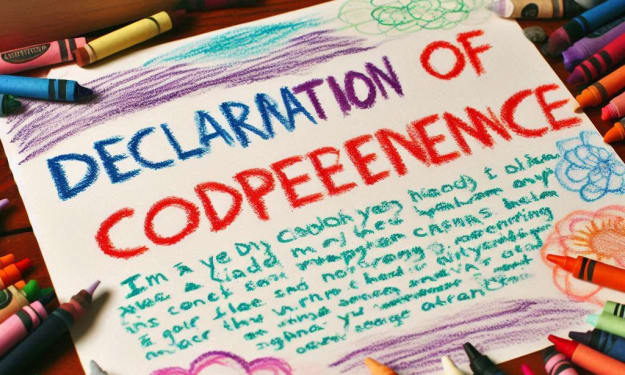
We the People of the Husbands of the United States of America, in Order to form a more perfect Union, and I mean you...with me...establish Justice, insure domestic Tranquility, provide for the common defence, promote the general Welfare, and secure the Blessings of Liberty to ourselves, after Puberty, do ordain and establish this Declaration of Co-Dependence.
By Gerard DiLeo7 days ago in Humans
How Can Professional Singles Find Love Without Sacrificing Career Success
Professional singles are faced with the dilemma of not sacrificing their career achievements in the name of trying to have romantic relationships. Successful people devote much time and efforts to developing their profession, working towards economic well-being, fame, and self-perception. Although such accomplishments are fulfilling they may cause obstacles in the establishment of meaningful relationships. The pressures of a hectic career may provide little time to date, bond emotionally and share experiences and so balancing ambition and intimacy may be hard.
By Mark Hipster6 days ago in Humans
Who is your "Person"?
It's important to recognize that you cannot go through life as easily on your own. My name is Elizabeth and I'm a survivor of child abuse and horrific trauma. Healing from trauma is not a quick fix and recognizing that it will take time, is part of the struggle.
By Elizabeth Woods2 days ago in Psyche



Comments
There are no comments for this story
Be the first to respond and start the conversation.