
In the dream, I was breathing feathers. Rushing up my nostrils to the back of my throat, a few drifting out slowly as I flared them against the softness, they smelled like fire and rain. And books; musical books - not music books, necessarily, but the kind of book that sat dormant in second-hand bookstores yet still coughed out strains of the music which had glued it together and brought it to life.
This smell was exactly like that. The creature - if the mass of fluid, writhing, almost invisible muscle had a centrally controlled sentience - moved as though it had no purpose except to sing through its feathers; as though it had written it, that strange melody teetering back and forth between memory and dystopia, and was flaunting it now in tailored whispers as it pressed me further towards its heart, scalpelling itself open in preparation to show me things that felt ancient, and terrifying, and sacred.
What was it? Lily used to take me bird-watching, mostly to the lake, though we'd sometimes liked to pretend we were brown bears and march through the forest-wasteland behind my house from time to time. I'd seen lots of swans then. Was this one of them?
It couldn't be, though. I'd touched a swan before too - they were brutes. Silent glares and dull, beady eyes, always protecting their cygnets even when the lakewater had long gone silent and there were no more cygnets to feed.
No, this wasn't a swan. It was something far softer, and sweeter, in a way, yet somehow more and more untouchable the further I tried to look up through the feathers to find some familiar object or gaze to reassure me that it was alive; that it was real.
What was it?
When I woke up, I was still holding onto Shaun Tan's Tales from the Inner City, its spine bent open and pages dipped in sweat. Most of them were crinkled and split, and the few left intact were smudged with my countless annotations of cartoons and sociological analyses done while I was still at university.
On the hardback cover, under an illustration of a glowing moonfish held up by the shadow of a boy, I'd sketched a comic strip of Lily, lining up the panels so you could follow her opening her mouth and turning into a snowy owl. I didn't know why I'd done that. Maybe I had been thinking about the time she threw a rock at a snake to stop it from approaching our campsite, her hair riled up from too long without conditioner. Maybe I'd been thinking about how she'd saved us that one time, however stupid it had been, how I owed her this final note of thanks to be tattooed onto my favourite book.
There were notes about her and by her on other pages too: a quote from our first year at university above 'Respect the sheep' on page 125 - we were the only two students to choose agriculture as a second elective - a snippet of her handwriting spelling out 'Save Luton, Mayor Borden' - a full-blown George's Marvellous Medicine-style story I'd written on the inside back cover with her as the protagonist because I'd once caught her crying about her awful great-aunt behind the cafeteria at recess in middle school.
All in fountain pen, as was everything I'd written for a long time. I remembered being scared my thoughts would stay on the pages as I wrote them, permanent and laughable forever.
So I scribbled as messily as I could, injecting as much ink as possible into the pages then preemptively rubbing it away myself, pushing the words back into my skin, perpetually terrified that something - nothing - everything - might change.
Lily had given me my first fountain pen too, for my nineteenth birthday. It was golden, and came in a tight clear silk wrapper on top of a navy velvet bed. It was the most luxurious thing I'd ever been given.
I remembered her smile as she opened the lid for me, her thumb just covering the engraving I found later: 'Eric. From Lilianne and the Braxton Urban Development Society.' I remembered dropping it and walking out, pushing the back door open, looking up at the sky, looking back at the door as it swung back and forth from the wind. I remembered swiping my knuckles against the curtained windows at her parents' house, calling for her, feeling the words in my mouth turn from pain to confusion to anger. I remembered so many other things - old Emily Garcia coming out of her bungalow to tell me the Patons had moved out last week, while I was still working in Indiana - grocer Gibbons letting me know that he was moving to New York too, because 'Screw the Braxtons, but I can't live on in a ghost town' - Rosie Taylor, my childhood archnemesis, crying that without the Patons, none of Luton would want to stay.
Now, my back still against the same wooden boards I'd played on and dreamt on my whole life, I still remembered. The Braxtons' society hadn't demolished Luton, hadn't managed to reprogram it into an urban metropolis they had been advertising and threatening eight years ago. But everyone had left, that was true. Without the Patons, the founders of the town, without Lily Paton, we seemed less vibrant; somehow, less worthy of living.
It was just me - and the occasional travelling salesman with a revolutionary shampoo formula - who came in and out of the streets now, and even I had started moving bits and pieces back out to a small apartment in Indiana a few months ago. Soon, I would be gone too. Completely.
God, though, she was still everywhere, things about her and our old friendship flowing through my stuff like a vapid stream. As I pushed my clothes into boxes, looking under bed and cupboards for displaced shirts and ties, I kept finding things from her. Everywhere. Weirdly, a lot of things about birds. Swans, especially - a Swarovski pin, an embroidered handkerchief, a ten-page-long letter about why swans were better than every other creature alive. That had been from our first fight at ten, when I'd said she shouldn't have fed the lake swans because they were so brutish and ugly.
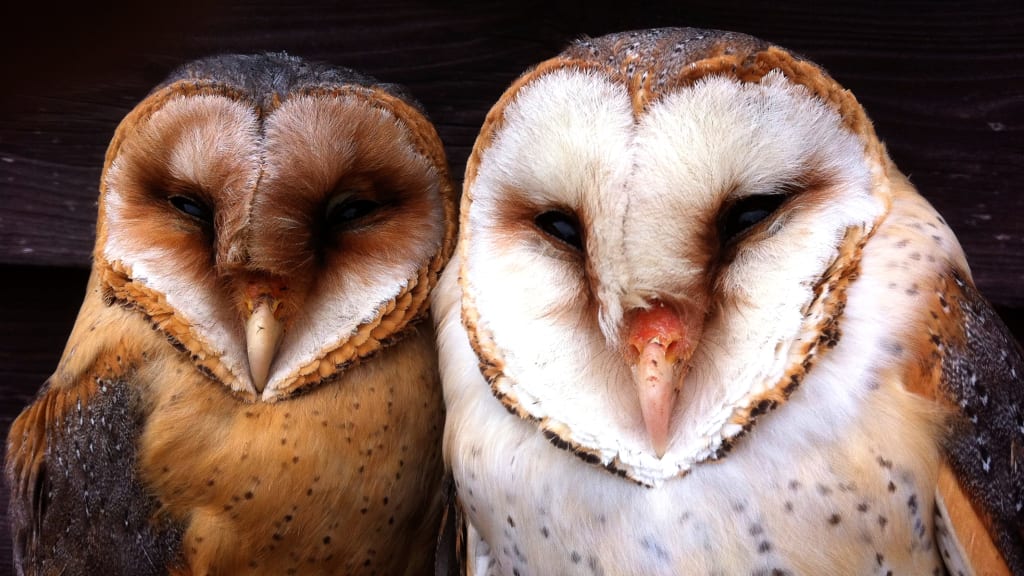
I'd always hated swans - she knew that. But she'd loved them, and I'd never understood why. Not before a little while back, anyway. I'd tried to give her a barn owl bookmark I'd made at the annual crafts exposition once, and found out later that she'd thrown it away the second she'd gotten home. I didn't write her a letter that time.
Last year, though, Ralph Gibbons came back to visit me. He'd been middle-aged already when he left four years ago, but for some reason we'd always gotten along. He asked me if I knew how Lily was doing, and I said no, because I didn't. We'd lost contact straight after they moved away - I had, anyway. She could have dropped in anytime. So I didn't know that she'd done a Masters in Resilient Urban Design at Clemson, that she'd quit her job as a policy advisor to move to New York, that she'd settled back into the big trust-fund life her parents had been supporting with their business ventures throughout the country, and turned into an up-and-coming socialite. I didn't know that she'd married Gene Braxton, fifteen years her senior, that she'd had the newest Paton-Braxton heir earlier this year. I didn't know any of it when Ralph told me, walking through the old street where all the expos used to be held. But it felt like I had known for a long time.
'She always really loved swans, ye know. Boy, I thought it was weird.' I looked at Ralph.
'Yeah, I did too. Never found out why, though. I thought they were mean.' He looked back at me, chuckling, and thought for a few moments.
'I think de things you like reflect what you are sometimes, son,' he mused.
After a pause, 'You didn't like swans, huh? What did you like - dem old barn owls? My wife used to paint them from time to time, in the winter mostly. What did you like about 'em?'
I felt my fingers stiffen from the cold and shoved them back in my pockets. 'I don't know, I guess. They're like swans in a lot of ways - they mate for life, they're intelligent, they're both more or less white, but I've always thought barn owls were more noble for some reason.'
'Noble, huh?'
'Yeah. I mean, they're not owned by the law, you know, like the Queen owns all the swans in the UK, but they're not regal. Barn owls are - brave. Ambitious. Noble.'
'Yeah.' I glanced over at Ralph again. He was silent, his nose tinged with rose as the sun started to go down over the ghost town. I gestured that we should start heading back to my house and he nodded, turning.
'You know... I heard a poem once that I haven't ever been able to quite get out of my head.'
'Yeah?'
'It was about a swan, though I don't think it really makes much sense here...'
'Which one was it?'
He paused, trying to find it. 'The Silver Swan:
The silver swan, who living had no note,
When death approached, unlocked her silent throat,
Leaning her breast against the reedy shore,
Thus sung her first and last, and sung no more:
Farewell all joys! O death, come close mine eyes;
More geese than swans now live, more fools than wise.'
He stopped, seemingly embarrassed. 'I don't know who wrote it. Anyway, that last line reminds me of you. Swans and owls, though. Not geese. I have geese.' He looked around the buildings long emptied of their once-bustling activity.
'Maybe we shoulda stayed... I shoulda, at least. Who knows what might've happened here. Maybe we didn't need the Patons after all. Didn't ever need 'em, maybe. Didn't know it though, then.'
I let out a low whistle, and smiled. 'Maybe. Don't worry, though. Haven't you heard this one?
When cats run home and the light is come,
And dew is cold upon the ground,
And the far-off stream is dumb,
And the whirring sail goes round,
And the whirring sail goes round;
Alone and warming his five wits,
The white owl in the belfry sits.
That one's Tennyson.'
Ralph laughed, delighted, and took my arm, pointing back down the street we'd come by.
'I guess it's time for your swan song then, hey? You said you're gonna come live in the big city.'
'Comparatively, I guess.'
We looked back at the sunset, towards the burnished rays of gold and copper lining up the horizon, and smiled together.
And as if by some mysterious miracle still slowly running in the veins of the Luton bricks and walls, we heard the brazen scream of a barn owl piercing the air behind us.
When we'd turned, it had long gone, but the meaning was still there, reverberating through the trees.
A swan song, a farewell to the old life, a final, solemn, noble salute.
About the Creator
The Captain Who Refused to Hate
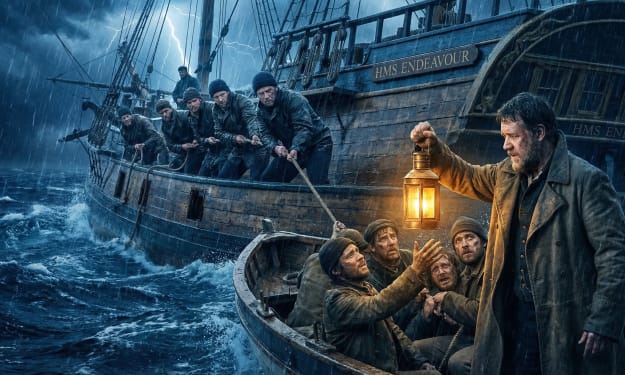
In the cold and dark days of the second world war there was a man named Captain Richard. He was a brave sailor from England who was in charge of a big ship. The world was full of anger and every country was fighting against the other. In those times people were told that the person on the other side was an enemy and did not deserve any kindness. But Richard was a man of deep character and he believed that being a human was more important than being a soldier.
By Hazrat Umer6 days ago in Humans
A System That Isn’t Working Challenge Winners
Systems promise order. They organize behavior, distribute opportunity, and suggest that if everyone follows the rules, things will work. The entries in A System That Isn’t Working look closely at what happens when that promise begins to slip.
By Vocal Curation Team5 days ago in Resources

Comments
There are no comments for this story
Be the first to respond and start the conversation.