
Ghana & A Culture of Bullying
I've come to realize they have a culture of bullying others & it's disgusting

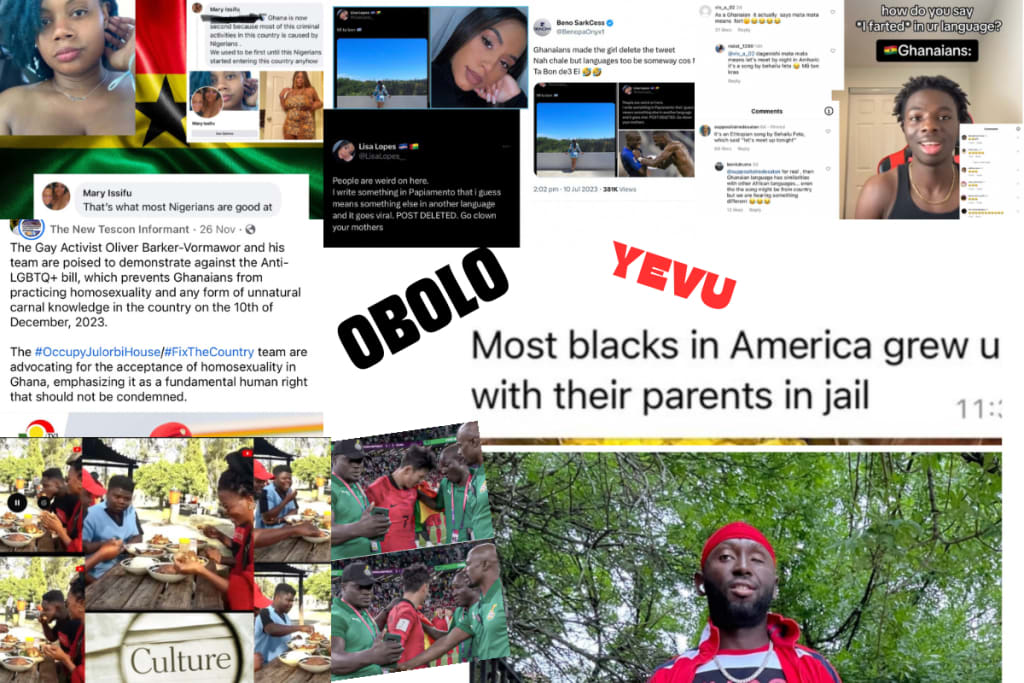
Wednesday, 13 December 2023
By: TB Obwoge
I think this is an issue of several combined things that need to be addressed seriously. I don't know if it's lack of a good educational system, lack of home training or immorality.
However it needs to be addressed, every horrible lived experience I've had in the country, boils down to Ghana is home to, too many bullies. Its part of the culture that needs to stop!
I've written several times about issues I've had living in Ghana, most of the issues were because of my skin color. I'm a light-skin Black American, no I'm not mixed race just light. The skin tone, with the American accent, seems to give some Africans, apparently too many Ghanaians the right to classify me as white.
I have had too many incidents living in Ghana with being called fat when walking down the streets or travel within Ghana. Ghanians openly scream "obolo" which means fat.
Why would any human do that?
I've always wonder why they think this is polite. I was told by one man, "oh we love big fat obese women!" Which is another lie, he is talking about shapely women, where though does his statement sound loving?
1. Calling people fat, without any concern that it's rude or insulting. It's also not one person, it's a thing Ghanaians scream out all day long on the streets of Ghana.
I once met a man named Ishmael, he's separated from his wife due to work locations. When you work for the government of Ghana, they place you at any location in the country.
She works for the ministry of Social Security, they placed her in Ho, Ghana but she and her husband live in Accra, Ghana. She is 3-hours away from her husband, who works in Accra, this is how I met him.
Ishmael and I were seated next to one another for the ride from Ho back to Accra. I am overweight and on the van they refuse to leave until every seat is filled. I was in the middle seat, when they allowed a woman carrying a child to take the last remaining seat. The child was between 2-4 years old, sick and coughing.
I apologized several times for leaning or touching my seat-mate Ishmael. We talked the entire time, he was such a kind man. We started to discuss how Ghanaians scream "obolo" (FAT) in the streets.
He said he hates it because his wife is large and when people do that, it makes him so angry that he wants to fight them.
He explained how it bothers his wife so much as well. How can grown human beings think this behavior is acceptable? This is the most childish and bully behavior and it's not just some, it is a lot of Ghanaians that do this and think nothing ill of it.
Then there are so many that laugh when they hear it as well, so if they're not the one calling you this, there will be several laughing at this behavior.
Ghanaians are such bullies that there is a word created for the bulling that Ghanaians inflict on one another in senior high school. It's called "homoing", where older students inflict what most normal humans would call physical and verbal abuse on younger, or smaller children.
A Ghanaian man wrote an entire book on their SHS bullying, as well as several articles about how horrible bullying is in Ghana boarding schools. There was even a recent viral video of a young man getting his head cracked opened by a student he refused to return his charging cord.
The boy was recorded banging the smaller boys head into a metal bed frame. He cracked his head while blood ran down his face. Boys filmed, watched and even laughed.
Ghanaians are being taught bullying from high school, even worse that it is an acceptable form of behavior.
Public Health Student Examines Ghanaian Boarding Schools’ Bullying Culture in New Book Chapter
In Ghana, it’s common for high school students to attend single-gender boarding schools — an element of an education system introduced by colonial missionaries.
Now, almost 150 years after the founding of the first missionary school, many of these institutions have become harbingers of bullying culture. In Ghana, the harmful practice is popularly referred to as “homoing.” Committed by seniors and older students to control juniors and younger and vulnerable student populations, the methods include domination, verbal attacks, shaming, forced kneeling, and demoralizing tasks.
This damaging tradition is the focus of a chapter co-authored by Brown School Master of Public Health student, Baffour Boaten Boahen-Boaten. The chapter, “Bullying in the Name of Care: A Social History of Homoing Among Students in Ghanaian Boarding Schools,” is a socio-historical analysis of homoing among the student population; the origin and meaning of the name; its roots in colonialism; and how the behavior facilitates certain forms of social exclusion and social inclusion among students.
The chapter is part of the book “Global Perspectives on Boarding Schools in the Nineteenth and Twentieth Centuries,” which brings together a collection of scholarly works from around the world examining the social complexities of ‘boarding schools’ as a global and transcultural phenomenon.
Boahen-Boaten said homoing is causing substantial social and public health burdens in boarding schools – sullying spaces that are designed to provide care.
“In these places where students are supposed to receive care, it’s important not to create subcultures that become harmful,” Boahen-Boaten said. “When people congregate in a place with its own subculture, it’s ripe for homoing behavior.”
Boahen-Boaten, a former boarding school pupil and native of Ghana, collaborated on the chapter with De-Valera N Y M Botchway, a history professor and head of the History Department at the University of Cape Coast, Ghana.
After receiving his bachelor’s in psychology degree from the University of Cape Coast, Boahen-Boaten earned a master’s degree in Global Mental Health from the University of Glasgow, Scotland, UK. He holds a Postgraduate Diploma in HIV/AIDS Management from the University of Stellenbosch, South Africa. Prior to attending the Brown School, he was a lecturer in psychology at Eswatini Medical Christian University in Eswatini (formerly Swaziland) in southern Africa. He has been vocal on the concept of decolonization of knowledge and designed an ‘African Psychology’ course as a lecturer.
He also co-authored the chapter “Suicide in Low-and Middle-Income Countries” in The Palgrave Handbook of Sociocultural Perspectives on Global Mental Health.
As you can see it's always blaming others for their bad behavior, the Ghanian author blames something that happened over 150 years ago on the current day bullying in Ghana's schools.
Also this author didn't add this but some students are raped in Ghana boarding schools, most will never report these incidents. Especially with the current rape fees still being charged in Ghana.
2. Xenophobia and making hateful xenophobic comments, without thinking they're making hateful comments. Some don't care, when you try to have a conversation about it, they always counter with any story they can think about that includes a person from a country they hate.
Most Ghanaians have never even had a bad experience with someone from another country, they just heard a story from someone & decided they hate people from that group.
People renting housing openly discriminate against Nigerians and others from different countries, even South Africans and Americans. I've had to prove I wasn't Nigerian before one agent wanted to work with me.
Agents: Ghana seems to have this issue where any time you seek housing, you have to use an agent, they take 10% of all the money you pay the landlord. This is very expensive, I've tried doing it without an agent yet called numbers on properties and they lead you right to an agent.
3. Several times many Ghanaians have taken to social media to bully others, it's resulted in hundreds, if not thousands of negative comments. I've documented these time. They were all viral episodes, which some resulted in becoming articles in Ghana.
1a. Ghanaians made fun of an artist from Cabo Verde (Formally known as Cape Verde). She posted a photo to several of her personal social media accounts, they some how caught the eye of Ghanians. This ended horribly for the young woman from Cobo Verde.
She used her own language from her country, her own dialect and was bullied so badly she made her Twitter account private, after she deleted the Tweet. Because deleting the post wasn't enough, Ghanaians continued to attack her, mocking.
Because in her language it was translated in Twi (a language spoken by 17-18 million Ghanians) Twi isn't the official language of Ghana, English is, which then isn't even spoken by everyone nor is it taught correctly. You won't find everyone speaking proper British English and some Ghanaians have decided to change the meanings of words, it makes life difficult in Ghana.
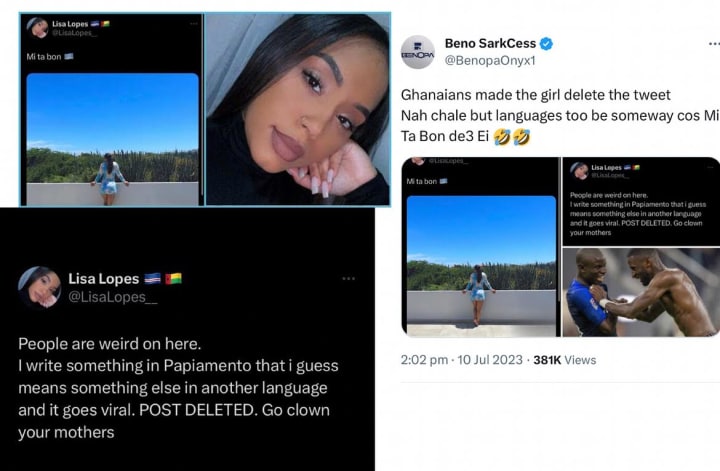
Lisa Lopes, a Cape Verdean singer, tweeted a photo captioned with the words “Mi ta bon!” which means “I’m good!” in Papiamento. The language spoken in Cape Verde.
The words in Twi, means “My fart smells,” which resulted Ghanaians to joke, insult and bully her until she deleted the Tweet. The bullying came from Ghanaians on more than one of her social media account. It was so bad she made her Twitter account private.
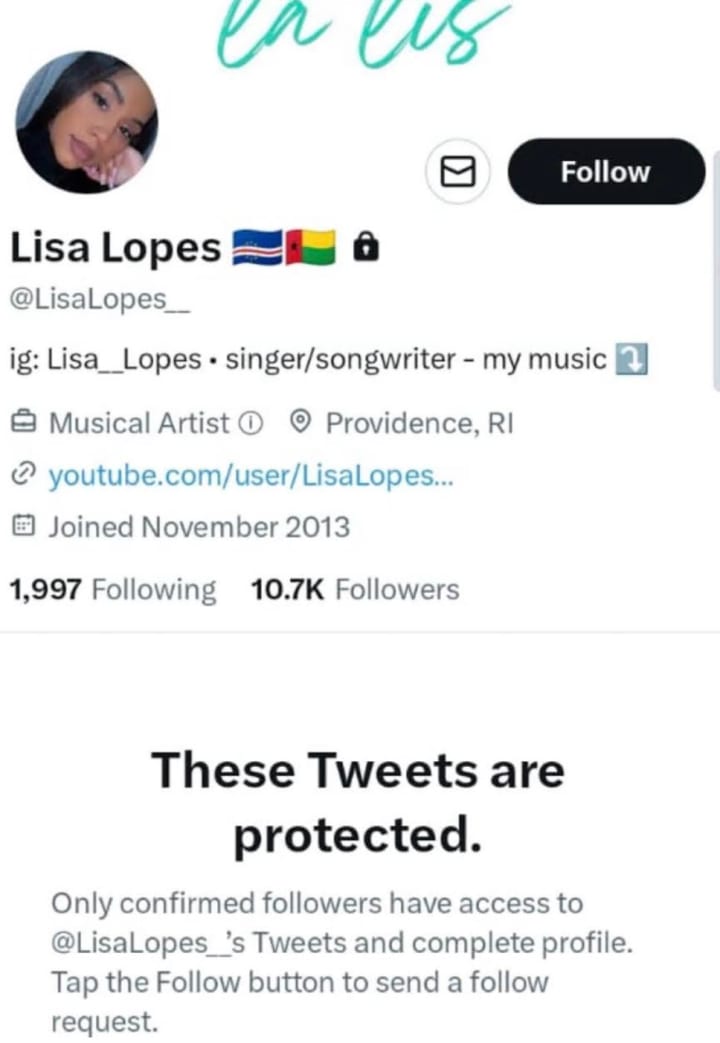
After making her account private Ghanaian's then decided to make fun of her some more. They posted insults about her being “vexed” then called her a “barbie”
The articles written by Ghanaian bloggers make Ghanians out to be the victims, not the young lady that innocently posted a Tweet in her own language. Ghanaians followed her to other social media platforms, Instagram and continued to bully her there.
Imagine this bullying while living in Ghana, being fat, dark skinned, a foreigner, having vitiligo, dreadlocks, or light skinned. This is how bad bulling is when you live in Ghana. They are rude, yet call themselves the politest people in Africa and claim their culture makes them better behaved than any other Africans.
This hasn't just happened once, it's happen more than once. A Ghanaian took to social media, playing an Ethiopian song, he then noticed words that in Twi translated again into "farts", why is this happening?
“Mi ta bon” means my fart stinks and now "meta meta" in the Ethiopian language means fart as well. So of course now you must bully Ethiopians while playing their music on you Instagram video.
This is the most immature behavior, the sad part this is common in real life living in Ghana and looking or being different from others.
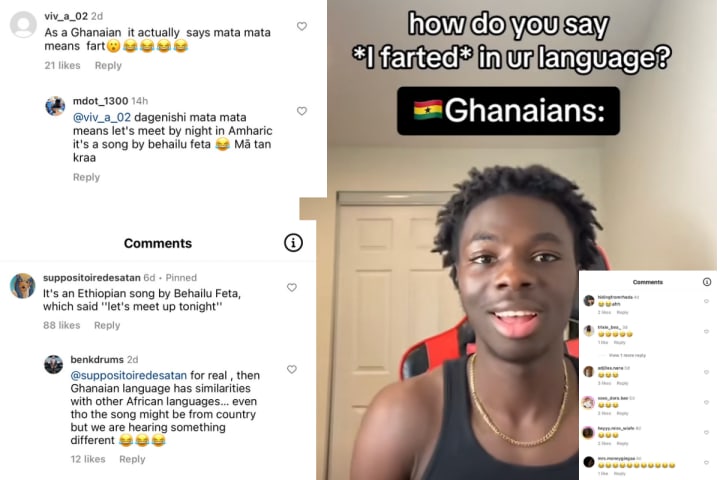
This idiot is laughing the entire time, after the first person explained that it's not the word fart, that it's Amharic, the most widely spoken and written language in Ethiopia. He should've deleted the video, but it's now shared widely on several other social media platforms.
Why isn't this looked at as disrespectful? It's not done in a way to teach others about language, from the post you can clearly see it's created to mock others language.
Meta has many meanings around the world, the fact a Ghanaian wants to associate it with a fart in Twi shows you the engrained culture of mocking & bullying.
Meta is a word which, like so many other things, we have the ancient Greeks to thank for. When they used it, meta meant “beyond,” “after,” or “behind.” The “beyond” sense of meta still lingers in words like metaphysics or meta-economy.
4, Racism- Ghanaians do show hatred towards white people, being light skin and having to deal with Ghanians thinking I'm white as widely come with raicst acts of hatred.
I've written about this so much, the anger still lingers in my soul for all the abuse I endured living in the country.
How can so many people not know that light skin Black people exist? I will never in my life understand why or how people living in a major African, capital city can't tell what a Black person looks like.
During a very important FIFA match, Ghanaians on Twitter were making fun of the Korean teams names. Several players had the same last name, an Italian announcer said their names quickly. In Ghana it became a video that was widely shared on WhatsApp and social media, of course because I have a Ghana number, contacts on WhatsApp and social media because I was in Ghana.
After this video was shared people were posting things in a fake "Asian" mixed spelling, as if to mock the Koreans. A Few days later Ghana's football team was to have a match with South Korea, some Ghanaians took to Twitter using the Korean alphabet to further mock Koreans.
Ghana won the match 3-2, from there the mocking via social media became much worse. I posted the score, with the words congratulations. The TikTok was seen by a little over 3,000 people, from there the insults started on me. I was called a racist, you're one of them, it went on and on.
A few people did respond by saying, you guys we won all the extra things aren't needed. But most of them unleashed bullying that was typical and lasted for several days.
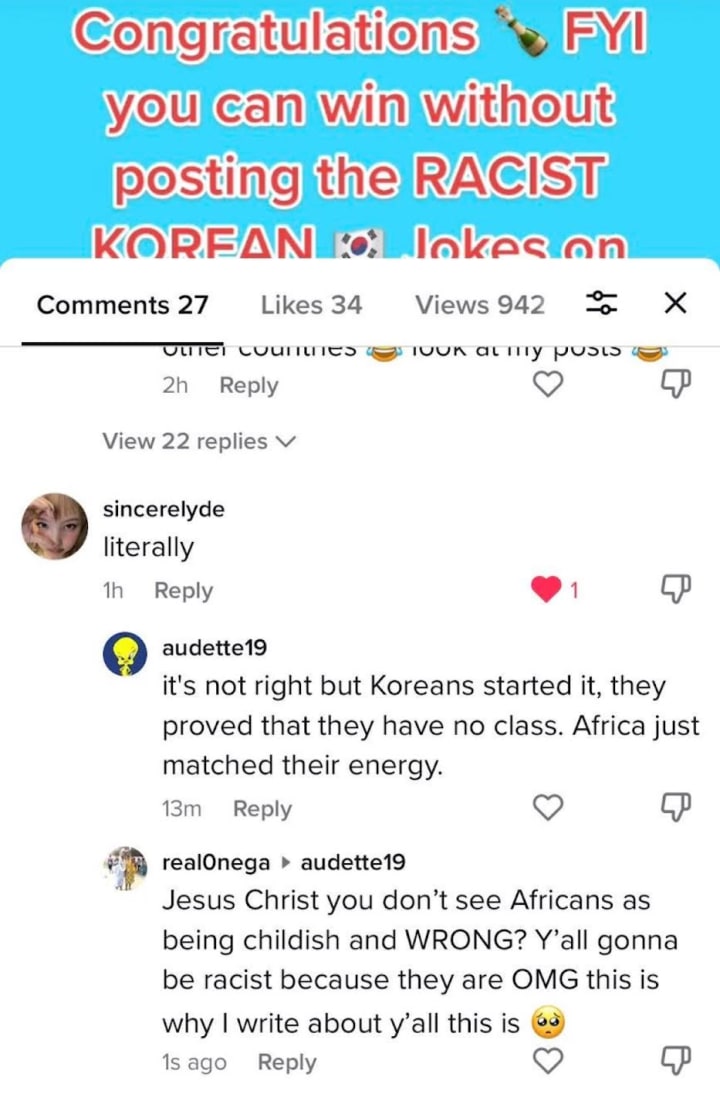
I am the one replying on the bottom, this Ghanaian man said Africans, it was from Ghanaians on social media it had nothing to do with Africans from other countries. Below you'll see that the photos and social media bulling went on for a while.
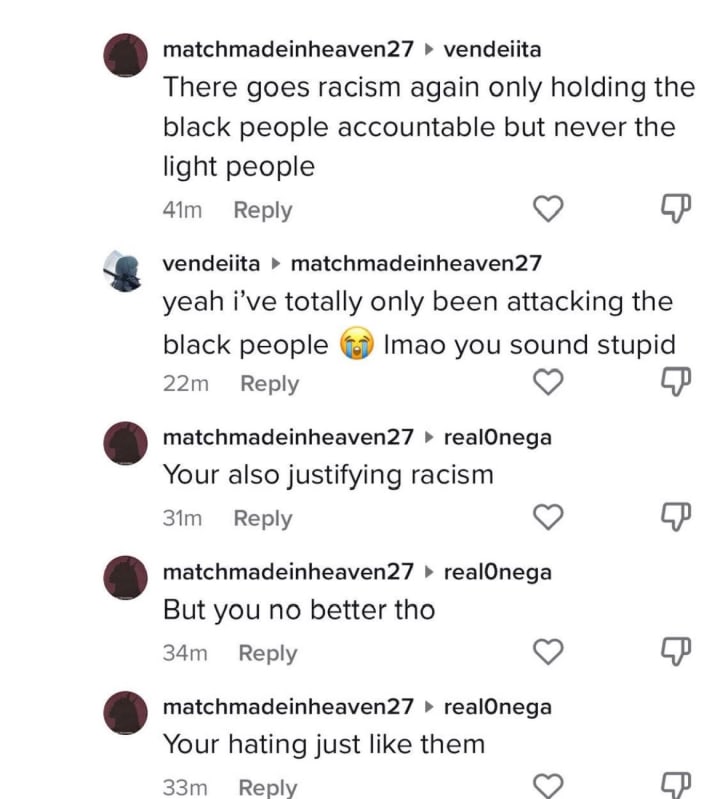
I have no idea why people that won a match, would bully the losers of the match, instead of being happy. However if this was racists white people, then would these Ghanaians see it as racism? I mean if the Koreans made fun of a white American team would they see this as racist?
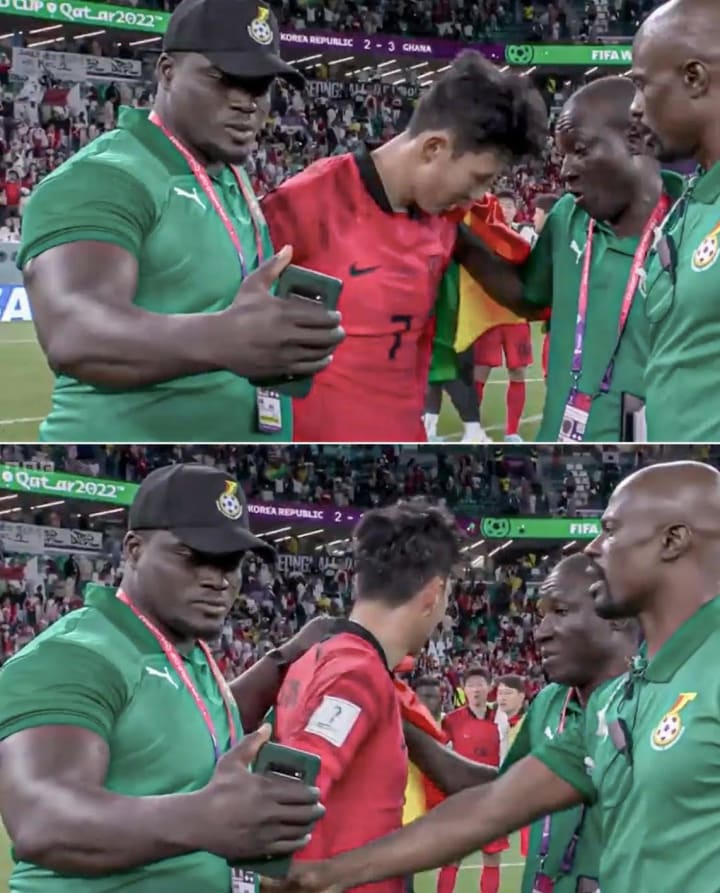
The man above took a photo of the upset team, this photo was shared hundreds of times. People placed words on them, jokes, turned it into a meme and it was shared for more than a month.
It wasn't about who was more racist or who was wrong, this is just yet again a culture of bullying.
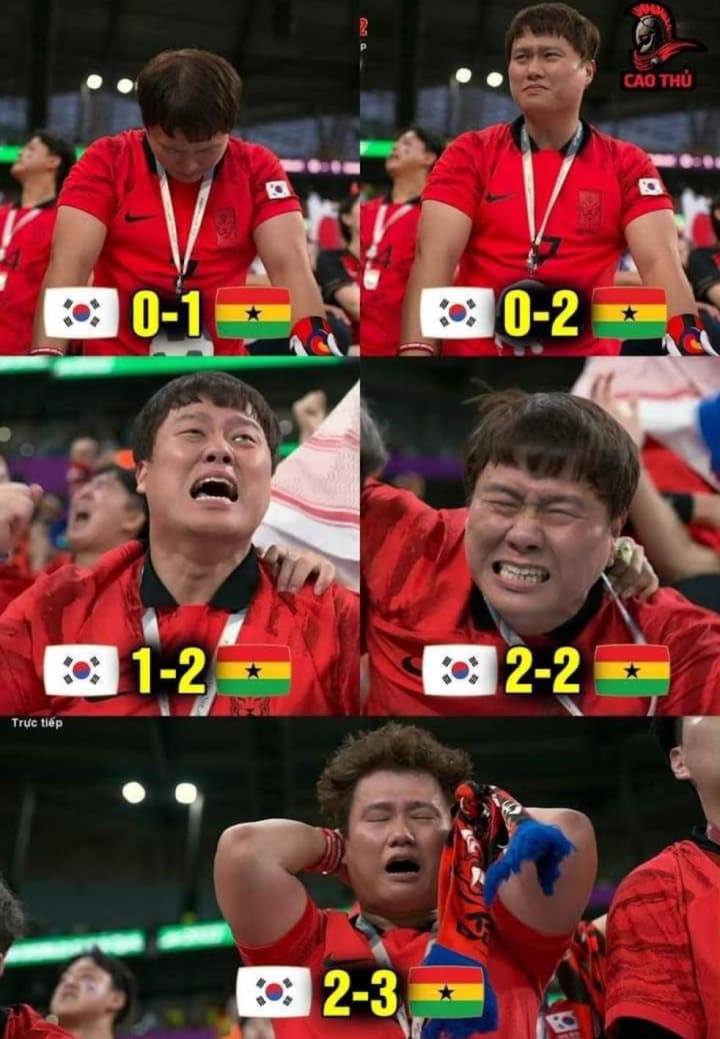
Now imagine living in Ghana, being different, light skin Black person, overweight, having a skin condition, not speaking their language. I have many more incidents as a matter fact I could write probably 10,000 words, with photos, recording and other examples.
Like the Ghanaian man that told me all Black Americans grew up with their parents in jail, or the Ghanaian woman that went on a rant calling all French speaking Africans "copycats and violent", or when my ex in Ghana told me to kill myself.
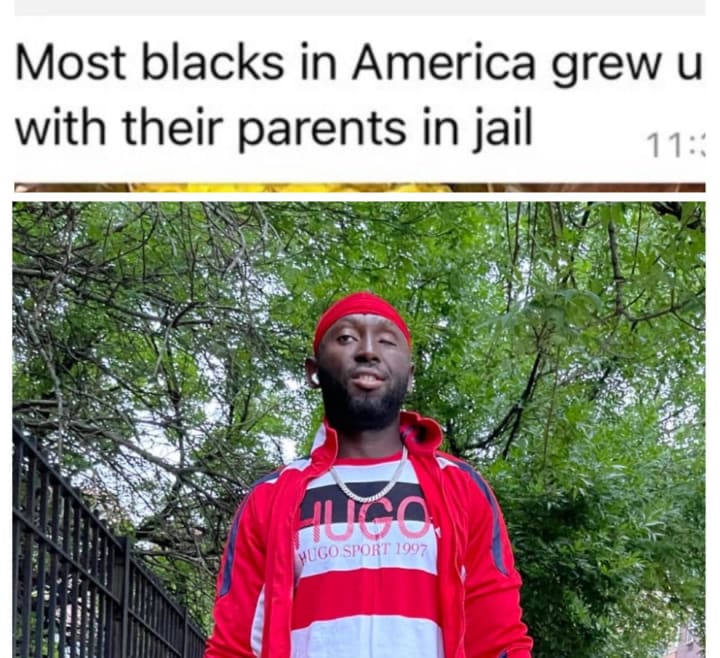
From rampant xenophobia, to so many other issues it appears to be a culture of bullying people, anyone who's different, even not-so-different. Darker skin in normal for Ghana but they still use the term "darky & blackie" on those Ghanians that are darker in complexion.
About the Creator
IwriteMywrongs
I'm the president of a nonprofit. I've lived in 3 countries, I love to travel, take photos and help children and women around the world! One day I pray an end to Child Marriages, Rape and a start to equal Education for ALL children 🙏🏽
Keep reading
More stories from IwriteMywrongs and writers in Humans and other communities.
What Makes the Maldives the Most Romantic Destination in the World
The romance of the Maldives begins with its geography. Scattered across the Indian Ocean, the islands are naturally isolated, surrounded by open water rather than neighbouring towns or tourist districts. This physical separation creates emotional space. Couples are not navigating crowds, traffic, or schedules; they are sharing an island that feels intentionally removed from the rest of the world. In the Maldives, privacy is not an upgrade or a premium add-on; it is the default. That sense of being alone together is the foundation on which all the romance is built.
By Claudia Fennelabout 13 hours ago in Humans


Comments
There are no comments for this story
Be the first to respond and start the conversation.