

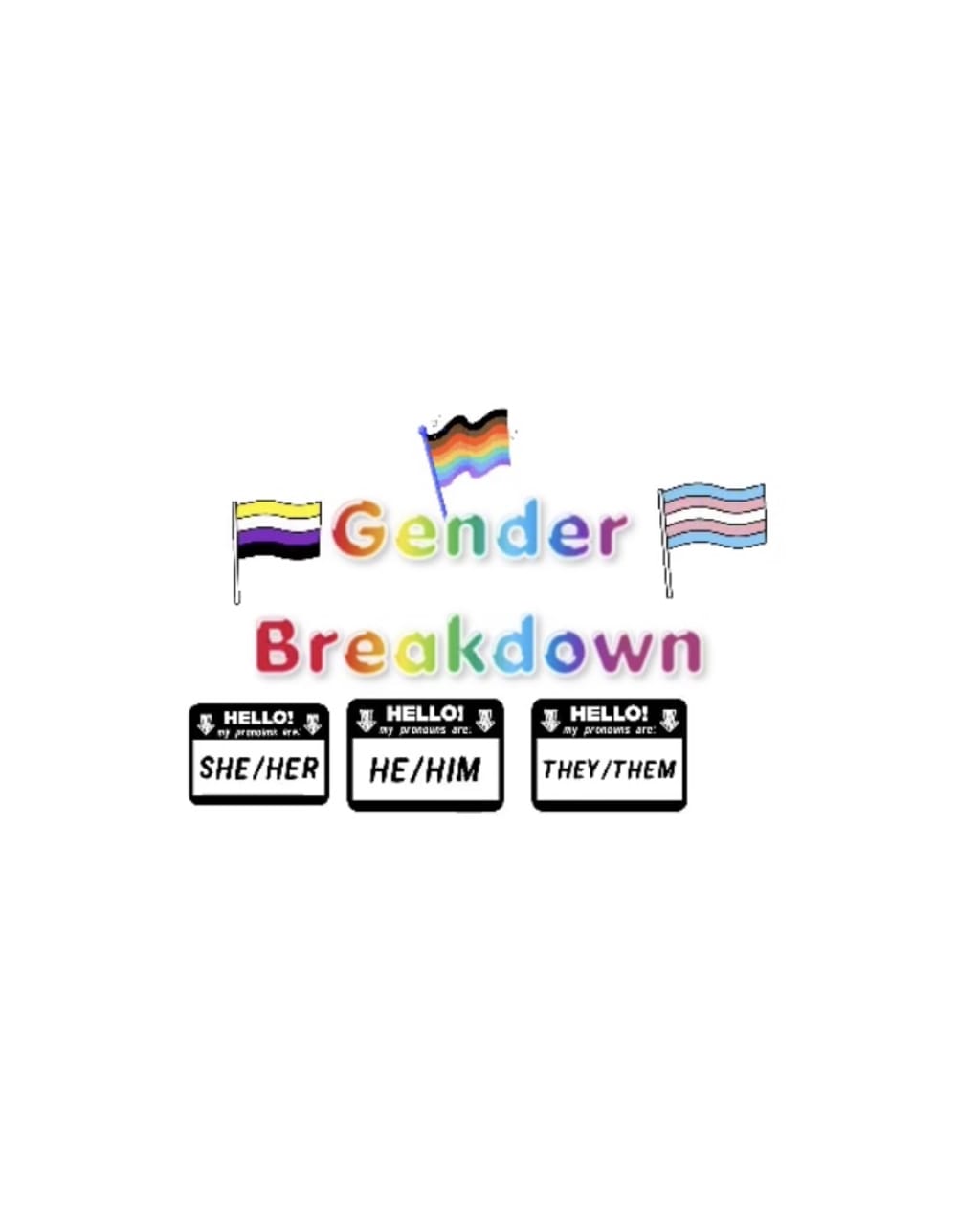
Today there are many different gender identities, to be specific there are sixty-four different established identities. However, in this article we’re going to go over the most common terms used in gender as well as make some important clarifications.
The first thing we have to understand is the difference between sex and gender. Sex is what is used to tell apart in both humans and animals as far as who has what kind of reproductive system. Gender on the other hand is a social construct, it is completely made up, and so technically speaking there is no limit to how many genders there could be. Gender does not always have to align with sex.
But what about the people who do have a gender that matches the sex they were assigned at birth? For instance, men who were born with male reproductive systems and were perfectly happy with their bodies, pronouns, and roles; this is called cisgender. According to dictionary.com, cisgender is defined as denoting or relating to a person whose sense of personal identity and gender corresponds with their birth sex.
Now obviously not everyone is cisgender, or I wouldn’t even be writing this article. So, what about people who are not cisgender? The definition of transgender is someone who’s gender identity does not match identically with the sex they were assigned with at birth. Which means whoever is not 100% cisgender, falls under the term transgender. The transgender pride colors are blue, pink, and white. The flag is made of stripes in the colored order of blue, pink, white, pink, and blue. Usually people who use these pride colors and this pride flag are transgender men and transgender women. However, everyone else who is not cisgender can still use these as their pride colors if they like, because they do fall under the term transgender. This includes people who are non-binary, genderfluid, demigirl, and demiboy. Those are the identities we will be discussing today.
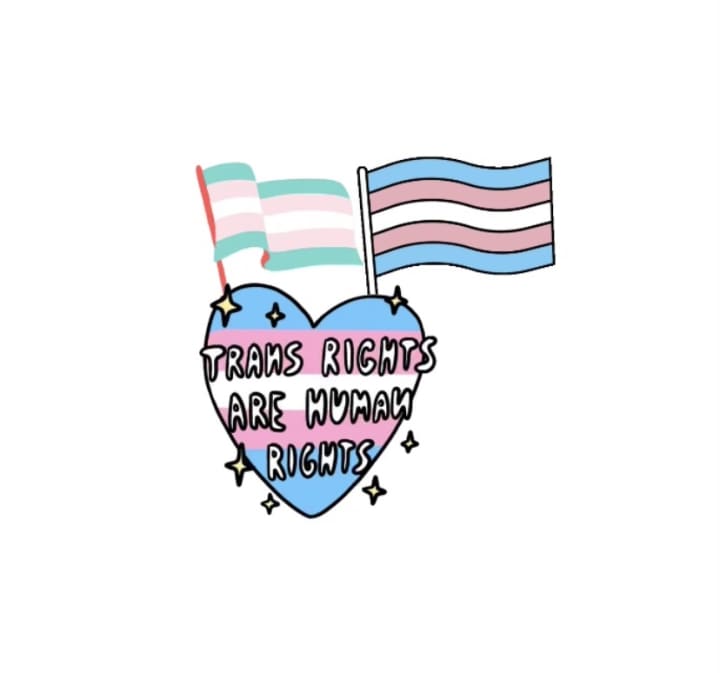
But before moving on, let us clarify what a transgender man and transgender woman are. A transgender man is someone who was assigned female at birth but now identifies as a binary man and uses he/him/his pronouns. A transgender woman is someone who was assigned male at birth but now identifies as a binary woman and uses she/her/hers pronouns. It’s important to note that not every transgender man and woman is able to afford physically transitioning, and others are simply not comfortable with the process. So just because someone doesn’t “look” like one would typically expect a man or woman to look, does not invalidate a transgender man or woman’s individual identity.
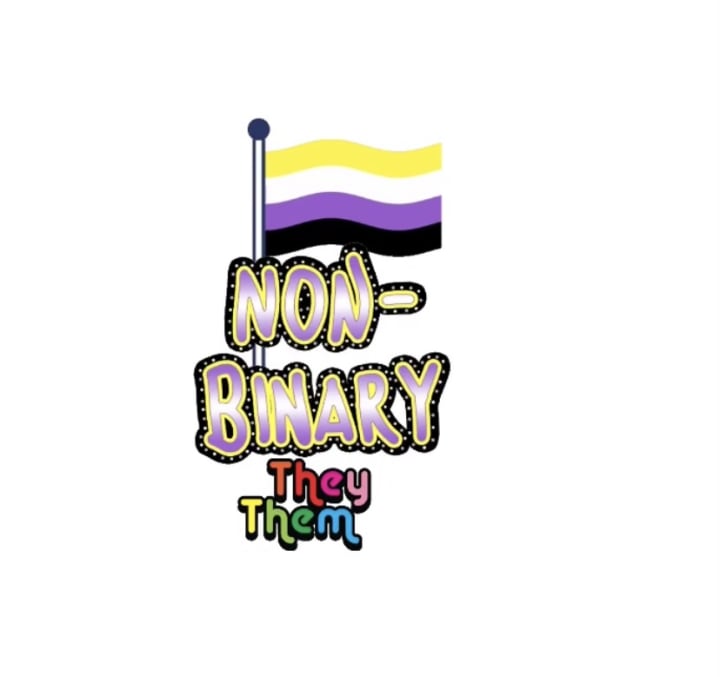
Non-binary is similar to the term transgender in the fact that they are both umbrella terms. Technically everyone from this point on in the article would be considered non-binary. Binary genders are man and woman. So, anyone who identifies as anything else is not a binary gender. However, non-binary is also an individual identity often used by people who regardless of what they were assigned at birth identify as neither man or woman and usually use they/them pronouns. Non-binary pride colors are yellow, white, purple, and black. Some people who identify as non-binary dress androgynous while others do not. Some non-binary people get hormone therapy and surgery, while others do not. Pronouns can also differ, so it’s always best to ask what their pronouns are.
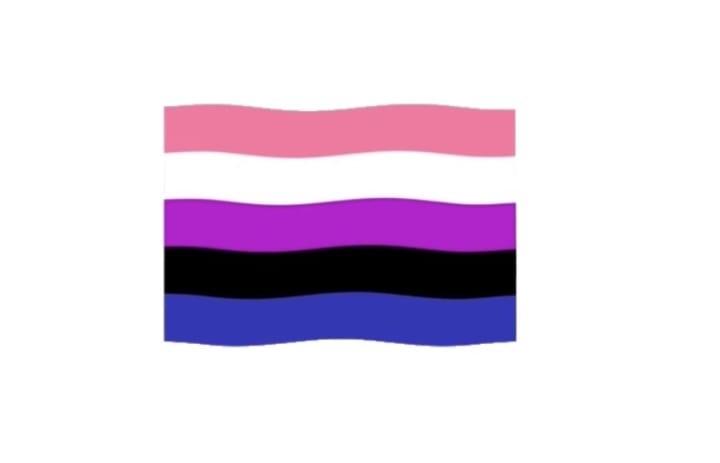
Genderfluid people are the people that if you asked, “Are you a man or a woman?” their answer would be “Yes.” It is common for them to use she/they/him pronouns, however it’s always best to ask since two genderfluid people are almost never the same. Genderfluid pride colors are pink, white, purple, black, and blue.
Demigirl is someone who regardless of what they were assigned at birth now identify as mostly woman but not completely. Their pronouns are usually she/they, but it’s always best to ask. Demigirl pride colors are dark gray, light gray, pink, and white.
Demiboy is someone who regardless of what they were assigned at birth now identify as mostly man but not completely. Their pronouns are usually he/they, but it’s always best to ask. Demiboy pride colors are dark gray, light gray, blue, and white.

Now before ending this article, we’re going to quickly go over some of the most common myths and misunderstandings about these titles.
Some transgender people do not like anyone who is not binary to use their pride colors. The same kind of hate can come from non-binary people and their pride colors. However, when someone is a minority inside of an already minority group, representation matters. Since it can be really hard for people who are genderfluid, demigirl, demiboy, or any of the other not as well-known gender to be seen by their individual identity, using the more well-known umbrella terms and their pride colors can help raise awareness and this is so important. The transgender community needs to learn to come together and support one another, regardless of official titles.
Binary people, both cisgender and transgender, have in the past attacked people who use they/them pronouns. Their argument is that those terms are plural terms. However, this is not true. Singular use of they/them happens all the time when information is absent about one’s gender. Sure, there are some instances that may sound different when using they/them at first. But even if this grammatical accusation was correct; one’s personal identity is more important than grammar.
Another common misconception binary people, both cisgender and transgender, make is that clothing and physical appearance correlate to gender. This is not true. Gender identity is based on how one personally feels, not what they look like.
In this article we talked about the seven most common gender identities, but as mentioned in the beginning of the article there are currently sixty-four established gender identities; and since gender is a social construct there can always be more. So, if someone tells you they are a gender identity and/or use pronouns that aren’t listed here, do not be rude. Even if you don’t understand, the important part is that you respect them.
Oh, by the way thanks for reading my article! I identify as genderfluid and use she/they/him pronouns. Which means, for me, you can use any of those three pronouns when referring to me and I will be comfortable.
About the Creator
Queen Othelia
Writer | Artist | Mom
Instagram & Twitter: queenothelia
Keep reading
More stories from Queen Othelia and writers in Humans and other communities.
The Meaning of Life
What is the meaning of life? Most people would shrug off this question with a simple "I don't know" and move on. But today I am going to discuss what the answer to the question truly is. Let us start by addressing some things we do already know.
By Queen Othelia5 years ago in Motivation
Autonomy Is The Real Privilege
Good morning, freedom-seekers! Today we’re gonna be looking at autonomy. A strange word, I know; one many would probably look at blankly and run away from on sight. We’re gonna figure out what it actually means, consider how it’s achieved, and decipher just how deeply most of us are tangled up in dependence without realising it.
By That ‘Freedom’ Guyabout 7 hours ago in Humans
How to Check Loyalty in Relationship Before You Get Hurt
Loyalty does not imply perfection. It is all about consistency, honesty, and emotional safety. When loyalty is there, trust increases. When it is missing, uncertainty gradually erodes the partnership. Many people disregard early warning signs, believing that things will improve. We feel it is better to observe, ponder, and comprehend loyalty before emotional damage occurs.
By Bloom Boldly6 days ago in Humans
Smart phones, Humans and Aliens.
WARNING. I will be tapping into one of your favorite creative tensions: The absurdity of humans worshipping their glowing rectangles as if they were tiny oracles. There’s something deliciously poetic about that contradiction, and it lends itself beautifully to an instructive proviso.
By Novel Allen4 days ago in Poets




Comments
There are no comments for this story
Be the first to respond and start the conversation.