
From Rafah to Exile... My Heart Remains in a Tent
Gaza human. The swamp

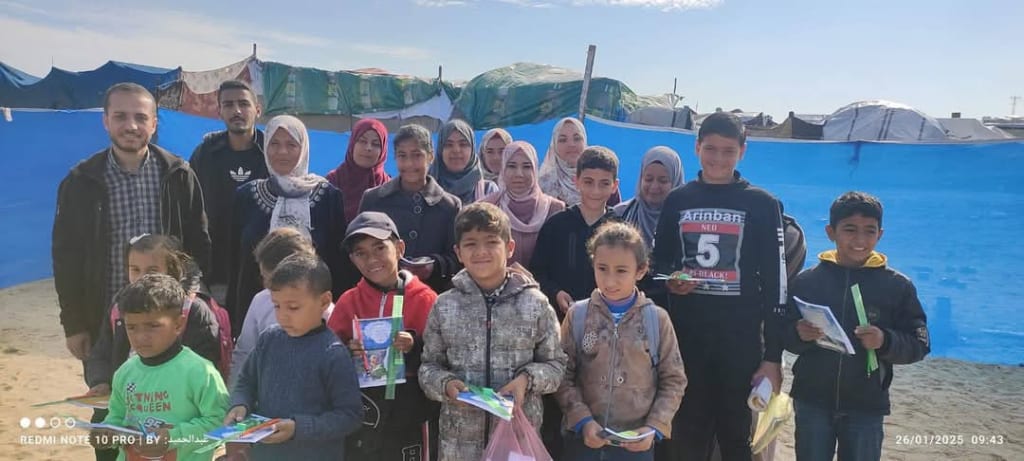
Iam Fidaa, a Palestinian woman from Rafah.
I was born and raised in that southern corner of Gaza—a city tucked between the borders, the sea, and the sky. My childhood was painted with the scent of jasmine, the laughter echoing through narrow alleyways, and the quiet resilience of our modest home. Rafah was more than a place—it was a feeling. A rhythm. A heartbeat.
I got married and moved abroad. Life pulled me elsewhere physically, but my soul never left. My memories, my family, my roots—they all remain deeply woven into the soil of Gaza. I am one of ten siblings, and all nine of them still live in Rafah. Or, rather, they used to live there—before war turned homes into ashes, dreams into dust.
We once had a simple life. We didn't ask for much. Just safety, dignity, and time together. Our home was full—not with wealth, but with warmth. At the center of it all was our mother. A teacher. A woman who spent decades educating generations of children, pouring herself into classrooms with the kind of dedication only a Palestinian mother can understand.
She retired just one year before the war began. We dreamed she would finally rest, travel a little, maybe grow a garden. Instead, she now lives in a tent—alongside all my brothers and sisters—after our family home was destroyed by airstrikes. She sleeps on the cold ground, cooks over makeshift fires, and showers only when water is available.
But even in the face of destruction, my mother refused to surrender.
Imagine this: a 60-year-old woman, standing among the ruins, deciding that giving up is not an option. She built a school—out of a tent. No whiteboard, no desks, no official curriculum. Just her, her voice, and her will.
Today, over 600 children come to her “classroom” every day. Children who lost their homes, some who lost their parents, many who carry more trauma than a child ever should. Yet in that tent, they find something sacred—a thread of normalcy, a flicker of hope. They sit on the dirt floor and listen to lessons taught with heart. They learn to spell, to add, to dream. For a few hours, they are students, not survivors.
Every day, I try to stay connected with my family. But communication is fragile. The internet barely works. Phone calls drop. News travels in fragments—sometimes about aid, but more often about martyrdom. I live in a safer place now. I sleep under a roof. I open my fridge and find food. But my heart is still there—in the dust, in the tents, in the voice of my mother as she teaches the next generation of Gaza.
People often ask me how I’m doing. I smile politely. But inside, I want to scream: "Do you know what it's like to feel guilty for your safety?" To eat a warm meal while imagining your family rationing a piece of bread? To wake up to silence while they wake up to bombs?
Is there anyone out there who truly feels Gaza’s pain?
Who hears its heartbeat—my mother’s heartbeat—echoing through a tent, in a school with no walls, in a land that refuses to die?
Gaza is not a number. Not a headline. It’s my home. It’s my mother. It’s 600 children learning by candlelight. It’s the sound of courage rising from rubble.
If you're reading this, I ask you—listen closely.
Don’t look away.
The world might forget Gaza, but we—its people—never will. And as long as a mother teaches in a tent, as long as a child holds a pencil instead of a weapon, there is hope.
I am Fidaa. And my heart beats in Gaza....
About the Creator
Keep reading
More stories from writers in Humans and other communities.
Cabin Fever Because of Snow, Sleet, and Freezing Rain That Turned to Icy Roads
What Is Cabin Fever? The short answer is that cabin fever is restlessness from being in a confined area. Cabin fever is the distressing irritability or restlessness experienced when a person or group is stuck at an isolated location or in confined quarters for an extended time. Research shows that prolonged cold, gray skies, and being stuck indoors can trigger mood shifts similar to “winter blues.”
By Margaret Minnicks7 days ago in Humans
Self Help: Grifters' Gospel
On Self-Help, Snake Oil, and the Illusion of Change Psychology professionals and students can be imagined on two opposite sides of a line called self-help books: likely a larger group opposes pop-science and step-by-step manuals filled with talk of success, journaling, and not giving a f**k; others love them, but they aren’t many.
By Avocado Nunzella BSc (Psych) -- M.A.P 5 days ago in BookClub



Comments
There are no comments for this story
Be the first to respond and start the conversation.