
From ‘May I Help You?’ to ‘I Remember You’: The Psychology of Personal Memory in Luxury Retail Sales
How a simple memory can transform a one-time buyer into a loyal luxury client.

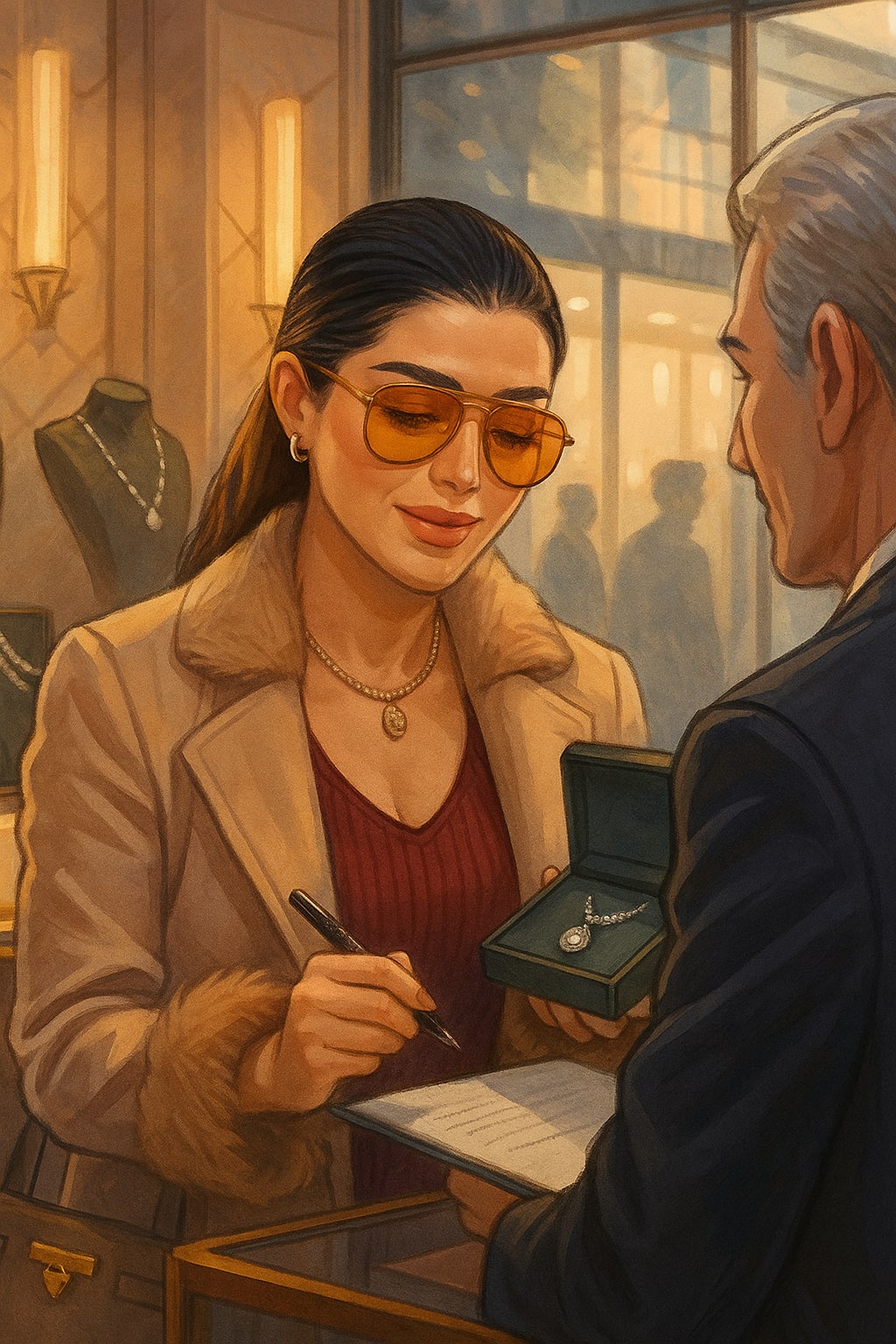
I’ve never really thought of my customers as “customers.”
To me, they were people I connected with—sometimes over a favorite gemstone, sometimes over a shared love for emeralds, and sometimes, simply over a story. One conversation often turned into another, and before long, these so-called transactions transformed into friendships. Most of my clients didn’t just buy from me—they introduced their sisters, their best friends, even their neighbors. They sent me messages during Nowruz, or during Eid al-Fitr, and I replied with just as much warmth. It wasn’t business. It was something far more personal.
Working in the Middle East, I learned that memory—real, emotional memory—is the soul of luxury sales. I would often jot down notes after each client left: her preferred metal, her favorite color, how she said her daughter’s name. Not because I had to, but because I cared. Months later, I could recall a woman’s story, or her hesitation about a ring. And when she returned, it wasn’t “May I help you?” It was, “I remember you.”
But not all luxury experiences are created equal.
A few months ago, during a trip to Dubai, I stepped into a boutique of a renowned global jewelry brand. Let’s just say it was one of those names that usually means elegance, precision, and high standards. I wanted to try on a necklace—not necessarily to buy, just to feel its weight and presence. The sales associate brought it out, placed it on the tray, and… that was it. No welcome, no context, no story, not even a compliment. I had to ask the price myself. The silence wasn’t elegant—it was cold. And I walked away, not because I didn’t like the necklace, but because I didn’t feel seen.
Contrast that with Montblanc—less flashy, perhaps, but deeply human. I walked in casually, unsure whether I even wanted to purchase anything. But the associate greeted me with sincerity, spoke with interest, remembered my tone, and created something we rarely talk about in retail: rapport. I left the store, walked a few blocks, and came back—just to make sure I could find her again and buy that bag.
That’s the difference. Not in product, not in logo, not even in price.
The difference is: who remembered me—and who didn’t.
And that, I believe, is the forgotten heart of luxury.
I don’t know how to explain it exactly, but…
you know when you go somewhere, a store or whatever, and they actually, like, remember you?
Like—not fake remember. Not the “Hello, Ms. So-and-so” thing. But the kind where they go “Oh hey, you liked the green one last time, right?”
And you’re like… wow. Okay.
It’s not even about buying, I think.
Sometimes I just walked into places to look, not planning to get anything.
But when someone remembered me—like, actually remembered me—I’d stay longer. Talk more. Maybe even come back. Maybe even buy.
It’s weird, right?
But I think that’s what luxury is.
Not the logo, not the price.
Just… that feeling.
I mean.
What else is there, really?
Honestly… I’ve thought about this way too much.
Like, how can a brand spend millions on a store design—every curve, every scent, every detail is curated—
and then put someone at the front who looks like they’d rather be anywhere else?
And I get it. I do. People have bad days.
But in luxury? You don’t get to have bad days in front of a client.
That’s just not part of the deal.
The issue, though, isn’t always the salesperson.
Sometimes, it’s who put them there.
You can train someone to say “Welcome,” but you can’t teach warmth.
You can’t script sincerity.
And HR forgets that.
I’ve walked into boutiques where everything screamed premium…
and then got treated like I was interrupting someone’s lunch break.
It’s not even personal. It’s systemic.
If HR teams hired based on energy and empathy instead of just resumes and brand-image smiles,
I swear—sales would go up.
Way up.
Because in luxury, the product is just part of it.
The person presenting it? That’s the whole show.
There’s something else I’ve noticed—
and maybe it’s not talked about enough, but it should be.
Culture changes everything.
The way someone walks into a boutique in Dubai? It’s different.
There’s a certain expectation—not just of service, but of warmth, presence, even familiarity.
Clients in the Middle East, we don’t just buy. We connect.
We want to talk. We want to feel. Sometimes we want to sit and have coffee before we even ask about a ring.
It’s not about rushing. It’s about rhythm.
And honestly? Some European training programs miss that entirely.
I’ve seen associates trained in Paris, flown in to work the Gulf region—and they treat the whole thing like a silent performance.
Elegant? Yes.
But too quiet. Too distant. Too cold for our kind of client.
We don’t want someone to whisper, “Would you like to try it?”
We want someone to remember us.
Ask how our mother is. Compliment our perfume. Make us feel human.
Because in the Middle East, luxury isn’t just about exclusivity.
It’s about emotion.
It’s about the relationship.
And if brands don’t adapt to that? They’ll lose the client—without even realizing why.
I’ve said this before, and I’ll say it again—
People don’t stay loyal to brands.
They stay loyal to how those brands made them feel.
You could give someone a discount, a glass of champagne, a gift with purchase…
but if they walked out feeling unseen? Forgotten? It won’t matter.
What keeps them coming back is memory.
Not your memory. Theirs.
The memory they take with them.
They remember how the associate said their name without looking at the receipt.
They remember a laugh, a shared story, a compliment that felt real.
And that sticks—way more than the product ever could.
If I had to build a luxury brand from scratch today, I’d train staff to build moments, not just make sales.
To write notes after a client leaves.
To follow up, not with “Are you ready to buy?” but with “How did your daughter’s graduation go?”
Because that’s where real loyalty lives.
Not in promotions.
In personal memory.
If there’s one thing I’ve learned from years in luxury retail, it’s this:
People remember people. Not packaging. Not polish. People.
The smallest gestures—remembering a client’s daughter’s name, asking how their last vacation went, offering a real compliment about their perfume—
those moments stay. They linger.
And they build something money can’t buy: trust.
I’ve had clients come back after a year just to say hello.
Not to shop. Not to spend. Just to reconnect.
And that, to me, is the quiet power of memory.
You don’t need billboards when your client remembers you like a friend.
So here’s what I’d say, honestly—
To every brand director, retail trainer, HR executive:
Stop chasing perfection.
Start investing in presence.
Hire people who listen. Train people who care.
Make space for real human energy inside all that glass and gold.
Because the future of luxury isn’t louder.
It’s more human.
And when a client walks out of your store with more than a purchase—
when they carry a moment, a memory, a feeling they didn’t expect to find—
that’s when you know you’ve done something right.
That’s when luxury becomes real.
So the next time you walk into a luxury store—whether to buy, to browse, or just to feel—
ask yourself this:
Will they remember you?
And more importantly… will you remember them?
That answer says everything about the brand.
📚 References
1. Bain & Company (2022). The Future of Luxury: Winning the Next Generation of Consumers.
2. McKinsey & Company (2023). Luxury in 2025: The Rise of Emotional Precision.
3. Kapferer, J.-N., & Bastien, V. (2012). The Luxury Strategy: Break the Rules of Marketing to Build Luxury Brands.
4. Harvard Business Review (2021). Why the Best Retail Experiences Feel Personal.
5. Forbes (2020). The Human Side of Luxury: Emotional Loyalty in a Digital World.
🖋 About the Author
I’m Sarina Raftari—jewelry designer, founder of Khalifat Jewellery, and someone who has spent a big part of her career behind the counter of luxury boutiques, in real conversations with real people.
From the very beginning, I realized that people don’t just come for diamonds. They come to feel something.
To be seen. To be remembered.
For me, selling was never just about the product. It was about connection. Conversation. Memory.
I wrote this article because I truly believe that personal memory is the most underrated asset in luxury retail today—and yet, it’s the one thing that keeps people coming back.
Now, as someone working both in jewelry design and in talent development for global-facing luxury companies, I try to be a voice for the things we don’t always write down…
but that stay with the customer long after they leave the store.
If anything in this article stayed with you,
I hope it was the feeling.
📱 WhatsApp: +49 1523 1436176
🌐 sarinaraftari.wordpress.com
About the Creator
Sarina Raftari
Founder of Khalifat Jewellery | Luxury brand creator & HR strategist | Writing about identity, culture, emeralds & women's leadership in the Middle East.
Keep reading
More stories from Sarina Raftari and writers in Humans and other communities.
Wearing My Worth in Emerald and Grit
I never needed luxury to feel worthy — I was born into it. My childhood wasn’t a lesson in scarcity; it was a lesson in elegance. I remember my mother’s emerald ring — not just because it glittered in the afternoon light, but because of the way she moved when she wore it. There was a kind of language in her hands, in the quiet certainty of someone who doesn’t ask for permission to be seen. That’s where my love for jewelry began — not from longing, but from inheritance. Not material, but emotional.
By Sarina Raftari8 months ago in Humans
The CEO of Everything
They say "jack of all trades, master of none," but they forgot to mention the part where the jack of all trades is also the camera woman, the makeup artist, and the person currently yelling at a tangled Wii microphone cable in a her own bathroom while recording herself singing and trying to make it look realistic and professional. (As professional as you can make it with nothing but a cell phone camera and a mic that doesn't work)
By Sara Wilson6 days ago in Humans


Comments
There are no comments for this story
Be the first to respond and start the conversation.