
From Braces to Gold
The girl told she'd never walk went on to outrun the world at the Olympics 🌟
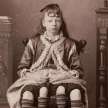

On a sweltering summer day of June 23, 1940, in a tobacco barn outside Clarksville, Tennessee, a fragile baby girl entered the world. Born at just 4½ pounds, she was the 20th of 22 children. Her name was Wilma Glodean Rudolph, and no one guessed that this tiny child would become the fastest woman in the world.
Between scarlet fever, pneumonia, and infantile paralysis (polio), doctors were grim. Her left leg and foot were paralyzed. By age 12 she still leaned on a brace and orthopedic shoe. “My doctor told me I would never walk again. My mother told me I would. I believed my mother.*” — words Wilma later wrote in her autobiography. With twice-weekly journeys to Meharry Medical College in Nashville and countless at-home massages, the little girl whose classmates thought in terms of fitting braces, learned instead to stand free of them by adolescence.
Before Wilma could even hold a basketball, she held hope. As the years passed, she switched from home school to Burt High School, where she joined the basketball team. Each bounce. Each pivot. Each barefoot shot (she eventually ditched the brace entirely)—a declaration: I belong. She blossomed in the sport, catching the eye of Ed Temple, the coach of Tennessee State University’s legendary “Tigerbelles.” He invited 14-year-old Wilma to summer training. Under his guidance, at her first Amateur Athletic Union meet, she won all nine events she entered. Temple knew she was going somewhere.
At just 16, Wilma made the U.S. Olympic team in Melbourne, running the third leg of the 4×100 relay. The team clocked 44.9 seconds, equalling the world record—and picked up a bronze medal. The smallest member of the team had just broken the first record: herself.
Four years later in Rome, at 20 years old, Wilma would race nine times in just eight days. In the 100m semifinal she tied the world record at 11.3 seconds. In the final, she won gold—even though officials ruled the wind too strong for a record. Two days later, she shattered the Olympic record in the 200m with 24.13, officially 23.30 in an earlier heat. Three days later, with Barbara Jones, Lucinda Williams, and Martha Hudson, Wilma nearly dropped the baton—then surged ahead to win gold and break the world record in the relay. She had become the first American woman to win three track-and-field golds in one Games—officially dubbed “The Black Gazelle” by European media for her majestic speed.
A few voices from around that time capture how Wilma placed her own fear in the rearview mirror:
> “Winning came later. First came the struggle. I spent my childhood in pain. I believed I could walk again, then run—and somehow, I did.”
> “I had on that brace all the time, but I learned to run barefoot and free.”
When she returned to Clarksville, her homecoming parade became the town’s first racially integrated celebration—only after Wilma refused to attend it unless Black and white residents could march and dine together. She knew speed wasn't her only legacy; change was part of the prize.
She briefly returned to racing after Rome but retired in 1962 at just 22—still holding world records in the 100m, 200m, and 4×100m relay. She completed her degree in education at Tennessee State in 1963, coached youth teams, founded the Wilma Rudolph Foundation, and spent the rest of her life advocating for women, children, and civil rights—even as health challenges returned. In 1994, she passed away from brain cancer at age 54—her shoulders heavy with medals, her voice echoing promises she had once whispered as a child: I will walk.
About the Creator
Keep reading
More stories from writers in Humans and other communities.
Autonomy Is The Real Privilege
Good morning, freedom-seekers! Today we’re gonna be looking at autonomy. A strange word, I know; one many would probably look at blankly and run away from on sight. We’re gonna figure out what it actually means, consider how it’s achieved, and decipher just how deeply most of us are tangled up in dependence without realising it.
By That ‘Freedom’ Guya day ago in Humans
How to Choose Quality Himalayan Salt Bricks for Bulk Orders
When constructing a salt room for a premium spa, designing a salt wall for a restaurant, or stocking salt bricks for retail, salt bricks set the wellness and natural aesthetic for your project. Sourcing salt bricks in bulk is a significant investment, and the profit of the investment relies on the quality of salt bricks.
By Emily Rosieabout 2 hours ago in Humans



Comments
There are no comments for this story
Be the first to respond and start the conversation.