
Forced Migration... a post war story
War in Ukraine

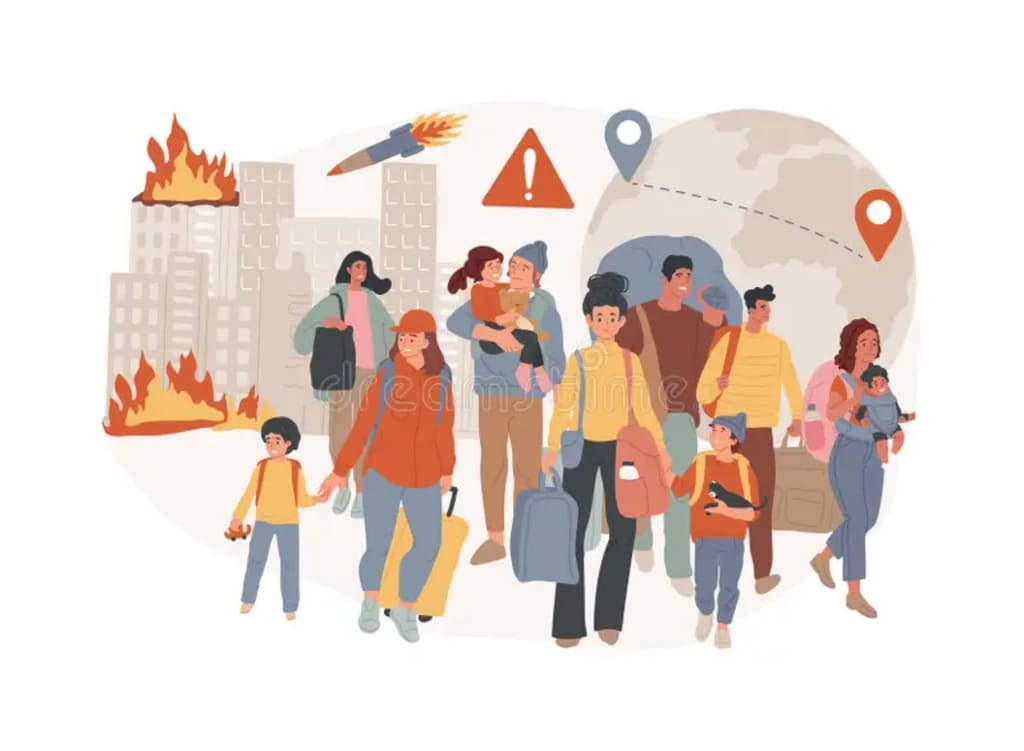
Imagine yourself being successful—living in a paid-off house, running a business you’ve built, and working in a career you love. Imagine yourself as a single woman whose children are standing on their own feet because of your hard work. And then, imagine losing all of that in a matter of days.
Unfortunately, this is not a fictional character. This is a real person and my close friend. Her name is Tatyana.
Tatyana is Ukrainian. In 2020, she moved from the city of Kharkiv to Mariupol to expand her business. On February 24, 2022, she texted me: “We are being bombed.” Mariupol was one of the first cities to be fully and immediately occupied by the Russian army.
A few days later, she sent another message: “We are being surrounded. I don’t know if I will survive.” Then came silence. For weeks, there was no communication. For me, it was the unbearable waiting. For her, it was a life-altering period.
Mariupol is a large city, packed with high-rise buildings and countless citizens. From the beginning, it was bombed nonstop. Tatyana’s building was destroyed. People were hiding in basements, with no heat, no electricity, and no running water. Tragically, the explosions didn’t just destroy buildings—they killed people.
At first, it was shocking to see dead bodies in the streets. The initial instinct was to help the wounded. People were screaming, crying, and bleeding, and the natural response was to reach out. But that wasn’t always possible.
Under constant stress, people learned how to survive. When they got thirsty, they crawled to a small river to fill buckets with water—and froze in place during another bombing. The bombings came without air raid sirens, which meant no warnings. When they were hungry, they burned wood and cooked whatever food was left.
After nearly four weeks of blockade, they heard that one of the checkpoints had been blown up. It meant they might have a chance to escape.
One of Tatyana’s friends managed to save his car battery. He had a running vehicle but faced an impossible choice. His mother had dementia and couldn’t keep her strong opinions to herself—especially about the Russians. They knew that if they were stopped by Russian soldiers and the elderly woman spoke out, it could cost them their lives. War crimes and the killing of innocent civilians had become a horrifying reality.
A heartbreaking decision was made: the elderly woman was left behind in Mariupol to live out her days, and Tatyana was offered an empty seat in the car. So, they drove—hoping not to hit a mine, waving a white bedsheet. They were stopped by the enemy, expecting to be shot or captured—but were let go.
That was the end of one nightmare and the beginning of an uncertain new chapter. A chapter no one intended to write. A month later, I received a text from my friend: “I am alive.” She was alive, but everything else was gone. Her health—both physical and mental—was fragile. Panic attacks were constant. Focus was difficult. Thousands of people were in the same condition as Tatyana.
Even the train ride from Ukraine to Poland was a battle. Everyone wanted to board, but space was limited. Tatyana fought her way onto the train. From Poland, she traveled to Italy. Then to Greece. Then Ireland. Then Bulgaria. She and thousands of others moved from country to country—not because they were picky, but because they needed to find a place where life could make sense. For Tatyana, returning home wasn’t an option—not for a long time. She needed to settle somewhere she could see a future and support herself by doing work she was capable of.
Although many countries offered some form of aid, the support was often limited. Italy had beautiful weather and a gorgeous sea sight, but it provided no financial assistance, and jobs were scarce—especially for someone who wasn’t fluent in Italian. Greece offered work, but only for those able to endure hard physical labor, which Tatyana’s health couldn’t allow. Ireland placed refugees in small villages, where job opportunities and public transportation were nonexistent. Though monthly payments were provided, the loneliness and isolation became unbearable.
For Tatyana, money wasn’t the only essential resource. Without communication, she lost the feeling of being alive. Her next destination was Bulgaria. Bulgaria offered no financial aid and no healthcare coverage, but it had beaches and hotels—which meant seasonal jobs. That’s where Tatyana finally stopped.
Each country had a different refugee program, a different language, and a different culture. Each country had both kind citizens and those who were less so. Italians are culturally rich and emotionally expressive but often overwhelmed with their own struggles. Even though Tatyana has a sister in Italy, the sister couldn’t help—not even at the beginning. She had two jobs and told Tatyana, “I’m too busy. Figure it out.”
In Greece, hotel jobs were suitable for physically strong employees. The louder and ruder the boss, the more efficient the workers were expected to be. In Ireland, some people saw an opportunity to take advantage of Ukrainian refugees. As harsh as it sounds, thieves exist everywhere. In Bulgaria, Ukrainian workers were accepted—but not always politically understood. Tatyana, a war survivor, once had to endure someone yelling in her face: “Putin is doing the right thing by bombing Ukraine!”
Not all of Tatyana’s experiences were negative, and not all the people she encountered were unkind. She met many people with warm hearts and supportive words—those willing to offer a helping hand and emotional support. But no shelter could replace her own home, and no kindness from strangers could replace the decades-long relationships with her loved ones, her neighbors, her coworkers, and her fellow citizens.
Immigration, even when planned, is challenging and stressful. Forced migration—or refuge—is best described by Warsan Shire:
“No one leaves home unless home is the mouth of the shark.”
About the Creator
Keep reading
More stories from Nina Domricheva and writers in Humans and other communities.
War in Ukraine: the beginning
After a long workday, it is very relaxing to sit on the couch and mindlessly watch a TV show. That was what we did on the evening of February 23rd. Later on, ready for a goodnight sleep, I went to check my phone. The phone was exploding with notifications of missed calls and messages from Ukraine. Everyone was informing me of the same situation: “the war has started” or “we are getting bombed by Russia.” My heart dropped as I turned the news on and started returning the phone calls. I did not go to bed as planned that night.
By Nina Domricheva2 years ago in Humans
When “Let’s Talk” Is a Trap:
Most of us grow up believing that “talking it out” is the mature, healthy, emotionally intelligent thing to do. And in genuinely respectful relationships, it is. Communication is essential for repair, understanding, and connection. But there is a painful truth many people learn only after being hurt: not every invitation to talk is an invitation to heal. Sometimes it is an invitation to be controlled, destabilized, or emotionally ambushed.
By Julie O'Hara - Author, Poet and Spiritual Warrior6 days ago in Humans




Comments
There are no comments for this story
Be the first to respond and start the conversation.