
Fable of Waterless Earth
In a world where water is forgotten, humanity thirsts for more than just hydration…

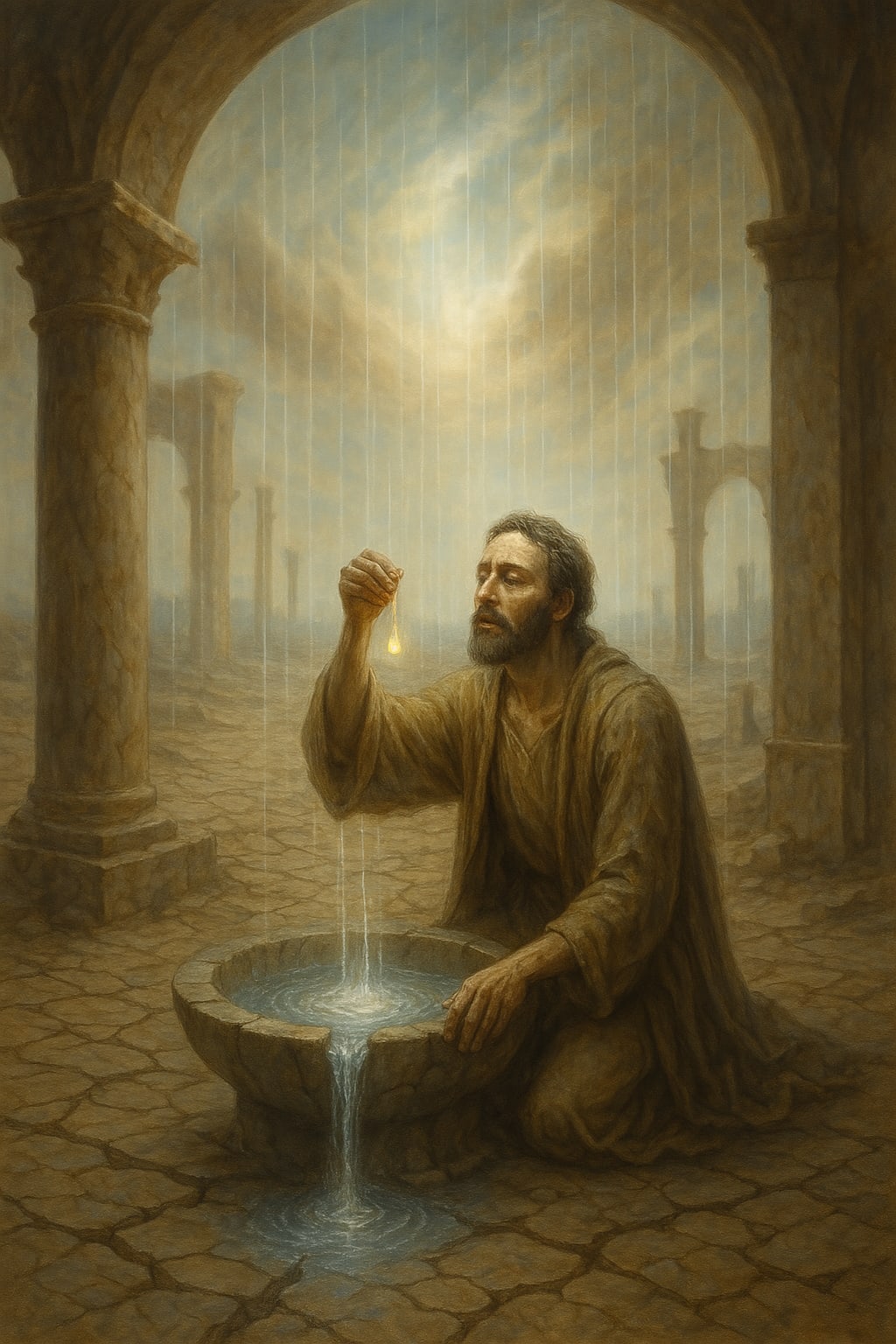
In a future not so far, nor too near, Earth stood still. It did not spin, not metaphorically, not spiritually, not even emotionally. It gasped beneath the weight of its own drought. The rivers had forgotten how to flow, the seas had lost their blue to a ghostly gray, and clouds, once white ballerinas of the sky, now hovered as burnt ashes, scattering soot, not showers.
People didn’t cry anymore. Not because they were brave, but because they couldn’t. Their eyes had dried into pearls of despair, corneas cracking like desert earth. The poets stop writing sonnets, for they could no longer rhyme “rain” with “pain,” since both had lost their meaning. The children played not with puddles but with dust. Humanity was not mourning. It was simply dehydrated.
The story begins with a man named Elan, whose name meant “life” in some forgotten tongue. He was neither a king nor a prophet, not a scientist, nor a savior. He was just… thirsty.
He carried in his rusted flask the last known drop of water—a single, shimmering sphere, like a trapped tear of God. He wore it around his neck in a vial of cracked glass, held with reverence, like it was a heart still beating in a tomb.
People worshipped him, not because he was divine, but because he had something divine. They called him Aqua-Dervish, The Saint of Sip, The Prophet of the Drop. But he corrected them gently, “I am not a prophet. I am just thirsty.”
You see, water had once been laughter in the air. It sang from the lips of fountains, danced in the bellies of brooks, gave rhythm to the tongues of tea kettles. It fell upon lovers as rain and blessed the dying as holy. It quenched rage, softened cruelty, gave shine to the eyes of the good. It forgave our sins as we bathed, cooled our anger as we sweated, and connected souls across oceans.
But we traded it. For speed. For steel. For cities that climbed higher than clouds, for plastic straws and power plants that coughed out cloud too toxic for sky to wear. We built empires on pipes, and when the pipes dry, so did the purpose of progress.
Elan walked across what was once a forest, now a gallery of skeletal trees, their limbs pointing skyward like beggars praying for mercy. He saw animals with eyes of ancient sadness, foxes who forgot to run, birds that hummed not for love but thirst. Even the ants stopped marching—no purpose, no puddles.
The irony of it all? We didn’t lose water. We wasted it.
We laughed while faucets ran like careless verses. We flushed away clean blessings. We let fountains gush to impress tourists and left taps leaking in the name of laziness. We watered lawns not for food but vanity. And when the last lake sighed its final ripple, we cried out to God—but our voices were cracked, too dry for heaven to hear.
Elan remembered the old tales his grandmother told him before bedtime—not of dragons or treasure, but of rivers. She speak of them as creatures: playful, angry, noble. “Rivers,” she whispered, “are the veins of Earth. Without them, the planet is a corpse pretending to be alive.”
In his hand, Elan held a seed. A foolish thing, some would say. Seeds need water. But to Elan, it was more than botanical hope. It was a metaphor. A revolution. An ancient echo. So he journeyed far, past the desiccated bones of cities, through towns where sand had claimed the roads, to the forgotten temple of Hydrona, the mythical deity of water—goddess of purity, forgiveness, and flow.
Inside, on cracked mosaics, water danced in artwork. Tears of gods. Lakes of stars. Springs drawn like halos around feet. It was both beautiful and cruel, like nostalgia from a lost paradise. And in the center, an empty basin. Once a sacred pool, now a ceramic coffin.
Elan unscrewed the vial from his neck.
He looked at the drop—its sparkle, its humility. A thousand galaxies swirled in that drop. A billion lives echoed in its curve. It was the last prayer Earth had.
He opened the vial and let it fall.
The drop descended not like a liquid, but like a verdict.
It kissed the cracked basin.
For a moment—nothing.
Then the earth beneath trembled, not in wrath, but remembrance. The basin glowed faintly. A pulse. A heartbeat. Water bloomed from the stone like a whisper finding courage. A stream poured, not in a rush, but in a sacred hymn.
The temple wept. The goddess smiled through her mosaicked eyes. And rain—rain!—fell for the first time in a century.
Not a storm, not a flood. Just enough. Just a promise.
People gathered around the temple, mouths open, tongues stretched, like newborns tasting the world. Children laughed like rain itself, men bathed like saints, and women planted seeds where their tears had fallen.
Elan sat beneath a reborn willow, letting the drops crown his scalp. He looked at the sky. “Thank you,” he whispered, though he wasn’t sure if he meant the water, the goddess, or the memory of both.
Humanity learned.
They didn’t build cities from concrete again, but from compassion.
Fountains were not status symbols, but sanctuaries. Rivers were no longer polluted but protected. Laws were made not just to govern men, but to guard the sacredness of water.
Water taught them to be better.
To be gentle.
To share.
To cry.
To kiss slowly.
To forgive.
To sweat honestly.
To love like rivers love their banks—not to drown, but to shape.
And though Elan died an old man, they buried him beneath the willow, beside the temple. His tomb read:
"Here lies Elan: Thirsty Man.
He gave the last drop,
So we could learn to drink with gratitude."
And rain falls every year on that day. Not because it must. But because it remembers.
About the Creator
Muhammad Abdullah
Crafting stories that ignite minds, stir souls, and challenge the ordinary. From timeless morals to chilling horror—every word has a purpose. Follow for tales that stay with you long after the last line.
Keep reading
More stories from Muhammad Abdullah and writers in Humans and other communities.
Sophie Turner
Introduction Sophie Turner is a famous English actress. She is best known for her role as Sansa Stark in the popular TV series Game of Thrones. Sophie became famous at a young age and grew up in front of the camera. Over the years, she has worked hard to improve her acting skills and build a strong career in film and television. She is admired not only for her talent but also for her honesty about personal struggles and mental health.
By Farhan Sayedabout 13 hours ago in Humans



Comments
There are no comments for this story
Be the first to respond and start the conversation.