
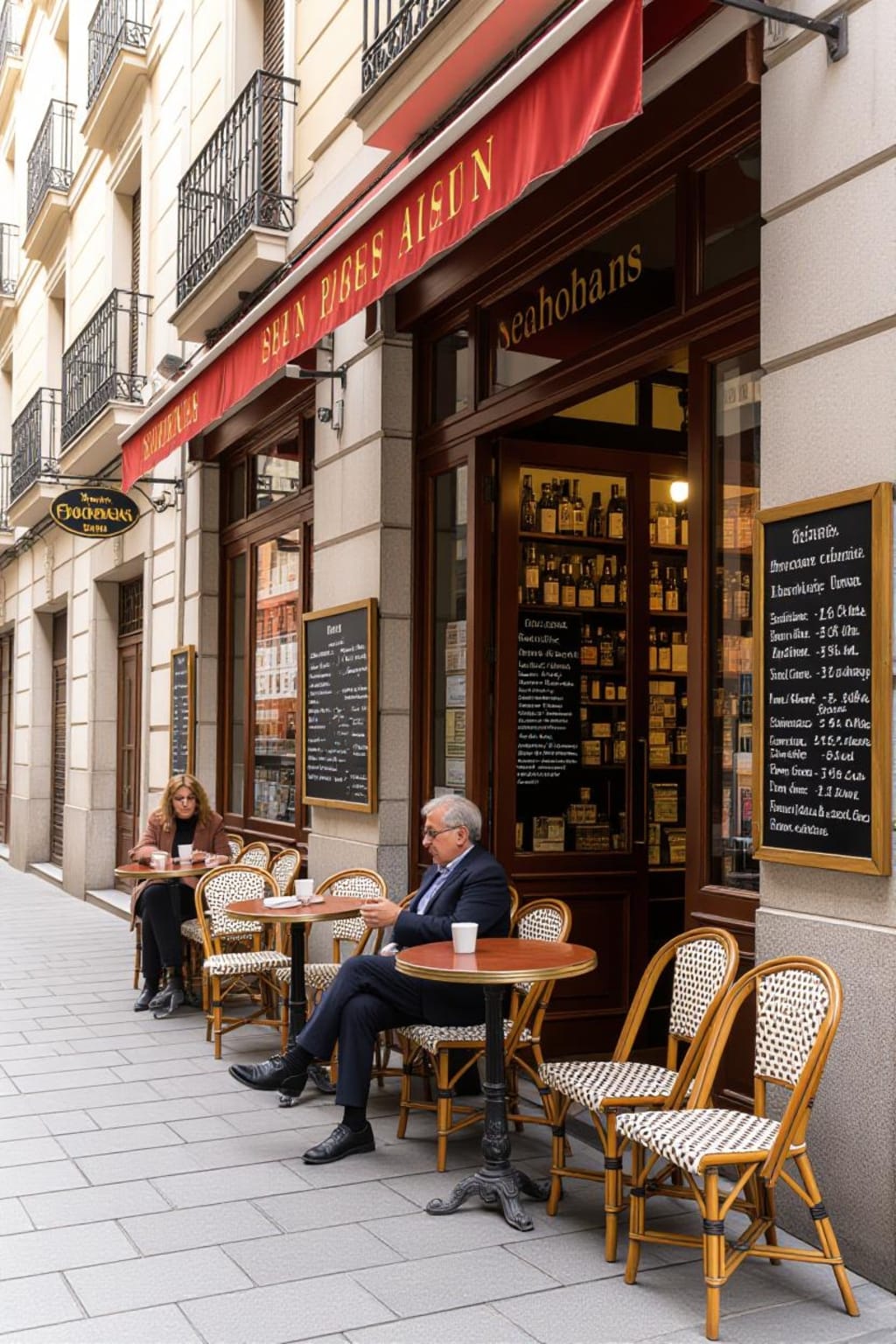
In the bustling heart of Madrid, where the sun dipped low over the rooftops like a reluctant lover, lived Domingo Alvarez. He was a man of words, not the spoken kind that danced in cafes or echoed in plazas, but the written ones that flowed from his fingertips onto screens. For years, Domingo had been ensnared by the Vocal website—a digital haven for storytellers, poets, and dreamers. It was more than a platform; it was his lifeline, his stage, his addiction. Every morning, he'd wake to the glow of his laptop, scrolling through notifications, reading comments from strangers who felt like kin. "Brilliant twist!" they'd say, or "This moved me to tears." Each like, each share, was a hit of dopamine that kept him chained to his desk.
Domingo's apartment was a testament to his devotion. Stacks of notebooks lay untouched, gathering dust, while his coffee mugs formed a fortress around his computer. He wrote about everything: lost loves in the streets of Seville, ghostly apparitions in ancient cathedrals, even the mundane magic of a rainy afternoon. Vocal rewarded him modestly—pennies per read, but enough to buy his daily espresso. Yet, it wasn't the money that hooked him; it was the community, the illusion of connection in a world that often felt isolating. His username, "DomingoDreamer," had amassed a following of thousands. They awaited his next post like pilgrims at a shrine.
But cracks began to show. Domingo's real life frayed at the edges. His sister, Maria, called him weekly, her voice laced with concern. "Hermano, when was the last time you left that room? The world is out here, not in pixels." His friends drifted away, tired of canceled plans. Even his health suffered—sleepless nights hunched over the keyboard left him with aching eyes and a perpetual fog in his mind. One evening, after posting a particularly raw story about a man lost in his own reflections, Domingo stared at the screen. The comments poured in, but they felt hollow. "Is this all there is?" he muttered to the empty room.
The turning point came unexpectedly. During a rare outing to the local market, Domingo's laptop slipped from his bag, crashing onto the cobblestones. The screen shattered like a broken mirror, reflecting his shocked face in fragments. Panic surged through him. No backups, no cloud saves—he'd been too immersed to think ahead. The repair shop quoted a week, minimum. "Señor, take a break," the technician chuckled. "The world won't end without your stories."
At first, Domingo paced his apartment like a caged animal. The absence of Vocal gnawed at him. He reached for his phone, tempted to log in via mobile, but something stopped him. Perhaps it was Maria's words echoing, or the sunlight streaming through his window, unfiltered by a screen. "Fine," he grumbled. "One day without it." But one day stretched into two, then a week. With no digital muse to summon, Domingo ventured outside.
He started small: a walk to Retiro Park. The autumn leaves crunched underfoot, a symphony he'd forgotten. Benches invited him to sit, not scroll. He watched couples stroll hand-in-hand, children chase pigeons, an old man feed ducks with breadcrumbs. Ideas bubbled up, unbidden. Not for posts, but for himself. He pulled out an old notebook from his shelf—the one with the leather cover his father had given him—and began to scribble. No word limits, no algorithms to appease. Just raw, unpolished thoughts.
Emboldened, Domingo booked a train to Granada, a place he'd only written about from afar. The journey south was a revelation. Rolling hills blurred past the window, olive groves stretching like ancient guardians. Without Vocal's constant pull, he conversed with fellow passengers: a young artist heading to sketch the Alhambra, a farmer sharing tales of harvests gone wrong. Their stories weren't curated or viral; they were real, messy, alive.
In Granada, Domingo wandered the Albaicín neighborhood, its narrow streets winding like veins through the city's heart. The air smelled of jasmine and spice. He climbed to the Mirador de San Nicolás, where the Alhambra loomed against the Sierra Nevada mountains, bathed in sunset gold. Tourists snapped photos, but Domingo simply sat, absorbing. That night, in a modest pensione, he wrote by lamplight. Not for likes, but to capture the essence—the way the call to prayer mingled with flamenco guitars, the taste of tapas shared with strangers.
Days turned into adventures. He hiked the Caminito del Rey, a perilous path clinging to cliffs, his heart pounding not from deadlines but from the thrill of heights. In Malaga, he dipped his toes in the Mediterranean, the waves erasing his footprints like forgotten drafts. He visited Picasso's birthplace, pondering how the master created without an audience's instant feedback. "Art isn't a performance," a museum guide told him. "It's a conversation with the soul."
Yet, doubts crept in. Back in his mind, Vocal whispered. What if his followers forgot him? What if inspiration dried up without the platform's prompts? One evening, in a seaside cafe, Domingo met Elena, a fellow writer who'd also fled the digital world. Over glasses of tinto de verano, she shared her story: burned out from chasing virality, she'd quit Vocal cold turkey. "It was like losing a limb at first," she admitted, her eyes sparkling. "But then I found my voice again—my real one."
Their conversation stretched into the night. Elena challenged him: "Write something here, now. No edits, no audience." Domingo hesitated, then penned a short tale on a napkin—about a man escaping his shadows. Elena read it, nodded. "That's you, isn't it?" For the first time in years, Domingo felt seen, not just read.
As weeks passed, Domingo's absence from Vocal transformed him. He cooked meals from scratch, savoring flavors instead of photographing them. He reconnected with Maria, joining her for family dinners filled with laughter. Ideas flowed freely, unbound by character counts. He started a journal, chronicling his journey—not for publication, but for posterity.
Eventually, the laptop was repaired. Domingo stared at it on his desk, a relic from another life. He logged into Vocal, the interface familiar yet foreign. His inbox overflowed with messages: "Where are you?" "Miss your stories!" A pang of nostalgia hit, but it passed. He posted one final piece—a farewell essay titled "Away from the Echo." In it, he described his exile, the world beyond the screen, the rediscovery of self. "Vocal gave me wings," he wrote, "but I forgot how to fly without them."
The response was overwhelming. Comments flooded in, some understanding, others pleading for his return. But Domingo smiled, closed the tab. He had stories to live now, not just tell.
Months later, Domingo sat in a Madrid cafe, notebook open. The Vocal website was a distant memory, a chapter closed. He'd started a local writing group, where faces, not avatars, shared tales. Life was richer, fuller—away from the vocal din of the digital world, he found his true voice.
About the Creator
Domingo Miranda
I have a lot to tell people. I am a Moderate (meaning I don't lean to one political party), but I do go to church and have a family, so I have no time for fancy trips and steak dinners
Keep reading
More stories from Domingo Miranda and writers in Humans and other communities.
My First Story
My name is Domingo Miranda. This is one of the stories that I have told many times before. YouTube has changed my life for the better and it has allowed me to become a better person and it is also improved my social skills many ways. at first I had an unbelievable stutter it was hard for me to get words out because I wasn't able to talk properly and I had trouble saying the right things.
By Domingo Miranda5 years ago in Humans
Kyrsten Sinema
Kyrsten Sinema is an important American political leader. She worked for many years in the U.S. government and became known for being different from many others in politics. This article uses easy English and clear subtitles to help you understand who she is, where she came from, what she did, and what is happening now with her.
By Farhan Sayedabout 16 hours ago in Humans


Comments
There are no comments for this story
Be the first to respond and start the conversation.