
“Doha Attack by Israel: Legal, Diplomatic, and Regional Fallout”
Middle East stability questioned as conflict spills into Gulf region.”

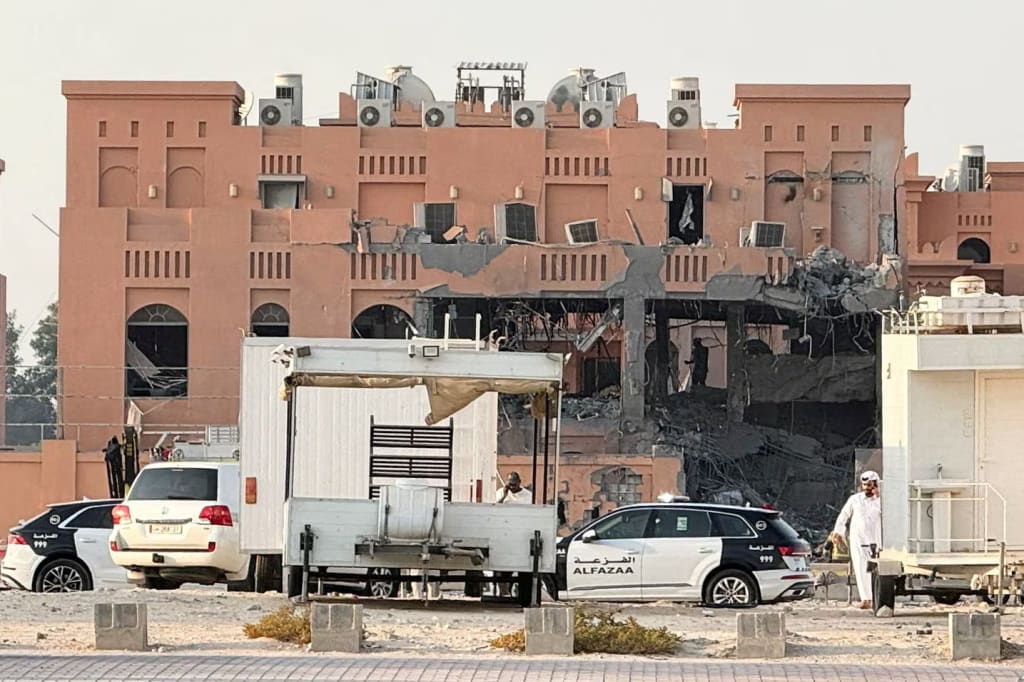
Doha, Qatar – The Middle East has been thrust into yet another crisis after Israel launched a surprise strike on Qatari soil targeting senior Hamas officials. The unprecedented attack in the Gulf state’s capital, Doha, has triggered an international outcry, raising urgent questions about sovereignty, regional stability, and the prospects for peace in Gaza.
According to Israeli sources, the operation was aimed at what they described as a “high-value Hamas leadership cell” that had been operating from Qatar while mediating ceasefire negotiations with Egypt and international partners. The attack, which struck a building in a Doha suburb, reportedly killed at least three Hamas officials and injured several others. The strike also caused damage to surrounding civilian infrastructure, though Qatari authorities have yet to release a full account of casualties.
A First in the Gulf
The strike marks the first time Israel has conducted a direct military action inside the Gulf region, a step analysts warn could open a dangerous new chapter in the conflict. While Israel has previously targeted Hamas leaders in Lebanon, Syria, and Gaza, the attack on Qatar—a wealthy, influential state that hosts a major U.S. military base—crosses a line that few anticipated.
Qatar has long played a complex role in the Palestinian question. It provides humanitarian aid to Gaza and has hosted Hamas political leaders for years, positioning itself as a mediator in ceasefire talks. By striking in Doha, Israel has not only attacked Hamas but also dealt a blow to Qatar’s diplomatic role, potentially undermining ongoing negotiations for a truce in Gaza.
Regional Condemnation
The reaction across the Middle East has been swift and severe. Qatar’s Foreign Ministry condemned the strike as “a blatant violation of sovereignty and international law” and called for an emergency session of the United Nations Security Council. Saudi Arabia, the United Arab Emirates, and Turkey issued strong statements warning that the attack risked destabilizing the Gulf region. Iran, a long-time supporter of Hamas, described the strike as “an act of war” and vowed retaliation through “appropriate measures.”
Jordan and Egypt, both U.S. allies with peace treaties with Israel, also expressed alarm. Cairo in particular fears that the strike could derail painstaking efforts to broker a ceasefire in Gaza, which has seen months of devastating violence.
International Fallout
Global powers have also weighed in. The United Nations Secretary-General António Guterres called the attack “deeply alarming” and urged restraint from all sides. The UN Human Rights Chief condemned the strike as “an assault on regional stability,” while European Union leaders pressed Israel to respect international law.
In Washington, the Biden administration walked a delicate line. The U.S. condemned Hamas for “using Qatar as a base of operations” but also expressed concern about the strike’s impact on American interests in Doha, where the U.S. Central Command (CENTCOM) maintains its largest military facility in the Middle East, Al Udeid Air Base. U.S. officials have reportedly been in urgent talks with both Israel and Qatar to contain the fallout.
Strategic Calculations
Analysts suggest that Israel’s decision to strike in Qatar was driven by frustration with the slow pace of ceasefire negotiations and intelligence that Hamas leaders there were plotting further operations. “From Israel’s perspective, Hamas leaders in Doha were not neutral negotiators but active participants in the war effort,” said a regional security expert. “The attack sends a message that there is no safe haven for Hamas, even in wealthy Gulf capitals.”
However, critics warn that the move could backfire. By alienating Qatar, Israel risks losing one of the few channels of communication with Hamas. Moreover, the strike may embolden Hamas and other militant groups to retaliate beyond Gaza, raising fears of attacks in Israel or on Israeli targets abroad.
Impact on Ceasefire Talks
The timing of the strike could not be more consequential. For weeks, mediators in Cairo and Doha had been trying to hammer out a framework for a Gaza ceasefire that would involve prisoner exchanges, humanitarian aid, and gradual easing of Israel’s blockade. Those talks are now in jeopardy.
“Hamas will not return to the table under these conditions,” said one Egyptian official. “The credibility of Qatar as a mediator has been damaged, and without Qatar, the process is paralyzed.”
Qatar’s Dilemma
For Qatar, the attack poses a direct challenge to its carefully cultivated role as a diplomatic broker. Hosting Hamas leaders was always controversial, but Qatari officials argued it gave them leverage to facilitate peace deals. Now, Doha finds itself under pressure from both domestic audiences demanding a firm response and international partners urging de-escalation.
Some analysts suggest Qatar may retaliate diplomatically by reducing its cooperation with Israel or restricting Israeli access to regional forums. Others believe Doha will avoid direct confrontation but push harder for international guarantees of its sovereignty.
A Dangerous Precedent
Beyond the immediate crisis, the Israeli strike on Qatar raises broader concerns about the erosion of norms in international conflict. If one state can target another on claims of harboring militants, critics warn, the door is opened to a dangerous world where sovereignty offers little protection.
“This is not just about Israel and Hamas,” said a UN diplomat. “It is about the rules of the international system. If we allow strikes like this to go unanswered, the implications for global stability are profound.”
The Road Ahead
As of now, the situation remains tense. Qatar has called for an emergency Arab League meeting and is lobbying for strong action at the UN. Israel has vowed to continue targeting Hamas leaders wherever they are, while Hamas has threatened retaliation for the killing of its officials in Doha.
Whether this moment becomes a turning point toward wider conflict or renewed diplomacy depends largely on how regional and global powers respond. For ordinary people in Gaza, Israel, and now Qatar, the strike is another reminder that the path to peace remains as elusive as ever.
About the Creator
First Date Strategies Help Singles Build Rapport Trust And Connection
The first date should be prepared. The advantage of pre-reflection on the expectation, interests, and boundaries is beneficial to singles. Being aware of own goals in the date assists in steering the dialogue and actions as well as alleviating anxiety. Mental preparedness also enables people to come out themselves in the real sense and have the confidence to do so.
By Mark Hipster7 days ago in Humans



Comments
There are no comments for this story
Be the first to respond and start the conversation.