
Digital Identity: How Social Media Shapes Who We Think We Are
Understanding how social media platforms influence our sense of self and identity in the digital age.

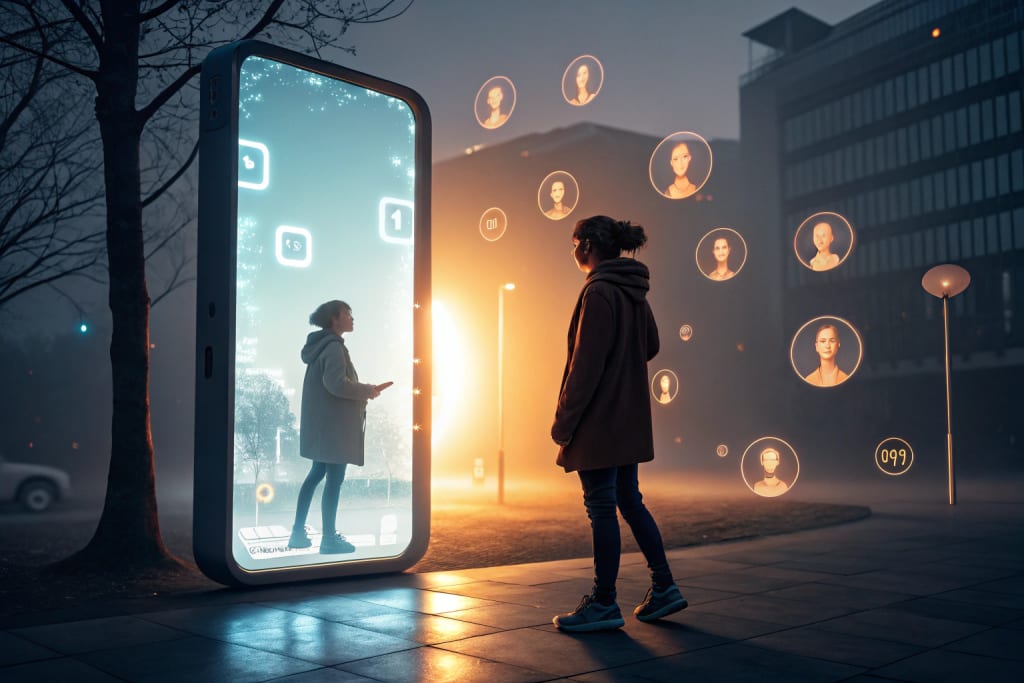
In the contemporary hyperconnected age, the line between who we are offline and who we are online is increasingly blurry. The same person can be present in multiple digital spaces, each with their own rules, audience, and expectations. On Instagram, for example, one might have a carefully styled feed showcasing travel, achievement, and social success. On Twitter, they may post witty observations or political opinions. On LinkedIn, they market professional successes, expertise, and ambition. Each site demands a slightly different version of self—a virtual self intended to engage, impress, or influence.
The rise of social media has amplified the significance of these displayed identities. While face-to-face communication has always demanded a certain degree of self-presentation, social media extends it into a constant, global performance. The consequences are both profound and subtle: they shape self-concept, influence mental health, and alter how we relate to other individuals.
Understanding digital identity—how social media constructs our sense of self—requires exploring the intersection of psychology, culture, and technology. It requires an understanding of the mechanics of online self-presentation, the power of affirmation systems like likes and followers, and the subtle pressures that lead to comparison, FOMO (fear of missing out), and identity problems.
A Brief History of Self-Presentation in Digital Spaces
The desire to present ourselves in the most favorable light is not novel to social media; it is as old as humanity. Anthropologists call "impression management" a universal social practice, expressed in everything from fashion, manners, and ritual to public spectacle. What social media has done is amplify and codify those practices in digital terms.
Early online platforms like Facebook and MySpace allowed users to create profiles containing personal details, photos, and interests. These early examples of self-presentation introduced new dynamics: identity could now be controlled, altered in real time, and accessed by large groups of individuals. In contrast to face-to-face interaction, the online environment provided control over timing, content, and presentation, and the act of self-creation became deliberate and performative.
As the years passed, social media evolved from simple profiles to image- and video-rich websites like Instagram, TikTok, and Snapchat. These websites reinforce engagement—likes, comments, shares—with algorithms that promote posts that get engagement. Social media, in essence, rewards the creation of highly stylized, attention-grabbing identities, often focused on looks, lifestyle, and social status.

Psychological Theories Behind Identity Formation
We can explain digital identity by beginning with psychological theories of self and identity.
Erikson's Psychosocial Theory concentrates on identity formation as a chief task of development. Adolescents and young adults, in particular, experiment with different roles and personas before their integration into a unified self. Social media accelerates and amplifies this experimentation, with endless possibilities for identity experimentation.
Goffman's Dramaturgical Model examines social interaction from the perspective of theatre performance. Individuals act out roles according to audience, stage, and intended outcomes. Social media turns this into a constant stage, with postings, comments, and profiles as controlled performances subject to criticism and feedback.
Social Comparison Theory, formulated by Leon Festinger, explains that individuals assess their worth through comparison with others. Online environments, as they are inundated with idealized content, hasten comparison, affecting self-esteem, life satisfaction, and perceived social status.
Self-Determination Theory prioritizes intrinsic motivation and autonomy as essential to psychological well-being. Excessive focus on external validation—likes, followers, shares—can undermine intrinsic motivation and shift the focus from authentic self-expression to performance-based behavior.
These theories illustrate that identity is not fixed; it is dynamic, socially constructed, and context-dependent. Social media exaggerates these dynamics, introducing both possibility for self-exploration and danger of distortion.
The Role of Likes, Followers, and Validation
Social media platforms are engineered to promote interaction, using mechanisms like likes, shares, and the followers count as proxies for social approval. Psychologically, it triggers the brain's reward system. Dopamine spikes in response to positive feedback, reinforcing behavior that gets attention.
While such validation can be uplifting, it also introduces vulnerability. Self-worth is measured by external validation, and anxiety, preoccupation, and compulsive checking ensue. Research demonstrates that individuals who place significant emphasis on online validation experience lower self-esteem and increased stress. Adolescents are particularly susceptible, with identity formation and peer acceptance inextricably linked to nascent self-concept.
Furthermore, the reliance on quantitative metrics—like follower numbers and numbers—is deceiving. A post or a photo may be liked not due to its intrinsic merit but owing to its prospect of getting engagement. The feedback circuit between content creation and external validation subtly reshapes the digital self, with appearance, performance, and conformity taking precedence over authenticity.

Social Comparison and FOMO (Fear of Missing Out)
Social comparison and FOMO are central psychological processes underlying online identity. Social media exposes us constantly to the edited highlights of others' lives—luxury vacations, career successes, milestones, and celebrations. This fosters a skewed perception: "everyone else is happier, more successful, or more fulfilled than I am."
FOMO—a fear of missing out—fuels this perception. Psychologists describe it as an anxiety based on the idea that others are having meaningful experiences without you. FOMO can cause compulsive checking, social media addiction, and feelings of inadequacy, reinforcing the urge to possess a competitive or desirable digital identity.
Research has shown that frequent exposure to social comparison on the internet is associated with negative mental health outcomes, including anxiety, depression, and body image problems. Paradoxically, despite the claim of social media to connect, social media can foster disconnect—between aspiration and reality, appearance and authenticity, and self-concept and actual experience.
Case Studies of Online Identity Conflicts
A number of real-life examples illustrate the disconnect between offline self and online identity.
• The Influencer Paradox: Social media influencers suffer from stress and anxiety caused by upkeep of curated self. Instagram influencers, for instance, regularly disclose that their daily lives are less glamorous than their feeds suggest. To present an online self requires constant performance, editing, and self-monitoring, generating identity dissonance.
• Anonymous vs. Real Identity: Websites like Reddit or forums provide anonymity, where users can experiment with new identities. While freeing, it can also result in fragmentation, where online identity is vastly different from offline self, sometimes causing confusion or contradictions in behavior.
• Professional vs. Personal: LinkedIn encourages a highly professional identity that will probably be in stark contrast with personal social media identities. Navigating these various identities can be cognitively taxing, requiring vigilant content, tone, and audience management.
These case studies reveal a fundamental tension: digital identity offers freedom and experimentation but also imposes psychological demands that affect authenticity, mental health, and well-being.
Strategies for Sustaining Authenticity
Despite social media pressure, authenticity and balance in online living can be achieved.
1. Reflect on Values and Intentions: Reflect before posting. Are you posting to be real and share your experiences, or for validation? Intentionality enables authenticity to be preserved.
2. Limit Time on Platforms: The less exposure you have to social comparison, the less you will stress and suffer from FOMO. Timed social media breaks restore perspective.
3. Curate Mindfully: Follow accounts that inspire, educate, or establish meaningful connection. Unfollow content that triggers negative comparison or emotional tension.
4. Engage Authentically: Prioritize quality interaction over quantity. Meaningful comments, discussions, and connections are more fulfilling than acquiring likes or followers.
5. Separate Online and Offline Validation: Develop self-worth through offline accomplishments, creative activities, and relationships. Creating intrinsic validation decreases dependence on digital approval.
6. Embody Vulnerability: Sharing challenges, failures, or authentic emotions can build connection and reduce pressure to perform an idealized self.
7. Try Anonymity or Private Sharing: Private journals, story features, or intimate groups facilitate self-expression without external pressure, which fosters authentic engagement.
Future Implications for Personal Growth and Relationships
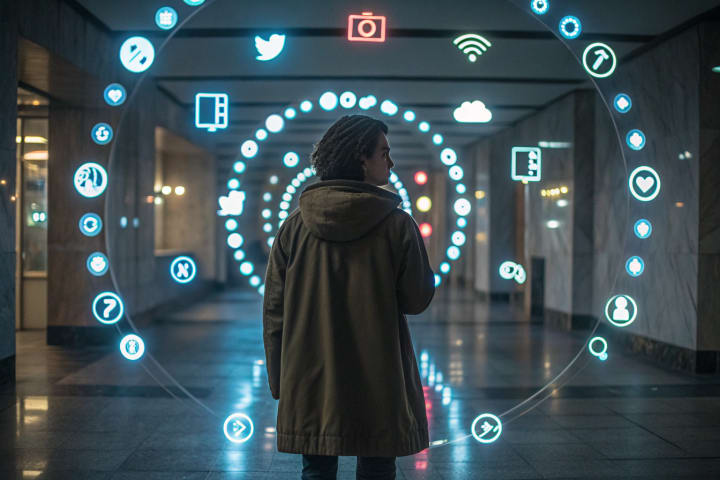
Online identity will continue to evolve with technology. Emerging platforms—virtual reality, augmented reality, and AI-generated avatars—usher in new forms of self-presentation and interaction. Borders between virtual and actual selves will become increasingly ambiguous, calling into question matters of authenticity, self-conception, and human connection.
Having a clear picture of digital identity is essential for personal growth. Understanding the psychological dynamics enables one to utilize the online realm without sacrificing mental well-being or authenticity. Relationships are affected as well: being able to distinguish between performance and self-expression enables deeper trust and connection.
Educational and therapeutic interventions now incorporate digital literacy, allowing individuals to develop critical awareness of online influence, social comparison, and identity management. As digital presence becomes omnipresent in life, these competencies will be essential for well-being, resilience, and authentic engagement.
Balancing Digital Expression with Real-World Authenticity
Last, the challenge of online identity is how to reconcile expression and authenticity. Social media offers unprecedented opportunities for creativity, connection, and exploration of self. But without thoughtful consideration, it can distort self-image and amplify anxiety.
Finding balance takes intentionality, self-reflection, and boundaries. It means understanding that digital identities are, by their very nature, curated—and that offline identity, experience, and relationship continue to form the basis for a healthy self. By incorporating thoughtful social media usage, authentic expression, and offline confirmation, it is possible for individuals to reap the rewards of digital identity without compromising psychological health.
Digital identity is a mirror, and it will reflect back both the self we are and the self we wish to be. Its psychology, when known, enables us to traverse this reflection wisely, using the technology not to perform, impress, or compare, but to connect, create, and explore the fullest possibilities of who we are.
About the Creator
The Chaos Cabinet
A collection of fragments—stories, essays, and ideas stitched together like constellations. A little of everything, for the curious mind.
Keep reading
More stories from The Chaos Cabinet and writers in Humans and other communities.
Into the Uncanny Valley: Why Robots Almost Human Make Us Nervous
A humanoid robot smiles at you. It has almost perfect skin, eyes that glint with knowledge, and movements that mimic the subtleties of human gesture. You would like to respond, to meet its gaze, but you are restrained. There is a wrongness—an offness, a moment of dissonance in its smile, a stumble in its movement—that makes you tense. You glance away, your heart racing, sensing a discomfiture you cannot quite explain. You are going through the uncanny valley: the strange, often creepy reaction humans experience to being in the presence of machines or virtual entities that are almost—but not quite—human.
By The Chaos Cabinet6 months ago in Humans
How To Stay Emotionally Balanced While Searching For Long Term Love
Long-term love search is an experience that produces both positive and negative emotions such as hope, anxiety, frustration, and impatience. Having good and bad times in dating is usual, but the issues of uncontrolled feelings may result in burnout or an inability to make an appropriate choice.
By Robert Smith2 days ago in Humans



Comments
There are no comments for this story
Be the first to respond and start the conversation.