
Into the Uncanny Valley: Why Robots Almost Human Make Us Nervous
Why Almost-Human Robots Make Us Feel Uneasy: Unpacking the Uncanny Valley Effect

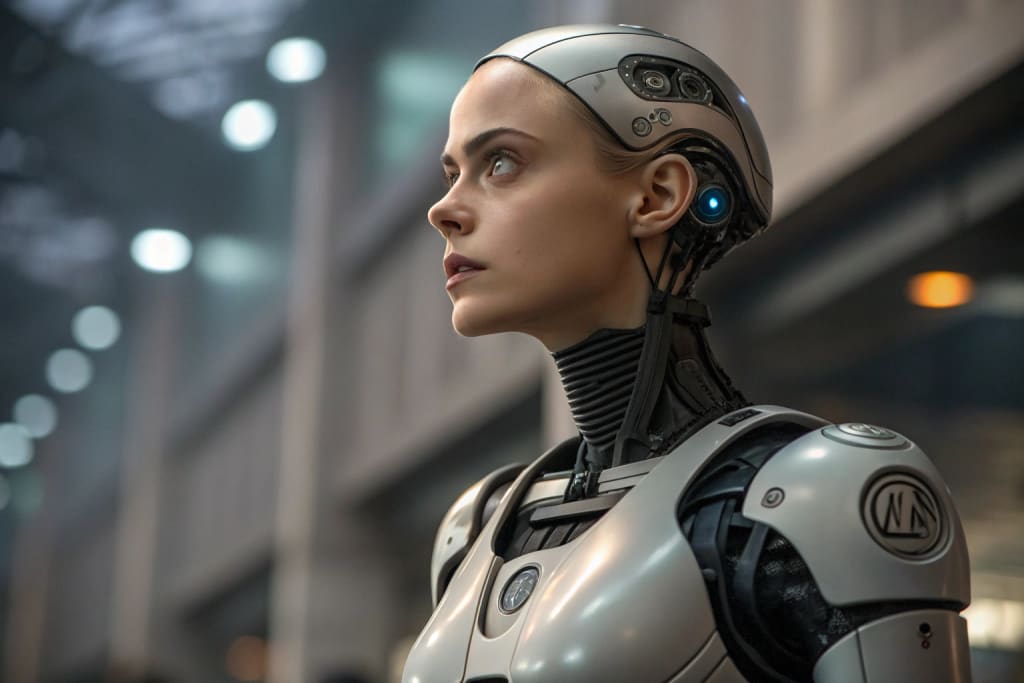
A humanoid robot smiles at you. It has almost perfect skin, eyes that glint with knowledge, and movements that mimic the subtleties of human gesture. You would like to respond, to meet its gaze, but you are restrained. There is a wrongness—an offness, a moment of dissonance in its smile, a stumble in its movement—that makes you tense. You glance away, your heart racing, sensing a discomfiture you cannot quite explain. You are going through the uncanny valley: the strange, often creepy reaction humans experience to being in the presence of machines or virtual entities that are almost—but not quite—human.
As technology continues to advance, the uncanny valley has also grown from a niche topic in robotics research to a central theme in entertainment, artificial intelligence, and human-robot interaction. It is no longer a philosophical notion; it has become a lens through which we analyze human perception, empathy, and life-artificial imitation borders.
The Origins of the Uncanny Valley
The term "uncanny valley" was first used in 1970 by Japanese robotics engineer Masahiro Mori. Observing human reaction to increasingly human-shaped robots, Mori discovered a curious effect: the more human the robots, the warmer the emotional reaction—up to a point of near-perfection, whereupon the reaction dropped into unease, creepiness, or even horror. This drop—the "valley"—named a contradiction: robots nearly human but imperfect stimulate more extreme negative reactions than clearly mechanical ones.
Mori proposed the uncanny valley may be an evolutionary tool. Humans are attuned to extremely subtle cues of expression, motion, and posture. Minor abnormalities—stiff motion, ungainly expression, or unusual skin texture—can instantaneously alert us to sickness, death, or hazard. In this sense, the uncanny valley would be a survival tool, alerting us to dangers disguised as human.
The uncanny valley effect was initially used to describe robots but has since encompassed animation, computer-generated imagery, prosthetics, and AI avatars. Wherever reality starts to rival human appearance, our brains respond—in fluctuating modes of fascination and unease.
From Automata to Modern Robots: A Historical Perspective
The roots of the uncanny valley reach far deeper than contemporary robotics. Automata—mechanical dolls constructed to imitate human motion—have a long history. In the eighteenth and nineteenth centuries, European clockmakers created sophisticated automata: musicians playing miniature instruments, dancers executing mechanical routines, and writing dolls mimicking handwritten texts. Humans marveled at their precision but felt a subtle discomfort as if the realistic motions were barely a hair's breadth "off.".
The nineteenth century also saw the development of realistic prosthetics and mannequins. While intended to restore form or display clothing, these objects could provoke eeriness when human resemblance became convincing without true life. Even in these early examples, humans seemed sensitive to the boundaries between animate and inanimate imitation. Mori’s uncanny valley formalized what people had intuitively experienced for centuries: a cognitive and emotional tension triggered by near-human figures.
In the twentieth century, robots became real in factories and laboratories. Industrial robots in the early years were self-evidently mechanical and only incited wonder. With the advancement of materials and electronics, engineers began making humanoid robots with synthetic skin, emotion-filled eyes, and articulated movement. These advances unintentionally created the uncanny valley, revealing its existence all along in human history and technology.
Cinema, Video Games, and the Valley on Screen
Few media transmit the uncanny valley as powerfully as films and video games. The early 2000s offered instructive examples. Computer-generated protagonist characters such as those in Final Fantasy: The Spirits Within (2001) and The Polar Express (2004) were technologically breathtaking yet elicited widespread unease. Audiences cited that minor imperfections—slightly stiff movement, too-realistic sheen in the eyes, or microexpressions that were not quite accurate—elicited a spooky, near-dead-like quality.
Video games show the same phenomenon. Hyper-realistic avatars can be wooden or jerky in their facial movements, producing subtle but persistent unease. Virtual reality enhances these effects: if a virtual avatar fills a space with realistic size and movement but with subtle inconsistency, immersion collapses, with a corresponding tendency to cause users to back off or check out.
Others exploit the uncanny valley intentionally. Horror and science fiction utilize nearly human characters to inspire fear. Androids, zombie humans, and specters conjured by man-made intelligence tap into our subconscious vulnerability, experiencing the narrative strength of the uncanny valley alongside its psychological impact.
Neurological and Psychological Explanations
What makes the uncanny valley unpleasant? Neuroscience holds the key. Functional MRI studies indicate that watching near-human bodies activates brain regions associated with empathy, social cognition, and threat detection. At the same time, small imbalances—mismatched microexpressions, delayed blinks, or anomalous gestures—activate brain regions associated with disgust, fear, and distaste.
Psychologically, the uncanny valley is the result of conflicting signals. Brains expect lifelike objects to behave consistently within internal models of human movement and expression. Cognitive dissonance occurs when we see visual realism coupled with behavioral inconsistency: the character is familiar enough to trigger social processing but abnormal enough to trigger fear. That dissonance manifests as the creepy, gut-level feeling we experience.
Evolutionary psychology adds another level. Humans are primed to perceive illness, death, and duplicity. Minor "off" things—pale or rubbery complexion, delayed gestures, too perfectly symmetrical face profiles—can inadvertently signal threat. Uncanny valley may thus be a collision between cognition, emotion, and survival mechanisms evolved.
Cultural Variations in Responses
While the uncanny valley seems almost universal in its existence, cultural influences determine its severity. Japanese subjects, having been exposed to humanoid robots and cartoonlike anime, tend to be more accepting of greater realism before experiencing discomfort. Western audiences, having less experience with anthropomorphic technology in everyday life, can become repelled at lower levels of realism.
Media exposure, cultural narratives about artificial life, and social attitudes toward robots inform responses. Cultures that use robots as an integral part of education, healthcare, and domestic life experience less intense uncanny valley effects. Naturalist cultures or cultures that are rejecting artificial intelligence tend to have stronger reactions. Designers, filmmakers, and AI engineers must be aware of these nuances when selling to diverse global audiences.
AI, Virtual Avatars, and the New Frontier
Artificial intelligence deepens the uncanny valley. AI avatars now convincingly copy conversation, facial emotion, and gesture at unprecedented levels of fidelity. Social robots, metaverse avatars, and virtual assistants are in perpetual engagement with humans, raising the stakes for emotional and ethical design.
Ironically, greater realism increases sensitivity to minor imperfections. A slow blink, off-key singing, or over-symmetry intensifies discomfort. The more realistic the AI, the more disconcerting its flaws. Questions of profound concern emerge: How realistic should AI avatars become? How can designers elude creating undue unease? As AI permeates ordinary life, the uncanny valley extends from aesthetics to ethics, psychology, and public health.
Real-World Examples and Experiments
Several humanoid robots exhibit quite obviously uncanny valley dynamics. An uncannily lifelike android, Geminoid, was made by Hiroshi Ishiguro, imitating its human counterpart in expression and motion. Individuals respond with fascination and wariness, quite displaying the strength of the valley psychologically. Likewise, authentic mannequins or AI-generated digital people on social media stimulate interaction, interest, and mild horror.
Virtual reality experiments validate these findings. Participants engaged with nearly lifelike avatars become detached when microgestures or facial expressions come just short of expected norms. These examples confirm that the uncanny valley is no thought experiment—it is a real effect with observable effects on perception and action.

Ethical Considerations in Design
The uncanny valley is an ethical issue, not an aesthetic one. Carebots, for example, education bots, or companionship bots can cause stress, fear, or distrust inadvertently. Hyper-realistic AI can influence behavior, exploit empathy, or prevent humans and machines from being easily differentiated in ways difficult to control.
Ethicists emphasize vulnerability. Children, elderly people, or individuals with cognitive impairments are particularly vulnerable to uncanny stimuli. Designers will have to balance realism and emotional well-being, balancing engagement, functionality, and psychological safety.
Implications for Human-Robot Interaction
Uncanny valley influences trust, acceptance, and performance. Discomfort-evoking caregiver robots can fail to assist. Industrial robots that eschew anthropomorphism tend to execute tasks better. Beyond the functional, uncanny valley influences cultural imagination, including storytelling in literature, film, and virtual media.
Through the study of the uncanny valley, researchers learn about social perception, empathy, and cognition. It illustrates the fine-grained manner in which humans read facial expressions, gestures, and microexpressions and displays the subtlety that makes human social interaction so uniquely fine-grained.
Philosophical and Cultural Reflections
The uncanny valley also provokes philosophical questions. It challenges us with the boundaries of life, consciousness, and artificial simulation. When a humanoid robot blinks or moves almost like a human being, we are reminded of our vulnerability to imperfection, the things which make "alive," and the complexity of human social existence.
These limits are pushed by artists, authors, and theorists. Films like Ex Machina or Her depict ethical, emotional, and existential concerns that arise with near-human AI. Literary and cultural analysis comes into play to shed light on how the uncanny valley affects social understanding of empathy, identity, and morality in a more technological era.
Future Visions: Human-Robot Coexistence
In front, the uncanny valley is both challenge and opportunity. Designers can create robots that intentionally avoid realistic simulation, choosing functional or symbolic form. Others will attempt to fill the valley, creating avatars and machines that are and appear human, potentially transforming therapy, friendship, and social engagement.
Speculative scenarios involve virtual worlds populated with hyper-realistic AI avatars, home robots capable of providing advanced emotional care, and human-AI co-working in offices. Designing these systems effectively and ethically will require an understanding of and leveraging the uncanny valley.

Reflective Conclusion: Learning from the Valley
The uncanny valley is not a wall—it's a mirror. It reflects back the intricacy of human vision, the ingenuity of social intelligence, and the elusive dance between life and simulation. By confronting it, we come to know empathy, trust, and the psychological cues that make humans human better.
Engaging with the uncanny valley lessons prudence, imagination, and philosophical reflection. It reminds designers, scientists, and the wider society to respect the thin line between realism and safety, curiosity and security. Ultimately, the uncanny valley is a threshold: through machines that reach for humanness, we learn more about ourselves, our fears, and the qualities that constitute the living, breathing world that we inhabit.
About the Creator
The Chaos Cabinet
A collection of fragments—stories, essays, and ideas stitched together like constellations. A little of everything, for the curious mind.
Keep reading
More stories from The Chaos Cabinet and writers in Humans and other communities.
The Changing Map of Friendship: How Technology Is Remaking Human Contact
Introduction: The Digital Evolution of Friendship In the past decades, technology has revolutionized nearly every aspect of our lives. From the way we work to the way we shop, technology has revolutionized the way we live. Perhaps one of the largest areas to be affected by this revolution in technology is our friendships. With the emergence of social media, messaging apps, and online gaming, the very nature of the way we interact, communicate, and form connections has been altered dramatically.
By The Chaos Cabinet4 months ago in Humans
How to Find the Right Day Treatment Program in Your Area
Finding the right level of mental health or addiction care can feel overwhelming, especially when outpatient therapy isn’t enough but inpatient treatment seems too intensive. This is where day treatment programs, often called Partial Hospitalization Programs (PHPs), play an important role. These programs provide structured, comprehensive care during the day while allowing individuals to return home in the evening.
By Jordan Blake6 days ago in Humans




Comments
There are no comments for this story
Be the first to respond and start the conversation.