
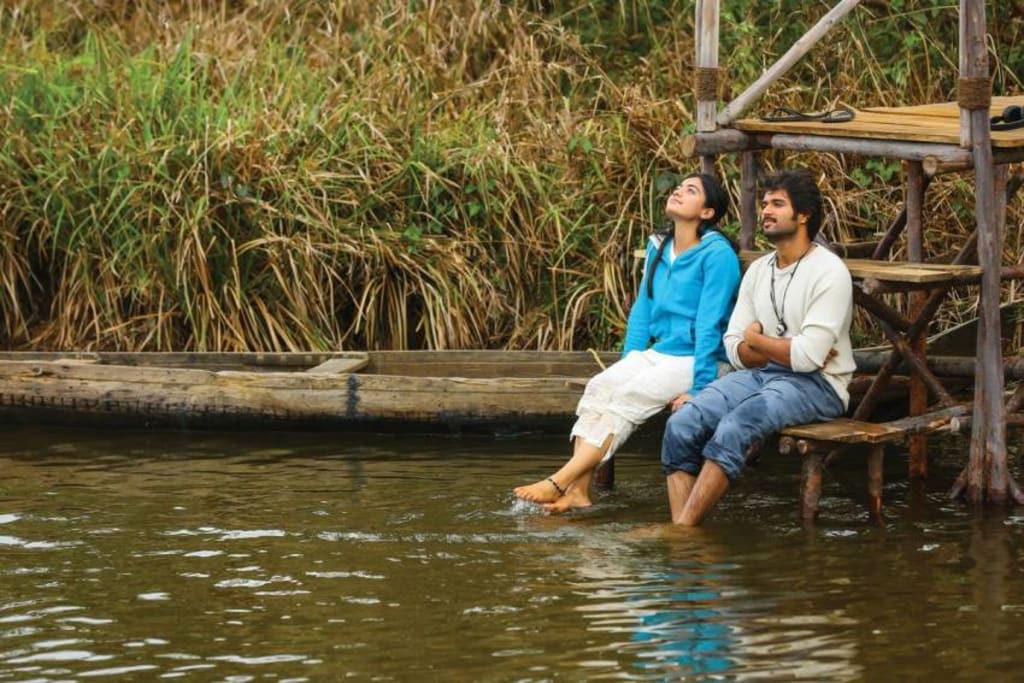
It is the story of Lilly and Bobby, two twenty-somethings figuring out what they want from life. Bobby is a student leader following his grandfather's legacy of fighting injustice, and begin a "Comrade" - which means supporting his friends and family through thick and thin. He's extremely hotheaded, and is always ready to break some bones which on the surface might look like Deverakonda's famous Arjun Reddy. However, the anger here is very different. It's the cry for justice, and the fight scenes feel extremely real. The anger and confusion comes naturally to our lead actor.
Lilly, on the other hand is a state level cricketer, extremely passionate about the sport, describing it as her first love. She's charming and confident, sweeping Bobby off his feet pretty early on. She's unimpressed by his overbearing personality. Having lost a loved one in a college conflict; she fears that Bobby's violent streak might land them in a bad place.

When he initially expresses his feelings to her, she refuses him in an instant, without a hint of doubt on her face. Her love for cricket means that she make a choice, and fully knowing Bobby and how different their paths are; she knows what the right thing to do is. The scene is wonderfully written, giving us a female lead who is more than just a love interest of her male counterpart. In fact, that is the most refreshing thing about this love story - the fact that it places a woman's journey at the center of its plot.
The rest of the film follow their romance and the struggles they face with or without each other. This makes the story so deeply textured, for the intensity of the love story never takes away from their individual journeys. In one of the film's key moments, Bobby tells Lilly - the day I become more important to you than cricket, is the day I'll distance myself from you. It amazed me to see this scene because the kind of cinema we have fed on always boasted of "love before everything else". The romance is extremely powerful.
"Uss din Maine use Jane k liye kah diya,
Aur wo roti huyi chali gayi;
Par mujhe pata nhi tha k wo fir kavi wapas nhi ayegi.
Uska aana mere zindegi main ek Naya aaghaz tha,
Par uska Jana mere wajood ki maut.
Ab main sirf ek zinda lass bann k rah Chuka hunn,
Saans leti zinda lass."

The film is also extremely relevant in the times of #MeToo In India. It makes poignant arguments about sexual harassment, never once sounding preachy. there are no token pleas made. It shames the hypocrisy of abusers, family, lovers and everyone else who forces their decisions on the victims; never once waiting to ask the victims themselves what they actually want. This makes the most powerful scene of the film. However, the scenes concerning the abuser in place are not dealt with as much sophistication as the rest of the film is.
Dear Comrade ultimately becomes the story of how a man supports his woman unconditionally; on the way dealing with his anger, her career and professional choices. It's unique because there are no external barriers to their union-no angry parents, no caste divide, no lecherous villain. In fact, the story is only secondary to our female protagonist's professional journey. There are some obvious flaws in the movie and parts that do not add up to the larger story.

However, if you're a sucker for flawed characters, you will be rewarded. The leads are so good in their parts, with not a hint of vanity, they overcome all these issues. And boy does Vijay Deverakonda know how to cry. It's special because we don't see our male leads do that on screen very often. For all his issues, Bobby is a keeper. He's there to support his partner through all that the world must put her through. Rashmika Mandanna is a revelation in this extremely complex and sensitive performance, going from confident to vulnerable, with as much conviction.
As much as it is a love story, Dear Comrade is also a movie about self-discovery; and this time it is about our female protagonist too.
About the Creator
Keep reading
More stories from mahi choudhary and writers in Humans and other communities.
Life without "MOM"
I had six weeks to prepare for my mother's death. That's 42 days or 1,008 hours, depending on how you want to look at it. But, I learned in those six weeks is it doesn't matter if you have one day or one year, there is no time in the world that can prepare you for the absolute devastation you feel when you a lose a loved one.
By mahi choudhary4 years ago in Families



Comments
There are no comments for this story
Be the first to respond and start the conversation.