
Crafting the Olympic Curling Stones: A Precision Endeavor
"The Journey from Remote Scottish Isle to Olympic Glory"

Introduction
In the world of winter sports, curling holds a unique place. The seemingly simple act of sliding a stone on ice towards a target, known as the house, requires a level of precision and finesse that is unmatched. But what makes this ancient Scottish pastime even more intriguing is the stone itself, particularly the Olympic curling stones, which are a masterpiece of craftsmanship and engineering. In this article, we delve into the meticulous process of creating these iconic stones, exploring why they are the only ones allowed in the Olympic Games.
A Remote Island's Legacy
Every curling stone used in the Olympic Winter Games since 2006 hails from a single source - Elsa Craig Island, off the rugged coast of Scotland. This remote island has been producing these stones since 1851, and while the tradition endures, the number of artisans involved has dwindled to a mere ten individuals globally. These craftsmen are driven by a deep passion, fully aware that the granite they work on could end up as the stone thrown for a gold medal at the Olympics or as the game-deciding stone in a world championship.
Elsa Craig's Granite: The Gold Standard
Elsa Craig Island's granite is the undisputed gold standard for curling stones. However, extracting this precious material is no simple feat. The island is uninhabited, devoid of basic amenities such as electricity and a water supply. Consequently, the team must transport everything required for the stone-making process, turning each harvest into a logistical marvel.
Two Types of Granite, One Perfect Stone
The creation of an Olympic curling stone begins with the selection of two types of granite from Elsa Craig Island: blue hone and common green. Blue hone granite forms the stone's running surface, while common green is used for the part that strikes other stones. The dense, fine-grained structure of Elsa Craig granite is what sets it apart. It boasts unparalleled resilience, remaining intact even in the frigid temperatures of the curling rink and during high-impact collisions.
Each stone must meet strict specifications defined by the International Olympic Committee. Its thickness must be precisely 145 millimeters, or 14.5 centimeters, ensuring the ideal depth for shaping while retaining the required weight. The granite slabs selected for coring, the process that shapes the stones, are meticulously chosen, reflecting the skill and experience of the artisans.
From Granite Slab to Curling Stone
Coring the granite slabs is an art that requires both precision and craftsmanship. Although the process is semi-automatic, it relies on the manual control of speed, a skill where the operator's expertise comes into play. Once the stones are cored, the excess granite around the corners is chipped away, preparing them for their final shape.
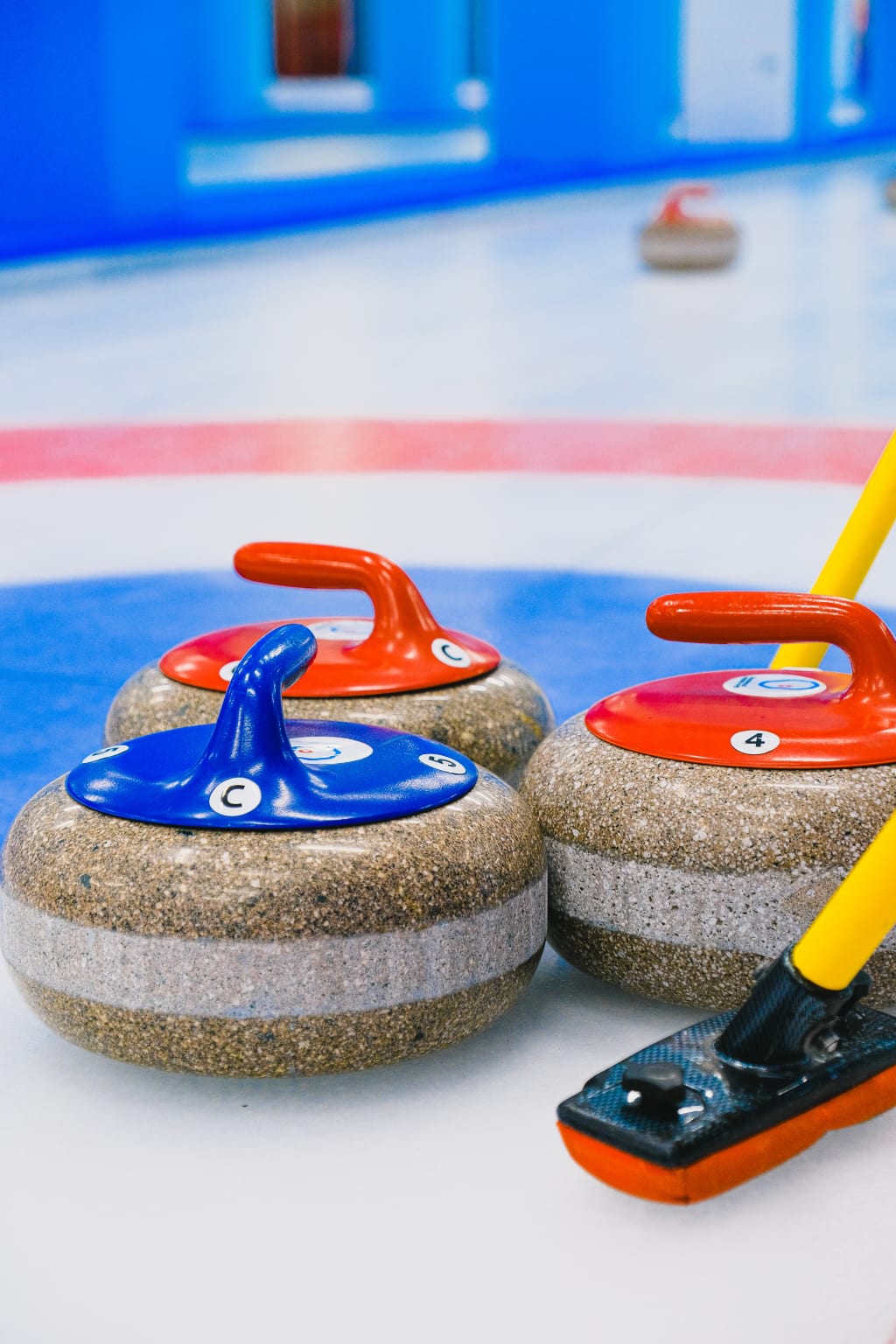
To meet Olympic standards, uniformity is key. The blue hone granite is expertly inserted into the common green body, forming a cohesive and perfectly weighted stone. Each stone weighs 40 pounds, plus an additional pound for the handle.
After achieving their final form, the stones undergo a meticulous polishing process. The running surface, responsible for the stone's curl on the ice, is carefully roughened by the skilled hands of the artisans.
A Growing Demand and Supply to Match
Curling has witnessed a surge in popularity in recent years, and with it, the demand for Olympic curling stones has grown. This surge in demand has also impacted the price of these stones. While this might be seen as a challenge, it's one that the industry welcomes. To satisfy the rising demand, companies like Kays, the sole supplier of Olympic curling stones, must return to Elsa Craig Island more frequently to harvest granite.
Remarkably, despite the increased demand, the island's abundant granite ensures a consistent supply. The last harvest, conducted in November 2020, utilized less than 0.01% of the island's granite reserves, leaving ample room for future production.
Conclusion
In the world of sports equipment, Olympic curling stones are a rarity. Crafted with precision and passion, these stones are not only a testament to the rich tradition of curling but also to the enduring spirit of craftsmanship. Elsa Craig Island's granite, its remote and rugged terrain, and the dedicated artisans who transform it into curling stones all contribute to the legacy of these iconic Olympic symbols. As curling continues to capture hearts worldwide, the stones that glide gracefully on the ice remain a testament to the sport's enduring allure.
About the Creator
Keep reading
More stories from Anu Preethi Danila D and writers in Humans and other communities.
The Elixir of Excellence: The Intricate Process of Crafting Grade A Maple Syrup from Centennial Trees
From within the tranquil embrace of century-old maple trees, a prized and exquisite creation emerges - Grade A maple syrup. This liquid gold, known for its unmatched purity and sumptuous taste, is meticulously extracted from the sap of maple trees without any additives. The journey of transforming nature's gift into this premium elixir is a blend of artistry, patience, and craftsmanship, giving rise to one of the most sought-after culinary delights.
By Anu Preethi Danila D2 years ago in Humans
Whiskey At Dusk
Guess the whiskey was more important to you in the end, wasn’t it? It was more than the well-being of your friends; more vital than showing up to the places you promised you would and could come to; more critical of a matter than fulfilling your damn responsibilities and getting the press off your back.
By Snarky Lisa5 days ago in Humans


Comments
There are no comments for this story
Be the first to respond and start the conversation.