

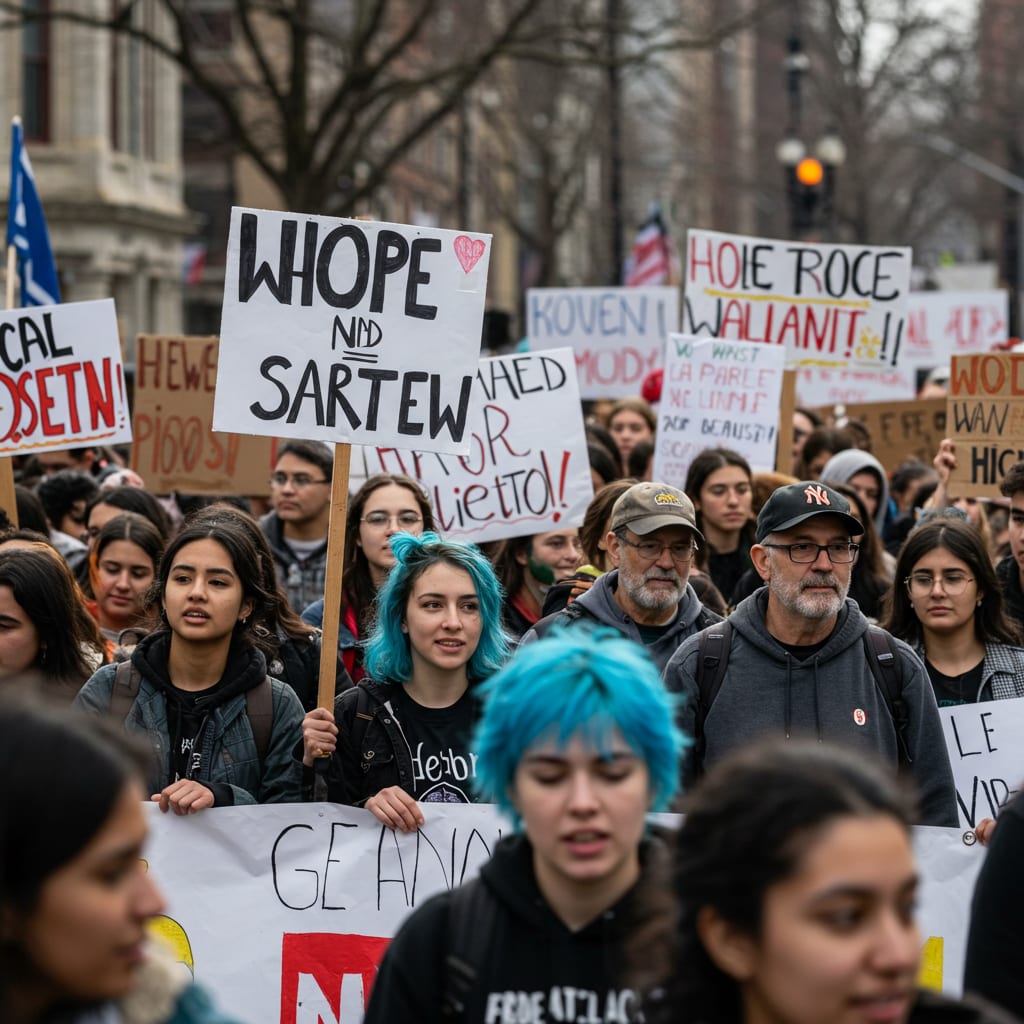
Boycotts have been the go–to tool for activist consumers looking for a marketplace–based solution to express their outrage about what they perceive to be corporate malfeasance. The term is named after Charles Boycott, against whom the tactic was successfully employed in the late 19th century, though the concept dates back an additional century or so.
The example from which the term comes notwithstanding, a question worth pondering is “how effective are boycotts?” The term gets thrown around quite often, so much so that it seems if they were implemented so often and were effective, the economy would implode. Historically, they are a mixed bag, though in more recent years, as increasingly immediate satisfaction is fulfilled and attention spans shorten, they seem to be less effective.
You may remember the drastic backlash Budweiser experienced from right-wing media personalities and consumers when they partnered with transgender influencer, Dylan Mulvaney. The focus was mainly on one particular product, Bud Light. However you may feel about the touchy political topic, it’s pretty clear in hindsight this episode didn’t just blow over as Budweiser probably hoped it would.
Instead, it was a disaster. I won’t bore you with a thorough rundown of statistics, but just to prove the point, sales of Bud Light dropped more than 20% alongside a corresponding drop in InBev’s (parent company of Budweiser) stock price.
May 2023 was the worst month in AB InBev’s history, with the largest selloff of the company’s stock in a single month and a 17% drop in overall sales. Of 133 boycotts occurring during the period from 1990 to 2015, none accounted for more than a 1% drop in overall sales.
Why is Bud Light such a noticeable outlier? Its customers' passion was certainly the impetus for the Budweiser drama, but alone it doesn’t explain what happened.
What does is Bud Light’s vulnerability as a product and brand. Let’s not mince words, Bud Light does not have a reputation as a good beer. As a beer drinker I had negative sentiments toward the product long before any controversy around influencers, and I know I’m far from alone in feeling that way. Nearly anyone who considers themselves a beer connoisseur views Bud Light as cheap swill.
That being the case, any loyalty to Bud Light is very easy to discard, if it ever existed. If you’re looking for another cheap beer to replace it, it's as easy as glancing to the right in the refrigerator at 7-Eleven and getting a pack of Miller Lite. Even if you do enjoy the taste of Bud Light, the other American light beers aren’t that much different and are easily obtained.
Immunity to Backlash
DEI and “wokeism” has become the hot target for right-wing outrage recently. A few years ago Critical Race Theory had people up in arms, and now that boogeyman has been resurrected in the form of a new euphemism. As such, anyone and anything falling under what seems to be the world’s broadest umbrella has become a potential target. That’s not a pun about Target’s feckless about-face on DEI initiatives and Pride-centric advertising.
In spite of palpable outrage about the latest euphemism for anything with even a whiff of progressivism, some companies, most notably Costco, have resolutely stood by their DEI policies and haven’t suffered for it.
The most recent data shows Costco still enjoys a renewal rate of 93% in the United States and Canada, and 90% globally. This is in spite of a membership rate increase back in September.
Why hasn’t Costco been subjected to the same pressure Budweiser was? People love Costco! It’s a weekly ritual for families to wander around Costco on Sunday and leave with bags of rice bigger than their children. The value is too profound to forgo because of culture-war-related wrath.
Additionally, the cost of switching is burdensome. Is there a BJ’s or Sam’s Club in town? If not, where am I going to get a hot dog on the way to picking up incredibly cheap toilet paper? Is the competition nearby? If they’re on the other side of town or anywhere else out of my way, do I really want to make all that extra effort to make a point Costco will likely never notice?
Lessons for the Present
This brings us full circle to the most prominent, viral, topic of the day, Tesla. Negative consumer sentiment towards Tesla these days seems more intense than that directed toward any other company. Already, the company’s health and outlook are buckling under the pressure of bitter consumer resentment. The stock is cratering and sales are hemorrhaging.
I can’t see Tesla fixing its problems well enough to reclaim the coveted crown of the electric vehicle space. It really seems like it’ll be a Budweiser and not a Costco. I doubt anyone has seen anything like the venom currently directed at the company. I certainly can’t recall another company’s inventory being shot at and torched like what we’re hearing about constantly in the news these days (disclaimer: I do not condone this sort of thing).
It’s relatively easy to buy a $40,000+ vehicle from a Tesla competitor if you’re enraged at Elon. Many people can’t afford to just dump their Teslas, and are also keen to point out that “I got this car before Elon went crazy” bumper stickers. But the mere fact such bumper stickers exist means the company brand is irrevocably tainted. When was the last time people really felt compelled to publicly broadcast their distaste for a public figure intimately associated with a consumer product? Further, given Tesla’s reputation for expensive repairs and poor resale value, I suspect many Tesla owners will switch to another car brand when they purchase their next car. And it’s not like conservatives are about to start loving electric vehicles, no matter how many White House lawn promotion stunts the administration pulls. Like the bumper stickers, such a desperate ploy speaks to Tesla’s current dire straits.
This isn’t the sort of thing that can be reversed by Elon stepping away from his DOGE role and paying more attention to Tesla, as it’s his association with the company that is the current primary driver of its misfortune. His “personal brand” (I just retched a bit) is radioactive, and his touch has a reverse Midas effect, turning everything to shit. Likewise, poor sales numbers and eroding market share can’t be explained away by a Model Y refresh.
People are not going to forget the impression Elon has left imprinted on their minds, mostly because he won’t let them. His pathological need for attention and messiah complex will ensure he remains highly visible in public, giving everyone the reminder they need about how much they hate him. This, combined with the cost of remaining loyal to Tesla, coupled with the relatively low cost of availing oneself of a different option, will keep Tesla’s prospects bleak for the foreseeable future, if not forever.
It’s hard to tell if a boycott will be successful, but there are indicators of how vulnerable a company is to a boycott. Many successful businesses e.g., Amazon, have been predicated on a single, simple,overriding principle; please the customer. How willing customers are to part with a business, and passionately attempt to convince others to do so, as a matter of principle, is largely impacted by how much value they perceive to be getting from a business. Additionally, driving the decision whether to remain loyal to a business is the cost, measured in money, time, and effort, of making a change.
About the Creator
Brain Juice
Wise ass from NYC and fervent storyteller. Writing about all things topical with flair, imagination, and wit. No AI generated content, just a little editing. All opinions expressed are solely my own, which is what makes them great.
Keep reading
More stories from Brain Juice and writers in Humans and other communities.
Duplicitous Double Dealing
By now, nearly everyone can agree that Elon Musk and reckless, self-serving decisions go together like rice and beans. Consequently, it’s really not that shocking that he would use a big pile of investor cash to bail himself out from the largest impulse buy in world history, especially in light of the fact this is not the first time he’s used other people’s money for quixotic acquisitions that only make sense in light of how they serve Elon’s interests. In light of those episodes, no one should be surprised he’d rob Peter to pay Paul.
By Brain Juice10 months ago in Humans
The CEO of Everything
They say "jack of all trades, master of none," but they forgot to mention the part where the jack of all trades is also the camera woman, the makeup artist, and the person currently yelling at a tangled Wii microphone cable in a her own bathroom while recording herself singing and trying to make it look realistic and professional. (As professional as you can make it with nothing but a cell phone camera and a mic that doesn't work)
By Sara Wilson7 days ago in Humans
Top 10 Web Application Development Frameworks in 2026
The landscape of web application development continues to transform rapidly as we navigate through 2026. Selecting the appropriate framework has become critical for businesses seeking to build scalable, secure, and high-performing digital solutions. Whether you're developing custom software in Chicago or creating mobile apps for a global audience, understanding current framework capabilities is essential for project success.
By Supreme Technologies5 days ago in Humans



Comments
There are no comments for this story
Be the first to respond and start the conversation.