
Chicken Jockey in Minecraft: Everything You Need to Know About This Rare Mob
Learn everything about the chicken jockey in Minecraft!


What Is a Chicken Jockey in Minecraft?
In the vast world of Minecraft, players encounter a wide variety of mobs—some friendly, others hostile. Among the rarest and most intriguing is the chicken jockey. A chicken jockey is a hostile mob that consists of a baby zombie riding a chicken. This unique combination not only looks unusual but also moves unpredictably and can be surprisingly dangerous.
The chicken jockey is a naturally occurring mob, meaning it can spawn in the game without any special commands or mods. However, its rarity and mechanics make it one of the most memorable sightings in Minecraft.
How to Find a Chicken Jockey in Minecraft
If you're on the hunt for a chicken jockey, you'll need a bit of luck. These mobs have a very low spawn rate. Here are the conditions under which they typically appear:
- Spawn Chance: A chicken jockey has roughly a 0.25% chance to spawn when a baby zombie spawns.
- Biomes: They can spawn in any biome where zombies normally appear.
- Light Level: Like all zombies, they require a light level of 7 or less to spawn.
- Time of Day: They typically spawn at night or in dark caves.
Because of the random nature of their appearance, encountering a chicken jockey is a rare and exciting experience for most players.
Types of Chicken Jockeys in Minecraft
While the classic chicken jockey consists of a baby zombie riding a chicken, there are variants depending on the version of Minecraft you're playing:
1. Baby Zombie Chicken Jockey
The most common type. It’s fast, small, and difficult to hit—especially for inexperienced players.
2. Baby Zombie Villager Chicken Jockey
This variant occurs when a baby zombie villager spawns and mounts a chicken. It’s even rarer than the normal version.
3. Baby Drowned Chicken Jockey
Found in swamp biomes or underwater, this is a version where the baby zombie transforms into a drowned mob. They can even swim while riding chickens.
4. Baby Husk Chicken Jockey
This version spawns in desert biomes. Husks don’t burn in sunlight, making them more dangerous during the day.
All these types share the same mechanics but offer different challenges, depending on the biome and gameplay situation.
Why Is the Chicken Jockey So Dangerous?
You might assume that something as small as a chicken jockey wouldn’t pose much of a threat—but that’s where you’d be wrong.
Here’s why chicken jockeys are unexpectedly deadly:
- Increased Speed: The combination of a fast-moving chicken and a baby zombie makes it very agile.
- Smaller Hitbox: Chicken jockeys are small, making them harder to hit with weapons or arrows.
- Attack Power: Despite their size, baby zombies deal as much damage as adult zombies.
Daytime Activity: Chickens don’t burn in daylight, which means the zombie riding it also won’t burn—unless it's not shaded by the chicken. This allows chicken jockeys to survive and attack during the day.
In tight spaces, chicken jockeys can surprise players, leading to damage or even death if unprepared.
Can You Tame or Keep a Chicken Jockey?
A common question among Minecraft players is whether it’s possible to tame or trap a chicken jockey. While you can't tame them like a wolf or a horse, you can capture them using certain methods:
- Name Tag: Using a name tag prevents them from despawning.
- Fence or Enclosed Area: You can trap them using fences, blocks, or glass to create a display.
- Keep in the Shade: If the baby zombie component isn’t protected by the chicken, it might burn during daylight. Keeping them indoors or underground helps preserve them.
Many players create mob zoos or rare mob displays and love showcasing a chicken jockey due to its rarity.
Chicken Jockey Fun Facts
If you're a fan of Minecraft trivia, here are some interesting facts about chicken jockeys:
1. First Introduced: Chicken jockeys were introduced in Minecraft Java Edition 1.7.2.
2. Surprise Spawn: You can sometimes see a baby zombie spawn already on a chicken, creating a jump-scare effect during exploration.
3. Jockey Mechanics: The zombie controls the chicken’s direction, making it move toward players more aggressively than a normal chicken.
4. Cross-Version Appearance: Chicken jockeys appear in both Java and Bedrock editions, though spawning mechanics may differ slightly.
5. XP Farming: Due to their fast respawn potential with the right spawner setup, some advanced players use them in XP farms or mob grinders.
How to Summon a Chicken Jockey with Commands
If you're in Creative Mode or just want to test things out, you can summon a chicken jockey using Minecraft commands.
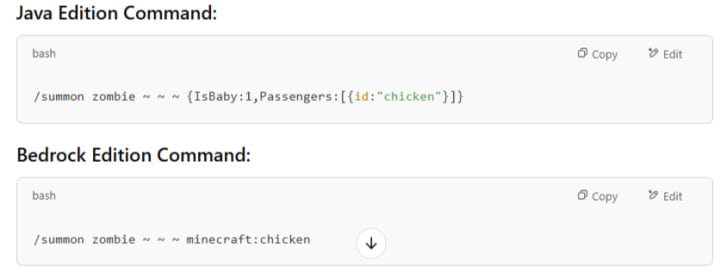
This is especially useful if you’re building a themed world or want to include rare mobs in your creative projects.
Tips for Dealing with Chicken Jockeys in Survival Mode
If you happen to run into a chicken jockey while playing in survival mode, follow these tips:
- Use a Bow: Since they’re hard to hit up close, a bow or crossbow can be more effective.
- Stay Above Ground: Open areas give you more room to avoid their quick attacks.
- Target the Chicken First: If you eliminate the chicken, the baby zombie becomes easier to manage.
- Use Shields: Always have a shield ready to block sudden attacks.
Preparation is key when dealing with any hostile mobs, and the chicken jockey is no exception.
Final Thoughts: Why the Chicken Jockey Stands Out in Minecraft
The chicken jockey may be rare, but it’s one of the most memorable mobs in Minecraft. Its unusual appearance and surprising power make it both a curiosity and a challenge. Whether you encounter one in the wild or summon one just for fun, chicken jockeys bring an extra layer of excitement to the game.
If you're building a mob collection, exploring rare mobs, or just diving deep into Minecraft trivia, understanding everything about the chicken jockey will make your adventures even more fun. Keep an eye out—you never know when one might come clucking your way!
About the Creator
Vincent Otiri
I'm a passionate writer who crafts engaging and insightful content across various topics. Discover more of my articles and insights on Vocal.Media.
Keep reading
More stories from Vincent Otiri and writers in Humans and other communities.
La La Anthony Age: A Closer Look at the Star’s Life, Career, and Timeless Beauty
How Old Is La La Anthony in 2025? If you're wondering about La La Anthony's age, you're not alone. The multi-talented actress, television personality, producer, and entrepreneur has been in the spotlight for over two decades. Born on June 25, 1979, La La Anthony is 45 years old as of 2025. Despite her age, she continues to look youthful, radiant, and energetic—captivating fans across the globe.
By Vincent Otiri10 months ago in Humans


Comments
There are no comments for this story
Be the first to respond and start the conversation.